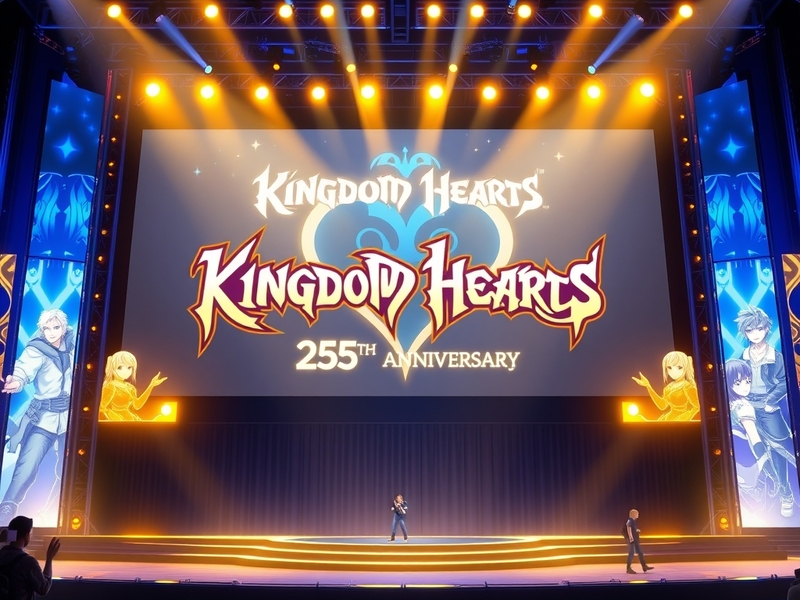
Square Enix has pulled back the curtain on a year-long celebration marking a milestone few franchises ever reach. The Kingdom Hearts 25th Anniversary event isn’t just a nod to the past—it’s a carefully orchestrated bridge between nostalgia and innovation, designed to unite fans across generations and geographies under one banner. From Tokyo to Toronto, Tokyo Game Show to community meetups in smaller cities, the initiative spans multiple continents, reflecting the series’ global footprint.
At the heart of this celebration is recognition of how Kingdom Hearts evolved from a bold experiment in merging Disney magic with Final Fantasy depth into a cultural touchstone. What began in 2002 as a surprise collaboration between two powerhouse studios has grown into a multimedia ecosystem: 16 mainline games, spin-offs, manga, novels, orchestral concerts, and a dedicated fanbase that spans from elementary students to adults who grew up alongside Sora and his friends. The anniversary isn’t about resting on laurels. It’s about redefining what a legacy franchise can become in the 21st century.
Global Events and Regional Celebrations
The anniversary kicked off with a worldwide livestream from Tokyo, where Square Enix unveiled a new trailer and announced key details about Kingdom Hearts Missing-Link, the upcoming mobile title often referred to as KH4.5. The broadcast was translated in real time across multiple languages, including Japanese, English, French, German, Spanish, and Chinese—a deliberate move underscoring the series’ reach beyond its Japanese origins. Local events followed in major gaming hubs: Paris hosted a pop-up exhibition featuring concept art and rare merchandise, while Los Angeles saw a panel at Anime Expo featuring voice actors from the English dub reprising their roles.
Not to be overlooked were grassroots gatherings. In cities like São Paulo, Cairo, and Jakarta, local gaming communities organized fan meetups, cosplay contests, and charity streams. One standout initiative emerged in Mexico City, where a group of indie developers collaborated with Square Enix to create a short animated tribute using pixel art, blending Mexican cultural motifs with the game’s signature style. These decentralized celebrations highlight a key truth: Kingdom Hearts is no longer just a Japanese export. It’s a shared language.
For travelers and gaming enthusiasts, this global tour offers more than just nostalgia. It’s an invitation to experience how a game can transcend language barriers and become part of local identity. If you’re planning to attend one of these events, check out our Travel section for tips on navigating international gaming conventions and fan gatherings.
The Role of Music and Performing Arts
Music has always been central to Kingdom Hearts. Composers Yoko Shimomura and later Takeharu Ishimoto created scores that blend orchestral grandeur with pop sensibilities, from the iconic Dearly Beloved wedding theme to the soaring battle tracks of Kingdom Hearts II. The anniversary celebration elevates this musical legacy to new heights.
The centerpiece is the Kingdom Hearts Orchestra World Tour, a series of live concerts in Tokyo, London, New York, and Seoul. These aren’t just background scores played over speakers—they’re full orchestral performances with projected visuals, choir segments, and even live performances by vocalists who’ve sung the game’s iconic themes. The London concert at the Royal Albert Hall sold out in under 24 hours, with fans camping overnight to secure tickets.
Beyond concerts, the anniversary has sparked a wave of creative reinterpretation. Fans worldwide have arranged piano covers, orchestral remixes, and even full-band metal versions of classic tracks. In Brazil, a local symphony orchestra performed a live rendition of the Destiny Islands theme, complete with Portuguese narration. These performances aren’t just entertainment—they’re acts of devotion, a way for communities to claim ownership of the soundtrack that defined their childhoods.
The emotional resonance of this musical celebration reflects a broader cultural shift. Video game music is increasingly recognized as a legitimate art form, and Kingdom Hearts stands as a prime example of how sound can elevate storytelling. It’s a reminder that games are more than code and graphics—they’re experiences woven from pixels, pixels, and melodies.
Expanding the Universe: New Content and Collaborations
Anniversaries often prompt reflection, but Square Enix is using this milestone to push forward. Alongside Missing-Link, the company teased a new DLC expansion for Kingdom Hearts III Re Mind, featuring an extended story arc with Roxas and Xion. While details remain scarce, the teaser trailer included a cryptic message: “The door to tomorrow opens today.” Fans have already begun decoding the cryptic symbolism, a testament to the community’s deep engagement.
Collaborations have also played a key role. A limited-time crossover with Disney Dreamlight Valley allows players to unlock special Kingdom Hearts items within the farming sim, including costumes for their avatars. Meanwhile, a partnership with Japanese streetwear brand Uniqlo released a capsule collection featuring art from the games, selling out online within minutes. These crossovers aren’t just marketing—they’re cultural cross-pollination, merging gaming with fashion, social media, and everyday life.
Looking ahead, Square Enix has hinted at a possible Kingdom Hearts IV reveal, though no official announcement has been made. Speculation runs high, with fans dissecting every leaked image and rumor. What’s clear is that the anniversary isn’t just about celebrating the past—it’s about building the future. Whether through new games, music, or unexpected collaborations, the franchise is evolving in ways that honor its roots while embracing the digital present.
A Legacy That Transcends Generations
The true measure of Kingdom Hearts isn’t found in sales numbers or review scores. It’s in the stories fans share. A father teaching his child to play the original game. A teenager discovering the series through a friend’s recommendation. An adult revisiting the worlds that shaped their adolescence. The anniversary celebration captures this intergenerational connection, uniting players who experienced the first game on PlayStation 2 with those who first encountered Sora on a smartphone.
This global phenomenon also reflects a broader truth about gaming culture in 2024. In an era where games are often scrutinized for their content or business models, Kingdom Hearts stands as a reminder of what makes interactive media special: heart. It’s a franchise that values emotion over mechanics, storytelling over statistics, and community over competition. The anniversary events aren’t just parties—they’re rituals, moments where players collectively affirm their love for a world that has given them so much.
As the celebration continues throughout the year, one thing is certain: Kingdom Hearts has earned its place not just in gaming history, but in the cultural fabric of a generation. It’s a story that began with a dream of merging two worlds—and in doing so, created a universe of its own. And as long as there are players willing to pick up the Keyblade, that universe will keep growing.