Moderna’s Decade of Scientific Pivots Before the Vaccine Spotlight
Before COVID-19 thrust Moderna into global headlines, the Cambridge, Massachusetts-based biotech company had spent over a decade navigating scientific setbacks, financial pressures, and the steep challenges of pioneering mRNA technology. Founded in 2010 by Harvard biologist Derrick Rossi and backed by early investors including Flagship Pioneering, Moderna’s origins were rooted in a bold gamble: using messenger RNA to instruct human cells to produce therapeutic proteins. That vision, though revolutionary, came with immense technical hurdles—mRNA was notoriously unstable, prone to triggering immune overreactions, and difficult to deliver safely into the body.
For years, Moderna’s scientists wrestled with formulation problems. Early lipid nanoparticle delivery systems, essential for protecting fragile mRNA and helping it enter cells, were inconsistent and often toxic. The company burned through hundreds of millions in venture funding without a single clinical success. By 2015, after a string of failed programs in oncology and rare diseases, Moderna pivoted toward vaccines—a strategic shift that would later prove fortuitous. Yet even then, skepticism ran deep. “There were people in the industry who said mRNA vaccines would never work,” recalled Stéphane Bancel, Moderna’s CEO since 2011, in a 2021 interview. “We were the laughingstock.”
The turning point came in 2017 when Moderna struck a $250 million deal with AstraZeneca to develop mRNA-based therapies for cardiovascular and metabolic diseases. The partnership, though not immediately profitable, validated Moderna’s platform in the eyes of investors. It also signaled a shift from pure research to targeted development. Still, the company remained unprofitable, with losses exceeding $1 billion annually by 2018. Its IPO in 2018 raised $600 million, but the stock price languished below $20 for years. Investors questioned whether mRNA could ever deliver on its promise beyond the lab.
The COVID Catalyst That Redefined the Company’s Trajectory
The arrival of SARS-CoV-2 in early 2020 changed everything. Within days of the virus’s genetic sequence being published, Moderna’s team—led by immunologist Kizzmekia Corbett and infectious disease expert Tal Zaks—began designing a vaccine candidate. By February 24, 2020, Moderna shipped the first clinical batch of mRNA-1273 to the National Institutes of Health (NIH) for Phase 1 trials. That speed stunned even seasoned virologists. Traditional vaccine development typically takes years; Moderna compressed the timeline into weeks.
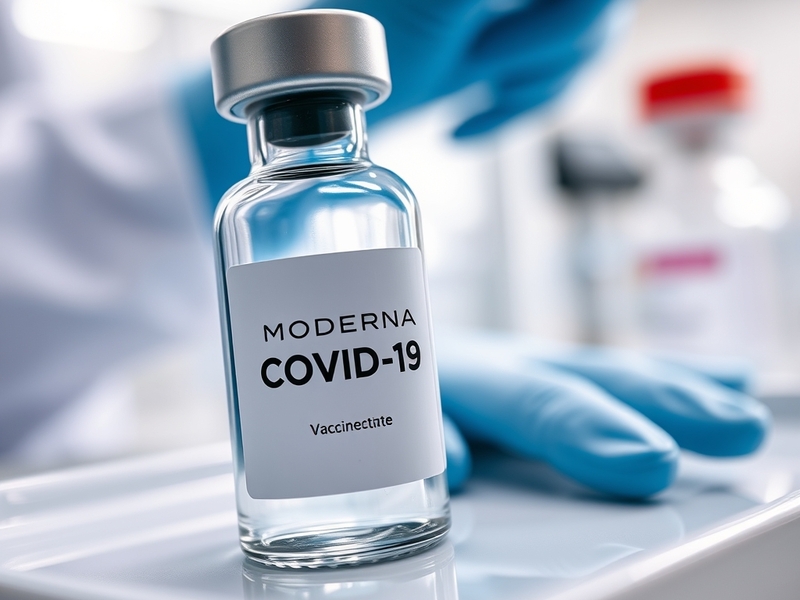
The results were remarkable. In the Phase 3 trial involving 30,000 participants, the vaccine demonstrated 94.1% efficacy against symptomatic COVID-19. Emergency use authorization followed in December 2020, just 11 months after the virus’s genetic code was made public. The FDA’s approval marked the first-ever mRNA vaccine authorized for human use. Within months, Moderna delivered over a billion doses globally, and its stock price soared past $400. The company’s market capitalization briefly exceeded $100 billion, catapulting it into the ranks of Big Pharma.
Yet Moderna’s rapid ascent wasn’t without controversy. Supply chain constraints, delivery bottlenecks, and patent disputes with the NIH over co-inventorship of the vaccine drew criticism. Some public health advocates argued that Moderna prioritized high-income markets, leaving low-resource countries underserved. By mid-2021, only 1% of doses had reached Africa. The company defended its distribution strategy, citing contractual obligations and logistical constraints, but the optics damaged its public image. “We learned the hard way that science alone doesn’t build trust,” said Bancel in a 2022 investor call. “We had to rethink how we communicate—and who we listen to.”
Beyond COVID: Moderna’s Bet on a mRNA-Powered Future
With its COVID vaccine now a household name, Moderna has set its sights on a much broader ambition: building a platform capable of addressing multiple diseases with mRNA technology. The company has over 50 programs in its pipeline, spanning infectious diseases, oncology, autoimmune disorders, and even personalized cancer vaccines. In 2023, Moderna announced positive results from a Phase 2 trial of its RSV vaccine, showing 83.7% efficacy in adults over 60. The FDA approved the shot in May 2024, marking Moderna’s second commercial product after COVID.
Oncology remains the most ambitious frontier. Moderna’s personalized cancer vaccine, mRNA-4157/V940, is being tested in combination with Merck’s Keytruda in melanoma patients. In a small Phase 2 trial, the combo reduced the risk of recurrence or death by 44% compared to Keytruda alone. Though the data is preliminary, it suggests mRNA could unlock a new era of precision immunotherapy. “We’re not just making vaccines,” said Juan Andres, Moderna’s Chief Technical Operations and Quality officer. “We’re building a programmable medicine platform.”
Moderna has also ventured into autoimmune diseases, with programs targeting lupus and multiple sclerosis. In 2023, it partnered with the Gates Foundation to develop a combined HIV and tuberculosis vaccine, aiming to deliver it in low-income countries. These initiatives reflect a strategic pivot from pandemic response to sustainable, long-term health impact. Yet the journey is not without risk. mRNA delivery remains technically demanding, and off-target immune responses can still occur. “The platform is powerful,” acknowledged Dr. Jacqueline Miller, Moderna’s Senior Vice President of Infectious Diseases. “But every new disease requires a bespoke solution. There’s no one-size-fits-all.”
Financial Rollercoaster and Leadership Under the Microscope
The pandemic transformed Moderna from a niche biotech into a global player, but its financial trajectory remains volatile. Between 2020 and 2022, the company reported $18.4 billion in revenue, mostly from COVID vaccine sales. But as demand waned in 2023, revenue plummeted to $6.7 billion, leading to a 30% workforce reduction and a $5.7 billion net loss. The stock price, once a darling of growth investors, fell below $100 by early 2024.
Critics have questioned whether Moderna can sustain its pipeline investments amid declining revenues. The company insists it remains financially sound, with $11 billion in cash and equivalents at the end of 2023. But analysts warn that without a third major product launch, investor confidence could erode further. “Moderna is no longer a COVID company,” said Leerink Partners analyst Daina Graybosch. “But the market is still pricing it like one.”
Leadership has also faced scrutiny. Stéphane Bancel, often praised for his scientific vision, has been criticized for aggressive timelines and opaque communication during the pandemic. In 2021, he sold nearly $40 million in stock just weeks before the vaccine’s authorization, drawing accusations of insider trading. Bancel defended the sales as part of a pre-planned 10b5-1 trading plan, but the episode fueled perceptions of corporate opportunism. Since then, he has pledged greater transparency, launching a public dashboard tracking vaccine distribution and collaborating with global health organizations on equitable access.
The company has also restructured its board and expanded its executive team, bringing in former regulators and industry veterans to rebuild credibility. “We’re in a new phase,” Bancel said in a 2024 earnings call. “This isn’t about one product. It’s about proving the platform works across diseases—and that we can operate responsibly at scale.”
What’s Next for Moderna? A Platform in Search of Validation
Moderna’s future hinges on two critical tests: proving its mRNA platform in new diseases and restoring investor trust. The next 18 months will be decisive. The RSV vaccine launch is a key milestone, but oncology and autoimmune programs carry higher stakes. Analysts estimate that by 2030, Moderna could generate $10 billion in non-COVID revenue if just three additional products reach the market. Yet each new indication carries its own risks—clinical trial failures, regulatory delays, or safety concerns could derail progress.
Moderna is also expanding its manufacturing footprint. In 2023, it opened a $170 million factory in Norwood, Massachusetts, doubling its U.S. production capacity. It’s building a second facility in Canada and exploring partnerships in Europe and Asia. The goal is to reduce reliance on external contract manufacturers and improve supply chain resilience. “We can’t be dependent on a single region again,” said Juan Andres. “The next pandemic could come from anywhere.”
Beyond vaccines, Moderna is exploring mRNA applications in regenerative medicine and gene editing. Early research suggests mRNA could be used to regenerate heart tissue after a heart attack or restore insulin production in diabetics. These are long-term bets, likely a decade or more from commercialization. Still, they reflect a broader industry trend: mRNA is evolving from a vaccine technology to a broader platform for human health.
For now, Moderna remains a company defined by paradox: a pioneer that changed the world during a crisis but must now prove it can sustain that success without it. Its story is no longer just about science—it’s about resilience, accountability, and the messy reality of turning revolutionary ideas into lasting impact. As Bancel told shareholders in 2024, “We didn’t save the world to become a one-hit wonder.”
Whether that ambition translates into reality will depend on execution, transparency, and a bit of luck. But one thing is clear: Moderna’s journey has already rewritten the rules of vaccine development—and that alone ensures its place in medical history.