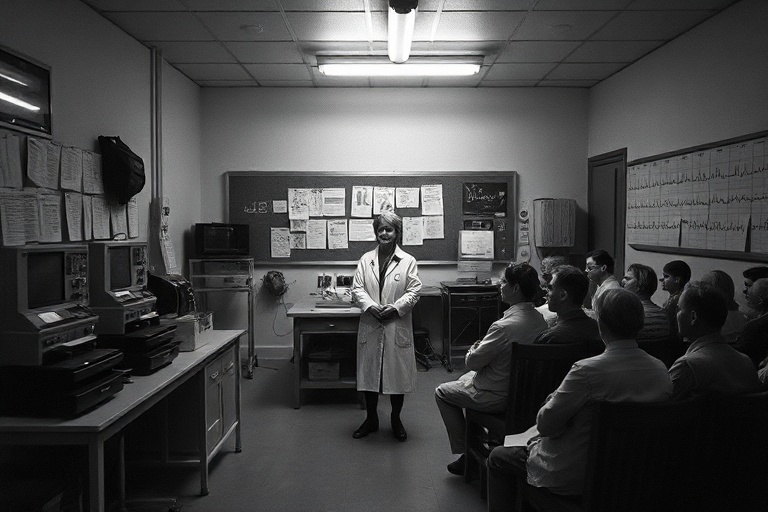
The Aberdeen Heart Study stands as one of the most influential longitudinal research initiatives in cardiovascular health, with roots tracing back to mid-20th century Scotland. At the heart of this study’s early development was Brenda Young, a pioneering epidemiologist whose work helped redefine how heart disease risk factors were understood and managed. Her contributions extended far beyond data collection; they reshaped public health policy and clinical practices across the United Kingdom.
Born in Aberdeen in 1927, Brenda Young began her career in medicine during a time when heart disease was rapidly becoming the leading cause of death in industrialized nations. After qualifying as a physician, she joined the Department of Medicine at the University of Aberdeen in the 1950s. It was here that her collaboration with Professor Ian Hill led to the establishment of one of the first large-scale cohort studies focused on ischemic heart disease. The Aberdeen Heart Study, officially launched in 1965, would eventually follow over 12,000 men aged 35 to 64 in the city, tracking their health outcomes for decades.
The Origins and Design of the Aberdeen Heart Study
The study was groundbreaking for its era. Unlike many earlier medical investigations that relied on small, hospital-based samples, the Aberdeen Heart Study was a population-wide survey. It included men from diverse socioeconomic backgrounds, reflecting the industrial and working-class reality of northeast Scotland. Participants underwent detailed medical examinations, including blood pressure readings, cholesterol measurements, and electrocardiograms. Lifestyle factors such as smoking habits, diet, and occupation were also recorded through comprehensive questionnaires.
Key to the study’s design was its longitudinal approach. Participants were re-examined at regular intervals—every five years—to track the progression of risk factors and the onset of coronary events. This follow-up structure allowed researchers to identify not just static associations, but dynamic patterns in how lifestyle and biological factors interacted over time. Brenda Young played a central role in designing these follow-up protocols and ensuring data integrity across multiple decades.
The study’s initial findings were published in the late 1960s and early 1970s. One of the most striking early discoveries was the strong correlation between smoking and heart disease. Young and her colleagues demonstrated that men who smoked more than 20 cigarettes per day had a threefold higher risk of myocardial infarction compared to non-smokers. These findings were among the first to provide robust population-level evidence linking smoking to coronary heart disease, helping to catalyze anti-smoking campaigns across the UK.
Brenda Young’s Role: From Data to Policy Impact
Brenda Young was not merely a scientist in the background; she was a public health advocate who translated research into action. As the study progressed, she became increasingly vocal about the implications of its findings. In 1974, she co-authored a landmark report with the Scottish Home and Health Department, titled Coronary Heart Disease in Scotland: A Strategy for Prevention. The report called for nationwide screening programs, dietary guidelines, and workplace smoking restrictions—many of which were later adopted.
Her influence extended into the medical curriculum as well. Young lectured extensively on preventive cardiology and helped establish public health training programs at the University of Aberdeen. She mentored a generation of epidemiologists, including Dr. Hugh Tunstall-Pedoe, who would later lead the famous Scottish Heart Health Study. Young’s emphasis on multidisciplinary collaboration—bringing together statisticians, clinicians, and social scientists—set a new standard for cardiovascular research.
One of her most enduring contributions was her focus on socioeconomic disparities in heart disease. The Aberdeen data revealed that men in lower occupational classes had significantly higher rates of coronary events, even after adjusting for known risk factors. This insight led to targeted public health interventions in deprived communities, including cholesterol-lowering initiatives and workplace wellness programs. Young’s work helped lay the foundation for the UK’s later efforts to address health inequalities through policy.
Key Findings and Long-Term Impact
Over its 40-year span, the Aberdeen Heart Study generated a wealth of findings that shaped national and international guidelines. Among its most significant contributions:
- Smoking and CHD: Confirmed a dose-response relationship between cigarette smoking and coronary heart disease (CHD), with risk increasing steadily with the number of cigarettes smoked.
- Blood Pressure and Cholesterol: Demonstrated that even mild elevations in blood pressure and serum cholesterol were associated with substantially increased CHD risk, supporting the concept of a “continuum of risk.”
- Physical Activity: Found that men with sedentary occupations had a higher incidence of CHD, even when controlling for other risk factors, reinforcing the benefits of regular exercise.
- Alcohol Consumption: Identified a U-shaped relationship between alcohol intake and CHD risk, with moderate drinkers showing lower rates than abstainers or heavy drinkers—a finding that influenced later dietary guidelines.
- Psychosocial Factors: Early analyses suggested links between stress, anxiety, and CHD, though these were less clearly defined than biological risk factors at the time.
The study also played a crucial role in validating the Framingham Risk Score, a tool used worldwide to predict an individual’s 10-year risk of cardiovascular events. Aberdeen’s data helped confirm the score’s predictive accuracy in European populations, leading to its adoption in clinical practice across the UK.
By the study’s conclusion in 2005, Brenda Young had retired from active research but remained a respected voice in public health. She passed away in 2012, leaving behind a legacy that endures in every GP surgery and hospital ward in Scotland. The Aberdeen Heart Study’s data continue to be analyzed, with recent papers exploring gene-environment interactions and the long-term effects of childhood socioeconomic status on adult heart health.
Legacy and Lessons for Modern Epidemiology
The Aberdeen Heart Study is often cited as a model of how population health research should be conducted. Its success rested on several key principles that remain relevant today:
- Longitudinal Design: The study’s multi-decade follow-up allowed researchers to observe the long-term effects of risk factors, revealing patterns that short-term studies could miss.
- Inclusivity: By including men from all social classes, the study avoided selection bias and provided a more accurate picture of heart disease in the general population.
- Integration of Data Types: The combination of biological, behavioral, and socioeconomic data enabled a holistic understanding of disease causation.
- Public Health Translation: Young’s commitment to turning data into policy ensured that findings translated into real-world change, from smoking bans to dietary advice.
In an era when big data and digital health tracking dominate the conversation, the Aberdeen Heart Study serves as a reminder of the power of patient-centered, long-term research. It also highlights the importance of individual leadership in science. Brenda Young’s combination of intellectual rigor and advocacy reminds us that data alone does not change the world—people do.
Today, as cardiovascular disease remains the UK’s second leading cause of death, the lessons of the Aberdeen Heart Study are more relevant than ever. The study’s archives, preserved at the University of Aberdeen, continue to inspire new research, including studies on the long-term effects of air pollution and mental health on heart health. Young’s vision lives on in every public health campaign that encourages smoking cessation or promotes physical activity.
For those interested in the intersection of epidemiology and public policy, Brenda Young’s work offers a compelling case study. It demonstrates how rigorous science, when paired with determination and a commitment to equity, can transform health outcomes for generations. The Aberdeen Heart Study was not just a collection of data points—it was a movement, led by one determined woman and carried forward by a community of researchers, clinicians, and policymakers.
To learn more about the history of medical research in Scotland, visit our History section. For insights into contemporary cardiovascular health initiatives, explore our Health category.
The Aberdeen Heart Study reminds us that the fight against heart disease is far from over. But with each new generation of researchers building on Brenda Young’s legacy, we move closer to a future where heart attacks are no longer inevitable—where prevention is not just possible, but expected.