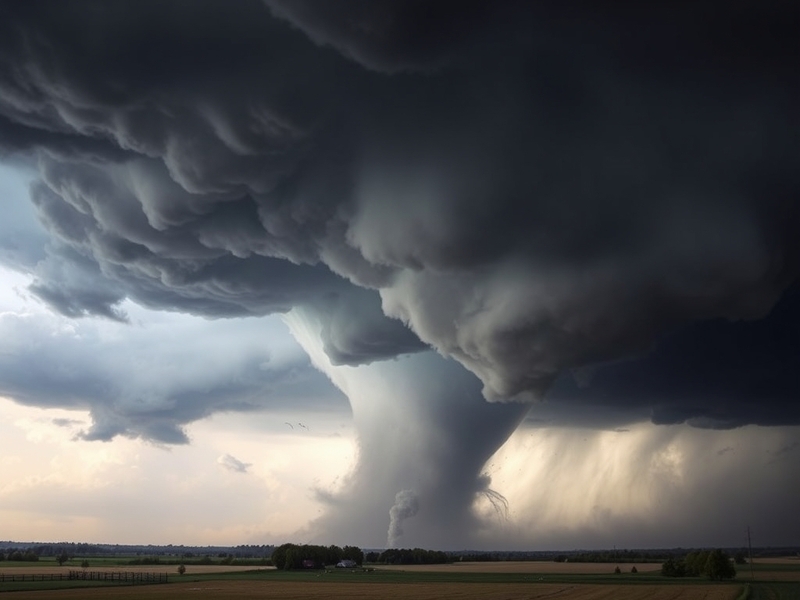
Wisconsin’s tornado season arrives with little warning, yet its impact lingers long after the sirens fade. The state averages 23 tornadoes annually, with peak activity from May through August, when warm, moist air from the Gulf of Mexico collides with cooler systems rolling in from the northwest. These storms don’t just appear suddenly—they develop from supercell thunderstorms, which can produce the most violent tornadoes on Earth. In Wisconsin, the Enhanced Fujita Scale (EF-Scale) measures their intensity, with EF2 tornadoes capable of tearing roofs off homes and uprooting large trees, while EF3 and above can level entire neighborhoods.
Last year, Wisconsin saw 21 tornadoes, including a rare EF3 that carved a 33-mile path through Dane and Jefferson counties. The storm injured 23 people and caused $30 million in damage, a reminder that even well-prepared communities can face devastation. Forecasters at the National Weather Service (NWS) in Milwaukee/Sullivan emphasize that Wisconsin’s tornadoes often form quickly, sometimes within 10 to 30 minutes of storm development. This unpredictability makes real-time alerts critical, especially for rural areas where cell service may be spotty.
Residents in counties like Fond du Lac, Sheboygan, and Waushara have learned to treat every severe thunderstorm warning as a potential precursor to a tornado. The NWS issues three types of alerts: watches, warnings, and emergency warnings. A tornado watch means conditions are favorable for tornadoes, while a warning indicates a tornado has been sighted or detected by radar. Emergency warnings are reserved for confirmed, life-threatening tornadoes moving toward populated areas.
How Wisconsin’s Tornado Alarms Work
The state’s warning system relies on a mix of technology and community networks. The NWS uses Doppler radar to detect rotation within storms, often spotting the telltale “hook echo” signature of a potential tornado. When rotation is confirmed, meteorologists issue a tornado warning for specific counties or portions of counties. Local emergency management offices then activate outdoor warning sirens—a system that dates back to the 1960s but remains a vital first line of defense.
Sirens are tested on the first Wednesday of every month at 1 p.m., but their effectiveness depends on proximity and timing. In rural areas, residents may only hear sirens if they’re within a mile or two of a siren tower. That’s why many communities now supplement sirens with Wireless Emergency Alerts (WEA) sent to smartphones, emergency alert radios, and even some smart home devices. The NWS also partners with local media to broadcast live coverage during storms, including drone footage from Dave’s Locker News that shows approaching tornadoes in real time.
Yet technology alone isn’t enough. Wisconsin’s tornado preparedness programs stress the importance of dual-channel communication. For example, the Dave’s Locker Analysis team found that counties with active storm spotter networks—where trained volunteers report ground-level conditions—had a 40% higher lead time on tornado warnings. These spotters, often amateur radio operators or emergency responders, provide critical updates that radar can’t capture, such as debris rotation or funnel cloud formation.
Counties Most at Risk—and Why
Wisconsin’s tornado risk isn’t evenly distributed. The southern and central regions bear the brunt of activity, particularly in a corridor running from La Crosse to Fond du Lac. This area, sometimes called the “Tornado Alley of the North,” sees more frequent and intense storms due to its proximity to the warm, humid air from the Mississippi River Valley. Counties like Vernon, Richland, and Sauk have recorded multiple tornadoes in a single season, with some storms producing multiple vortices that tear through multiple towns.
Northern Wisconsin, while less prone to tornadoes, isn’t immune. In 2019, an EF2 tornado touched down in Oneida County, damaging cabins and forests near Rhinelander. The region’s risk comes from a different pattern: fast-moving cold fronts colliding with lingering summer heat, creating short-lived but powerful storms. Residents in these areas often underestimate their vulnerability, assuming tornadoes only strike the southern half of the state.
Wisconsin’s top 5 tornado-prone counties (1950–2023):
- Waukesha County: 47 tornadoes, including an EF2 in 2005 that injured 20 people in Brookfield.
- Dane County: 45 tornadoes, most recently an EF3 in 2022 that traveled 33 miles through Cottage Grove and Sun Prairie.
- Jefferson County: 39 tornadoes, often hit by storms spinning off Lake Michigan’s lake breeze boundaries.
- Fond du Lac County: 37 tornadoes, including a deadly EF3 in 1980 that killed three people near Oakfield.
- Rock County: 35 tornadoes, with a notable EF2 in 2018 that damaged homes in Janesville.
These numbers highlight a troubling trend: Wisconsin’s tornadoes are becoming more erratic. Climatologists at the University of Wisconsin-Madison note that while the total number of tornadoes hasn’t increased significantly, the window for severe weather has expanded. Storms now occur earlier in spring and later into fall, catching communities off guard when they’re least prepared.
Preparation and Response: What Works—and What Doesn’t
When a tornado warning is issued, seconds count. Yet many Wisconsinites still rely on outdated methods. A 2023 survey by the Wisconsin Emergency Management (WEM) found that only 58% of residents have a designated safe room in their home, and just 42% practice tornado drills with their families. The WEM recommends a shelter-in-place strategy that includes:
- Interior rooms on the lowest floor: Basements are ideal, but interior bathrooms or closets on the first floor work in a pinch. Avoid windows and exterior walls.
- Cover your body: Use a mattress, heavy blankets, or a helmet to protect against flying debris. A study from the National Oceanic and Atmospheric Administration (NOAA) found that head injuries account for 30% of tornado-related fatalities.
- Have multiple alert systems: Sirens, weather radios, and smartphone alerts should all be used together. A single source of information can fail, especially during power outages.
- Plan for pets and livestock: Keep leashes, carriers, and pet first-aid kits near your shelter. Large animals like cows and horses should be moved to lower ground if time permits.
Public response to warnings varies widely. In urban areas like Milwaukee, residents are more likely to take immediate action, while rural communities—especially farmers—may delay seeking shelter due to concerns about livestock or crops. This discrepancy has led to preventable injuries. In 2021, an EF1 tornado near Green Bay injured a man who was checking on his barn after the warning was issued. He survived by taking cover under a tractor, but the incident underscored the need for better education in agricultural areas.
Emergency responders also face challenges. Wisconsin’s volunteer fire departments, which handle 90% of the state’s fire and rescue calls, often lack the resources to deploy advanced storm-tracking technology. Some departments have turned to drones to assess damage post-storm, but real-time tracking remains a struggle. The NWS is piloting a program called “Impact-Based Warning” in Wisconsin, which provides more detailed information about a tornado’s potential damage. For example, a warning might specify “damage expected to homes and vehicles” rather than a generic “tornado warning.”
The Human Cost—and How to Reduce It
Tornadoes in Wisconsin don’t just destroy property—they reshape lives. Survivors often describe the sound of an approaching tornado as a freight train or jet engine, a deafening roar that drowns out warnings. The psychological toll is significant: studies show that 30% of tornado survivors experience PTSD symptoms, including flashbacks and anxiety during severe weather. Children and the elderly are particularly vulnerable, with some older adults refusing to evacuate due to mobility issues or distrust of modern warning systems.
Recovery is another long-term challenge. After the 2022 EF3 tornado in Dane County, the Federal Emergency Management Agency (FEMA) approved $12 million in public assistance, but many homeowners struggled to navigate the bureaucracy of rebuilding. Local nonprofits like Tornado Recovery Wisconsin stepped in to help, offering grants for uninsured losses and mental health support. Yet gaps remain, especially in low-income communities where insurance coverage is sparse.
Looking ahead, climate change could worsen Wisconsin’s tornado risk. Warmer temperatures mean more moisture in the air, fueling stronger thunderstorms. Researchers at the Cooperative Institute for Meteorological Satellite Studies (CIMSS) predict that by 2050, Wisconsin could see a 15% increase in severe weather days. This shift demands proactive measures, from updating building codes to retrofitting homes with safe rooms. The state legislature recently allocated $5 million for a tornado-safe room grant program, but advocates argue it’s not enough.
The lesson is clear: Wisconsin’s tornado warnings save lives, but they’re only as effective as the response they inspire. Whether you’re a farmer in Vernon County or a homeowner in Waukesha, preparation isn’t optional—it’s essential. The next time the sirens blare, will you be ready?