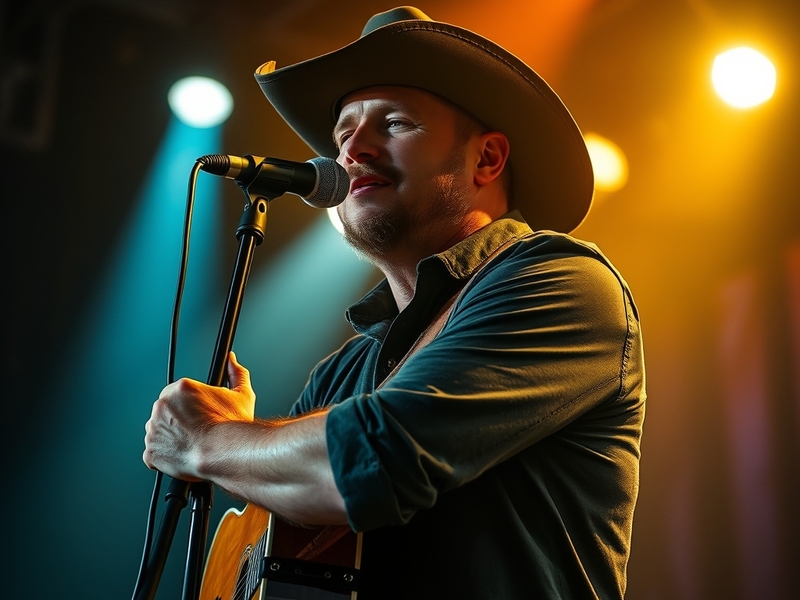
Gunner Rivers’ rise in the country music scene has been marked as much by raw talent as by the physical toll of touring. The 25-year-old singer-songwriter, whose gritty vocals and narrative-driven lyrics have earned him a dedicated following, recently faced a setback that’s put his momentum on pause. A leg injury sustained during a performance in Boise, Idaho, has sidelined Rivers for the foreseeable future, forcing cancellations and raising questions about his recovery timeline and future projects.
The incident that changed the tour
Rivers was mid-set on a sweltering July evening when he slipped on a wet stage surface, landing awkwardly on his left leg. The fall was sudden, captured on cell phone footage that quickly spread across social media. Within minutes, fans and industry insiders alike expressed concern, with many noting the severity of the injury as Rivers grimaced and was unable to put weight on the leg. Emergency responders on-site confirmed a possible fracture, and Rivers was immediately transported to a local hospital where X-rays revealed a displaced fibula fracture.
“It was one of those moments where time seemed to stop,” said a crew member who requested anonymity. “Gunner’s usually the one keeping the energy high, but that night, the whole room went quiet when he went down. He didn’t even scream—just clenched his jaw and let the medics do their job.” The injury occurred during the fifth song of a 90-minute set, disrupting what had been a high-energy show. Rivers managed to complete the performance with assistance but was visibly in pain.
Immediate fallout: cancellations and fan reactions
The injury prompted Rivers to cancel the remaining dates on his summer tour, including stops in Denver, Salt Lake City, and Seattle. His team announced the cancellations within hours, citing medical advice and the need for surgery. Fans reacted swiftly on social media, flooding Rivers’ accounts with messages of support and well-wishes. By the next morning, the hashtag #GunnerStrong had begun trending, with thousands sharing their favorite concert memories and hoping for a speedy recovery.
Among the canceled shows was a highly anticipated performance at the Boise Events Center, where Rivers was set to co-headline with a rising folk artist. The venue issued a statement expressing disappointment but emphasized the importance of Rivers’ health. “We’ve worked with Gunner’s team before and know how dedicated he is to his craft,” said a venue spokesperson. “This isn’t the kind of thing anyone takes lightly, and we fully support his decision to prioritize recovery.”
For fans who had traveled long distances or purchased non-refundable tickets, the cancellations sparked frustration. Some demanded refunds, while others requested ticket vouchers for future shows. Rivers’ management team responded by offering refunds within 30 days and vouchers at 50% face value for rescheduled dates, which are expected to be announced in the coming weeks.
Road to recovery: what comes next?
Rivers underwent surgery two days after the injury to realign the fractured fibula and stabilize the bone with a metal plate and screws. His surgeon, Dr. Amelia Chen of Boise Orthopedic Specialists, described the procedure as “routine for this type of injury” but cautioned that full recovery could take months. “Weight-bearing activities will be restricted for at least six to eight weeks,” Dr. Chen told reporters. “After that, physical therapy will be crucial to rebuild strength and mobility.”
Rivers shared a brief update on his Instagram Story the day after surgery, sitting in a hospital bed with his leg elevated and a cast extending from his ankle to mid-calf. “Thanks for all the love,” he wrote. “This sucks, but I’m in the best hands. See you all when I’m back on my feet—literally.” The post, though short, resonated with fans, many of whom left comments encouraging him to take his time.
His team has already begun rescheduling tour dates, with priority given to fall and winter stops. However, the timeline remains uncertain. “We’re working with the venues to find new dates that work for everyone,” said Rivers’ tour manager, Jason Cole. “Gunner’s focused on rehab right now, so we’re taking it week by week. Our goal is to have him back on stage before the end of the year.”
In the meantime, Rivers has turned to studio work, recording new material from his home in Nashville. He’s been posting short clips on social media, offering fans a glimpse into the creative process. One clip showed him sitting in a studio chair, strumming an acoustic guitar with his cast propped up on a stool. “Music’s the one thing that keeps me going,” he captioned the video. “Even if I can’t perform, I can still write and record.”
Broader implications: how injuries shape careers
Rivers’ injury is a stark reminder of the physical demands placed on touring musicians. Unlike athletes, whose bodies are often the primary focus of conditioning, musicians—especially vocalists and frontmen—frequently push through pain to deliver performances. The industry has seen its share of career-altering injuries, from Vince Neil’s back surgeries to Keith Richards’ various ailments, each forcing a reckoning with mortality and sustainability.
For Rivers, this moment could serve as a turning point. His second studio album, Dust and Echoes, released earlier this year to critical acclaim, had already cemented his place in the modern country scene. But with touring halted, questions arise about how he’ll maintain visibility. “Touring is the lifeblood of an artist’s career,” said music journalist Mara Blake. “It’s not just about the money—it’s about the connection. Fans remember a live show more than a record. When that’s taken away, the clock starts ticking.”
There’s also the financial strain. Touring is expensive, and cancellations often lead to lost revenue and canceled endorsement deals. Rivers recently signed with a major guitar brand and had planned a series of branded performances. His team has not confirmed whether those appearances will be postponed or canceled entirely.
Yet, history shows that setbacks can sometimes fuel creativity. Artists like Chris Stapleton and Brandi Carlile have used breaks to refine their sound and emerge stronger. Rivers’ ability to adapt will be key. Whether through stripped-down acoustic sessions, lyric videos, or even a memoir-style documentary, he has options to stay relevant without stepping on stage.
What fans can expect moving forward
For now, Rivers’ social media presence remains active, offering fans a mix of behind-the-scenes recovery updates and lighthearted content. He’s also hinted at a possible acoustic livestream from his home studio, giving followers a chance to interact directly. Such initiatives could help maintain fan engagement during the downtime.
His team has also emphasized the importance of mental health during recovery. “Gunner’s always been someone who thrives on connection,” said his publicist, Priya Mehta. “We’re encouraging him to take this time to recharge, not just physically but mentally. The music will always be there.”
Fans looking for alternatives have turned to Rivers’ existing catalog. Streams of his album Dust and Echoes surged by 40% in the week following the injury, and merchandise sales have remained steady. The outpouring of support suggests that his audience isn’t going anywhere—it’s just waiting for him to return.
As for the road to recovery, Rivers’ timeline mirrors that of many athletes: gradual progress, setbacks, and small victories. He’s already begun light physical therapy, focusing on range-of-motion exercises. His first milestone will likely be walking without crutches, followed by gradual weight-bearing. The ultimate goal? Standing on stage again, guitar in hand, ready to deliver the energy that’s become his signature.
The question isn’t whether Rivers will bounce back—it’s how he’ll use this time to grow. For a young artist with so much ahead, the pause might just be the push he needs.