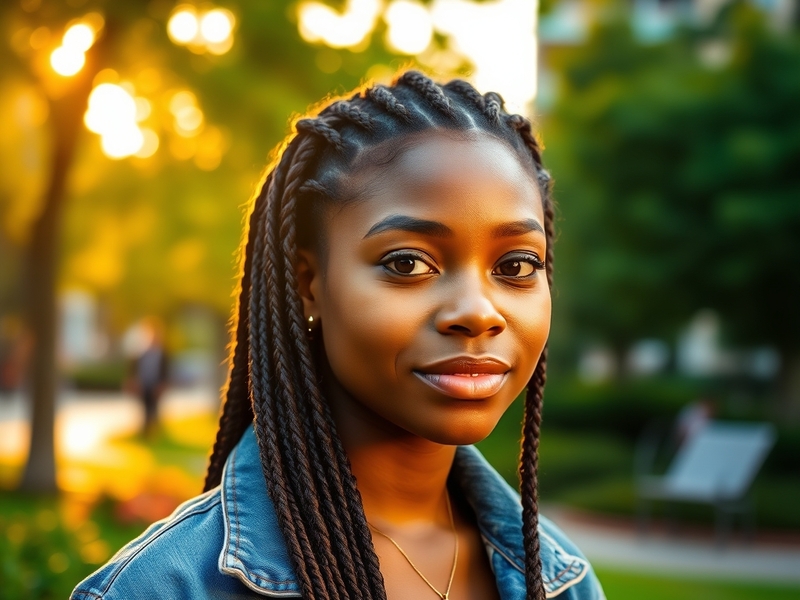
N Kiyla Jasmine Thomas has quietly built one of the most compelling creative portfolios of the last decade. Born in Atlanta and raised between Georgia and New York, Thomas emerged from the city’s vibrant arts scene in the early 2010s, when digital storytelling began reshaping how emerging artists connect with global audiences. Her work spans photography, mixed-media installation, and immersive digital experiences, often exploring themes of identity, migration, and the African diaspora. While her name isn’t yet a household one in mainstream art circles, within avant-garde and digital media communities, she’s known as a pioneer—someone who blends analog textures with algorithmic aesthetics long before they became industry buzzwords.
The Rise of a Transdisciplinary Creator
Thomas’s early career was marked by rapid experimentation. After studying visual arts at the School of the Art Institute of Chicago, she moved to Brooklyn in 2014, where she found a home in the city’s underground art scene. It was there that she began blending film photography with digital manipulation, creating layered images that felt both nostalgic and futuristic. Her 2016 series Crossroads in Chromatic gained attention for its use of infrared film and augmented reality overlays, allowing viewers to “unlock” hidden narratives via smartphone. Critics noted how the work anticipated the rise of AR in contemporary art—a prescient move that would later influence a generation of digital artists.
By 2018, Thomas had begun collaborating with musicians, fashion designers, and technologists across three continents. She designed album covers for experimental jazz artists, directed short films for indie labels, and even contributed visuals to music festivals in Berlin and Lagos. Her ability to straddle multiple creative disciplines made her a sought-after collaborator, but she maintained a fiercely independent ethos. In interviews, she often emphasized process over product, stating that “the medium should serve the message, not the other way around.” This philosophy has kept her work from being easily categorized—whether she’s shooting a portrait in a Lagos market or projecting interactive light installations onto colonial-era buildings in Cape Town, Thomas’s art feels rooted in place but unbound by borders.
A Global Practice Rooted in Local Stories
What sets Thomas apart is her commitment to storytelling that feels both hyper-local and universally resonant. Her 2020 project Waters of Return took her from the rice fields of Sierra Leone to the canals of Venice, documenting how climate change and diasporic memory intersect in coastal communities. The project culminated in a multimedia exhibition that traveled from Dakar to Rotterdam, using soundscapes recorded on-site and 3D-printed sculptures derived from ancestral fishing tools. Critics praised the work for its refusal to exoticize its subjects, instead presenting them as active participants in shaping their own narratives.
Thomas’s global perspective is also evident in her pedagogical work. Since 2021, she has led workshops in Accra, Kingston, and Medellín, focusing on decolonial approaches to digital art. Her curriculum often begins with a simple question: “Whose tools are we using?” By interrogating the politics of software, algorithms, and even camera lenses, she encourages artists from the Global South to reclaim agency over their creative processes. One participant, a young photographer from Nairobi, later told a local paper that Thomas’s workshop “changed how I see my phone not just as a tool, but as a site of resistance.”
Her influence extends beyond individual artists. In 2023, Thomas co-founded Studio Diaspora, a collective that supports creatives of African descent working in technology and new media. The initiative has already funded over 50 projects, from a virtual reality archive of Black oral histories to an AI-generated poetry platform trained on Caribbean folklore. In an interview with The Guardian, she explained, “We’re not just making art for the future—we’re building the infrastructure for it.”
Challenges and the Weight of Visibility
Despite her growing influence, Thomas has been vocal about the challenges faced by Black women in global art and tech spaces. In a 2022 lecture at the Tate Modern, she discussed the “double erasure” of being both underestimated as an artist and overlooked as a technologist. She recounted instances where galleries assumed her white male collaborators were the primary visionaries, or where tech platforms co-opted her concepts without credit. “Visibility isn’t just about being seen,” she said. “It’s about being respected—and respect requires structural change.”
Her response has been twofold: creating safe(r) spaces and demanding accountability. Through Studio Diaspora, she implemented a transparent credit system for all projects, ensuring collaborators are fairly attributed. She also publicly called out platforms that profit from Black digital culture without reciprocity, most notably a viral AI art generator that used her style without permission. The incident sparked wider conversations about ethical AI in creative industries, with Thomas penning an op-ed for Artnet titled “Who Owns the Dream?” The piece went viral in art and tech circles, amassing over 200,000 shares and prompting policy discussions at several major institutions.
The Road Ahead: What’s Next for N Kiyla Jasmine Thomas
Looking forward, Thomas shows no signs of slowing down. She’s currently developing Echo Chamber, a multi-year project that will use blockchain technology to create decentralized archives of Black digital art. The goal isn’t just preservation, but liberation—removing gatekeepers and giving artists full control over their work’s lifecycle. “The internet promised democratization,” she told Creative Review. “But too often, it’s just reinforced the same old hierarchies. I want to build something that actually lives up to the promise.”
She’s also returning to her roots in photography with a new series shot entirely on 8mm film, a deliberate rebellion against the ephemerality of digital culture. The project, titled Light Leaks, will premiere in 2025 at the Zeitz MOCAA in Cape Town, coinciding with the museum’s reopening after a major renovation. The exhibition will feature a live component where visitors can contribute their own light leaks—literally and metaphorically—to a communal film strip.
As the art world continues to grapple with questions of access, authenticity, and ownership, Thomas remains a vital voice. She doesn’t just create art; she interrogates the systems that shape how art is made, seen, and remembered. In an era where digital tools can either liberate or exploit, her work serves as both a mirror and a map—reflecting the complexities of our time while pointing toward more equitable futures.
For those watching the intersections of art, technology, and identity, N Kiyla Jasmine Thomas isn’t just an artist to watch. She’s a force to be reckoned with.