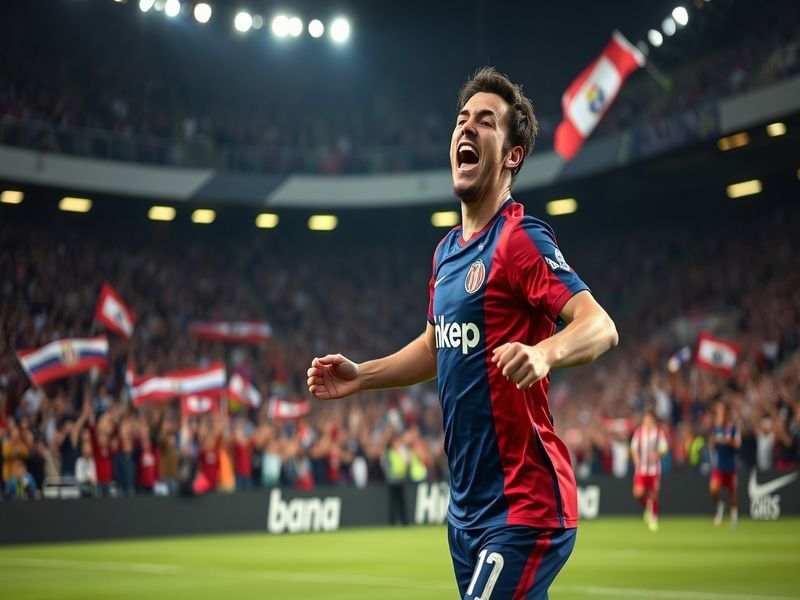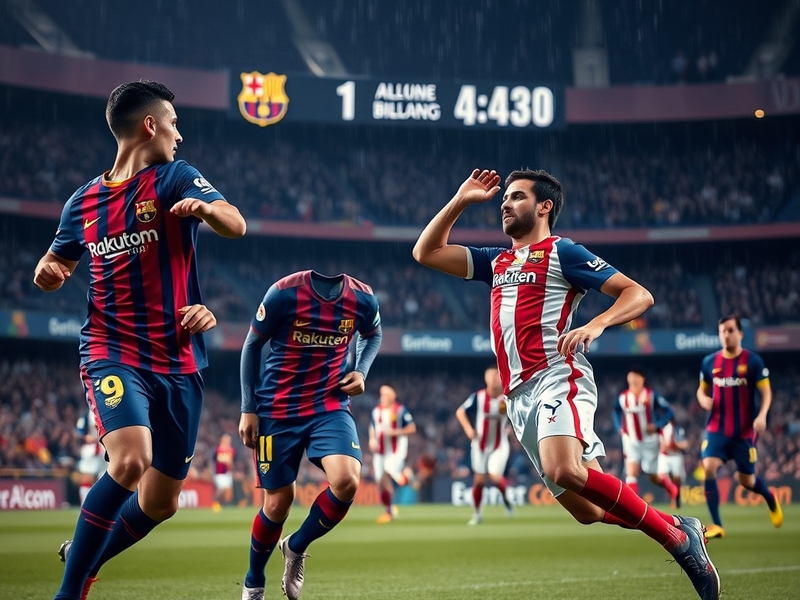
FC Barcelona’s latest clash with Athletic Bilbao delivered more than just a three points—it exposed tactical fissures, reaffirmed league unpredictability, and reminded Blaugrana faithful that La Liga remains anyone’s playground. When the final whistle blew at Camp Nou, the 2-1 scoreline flattered Barça, masking a performance that oscillated between brilliance and bewilderment. The visitors from Bilbao, never content to be spectators, absorbed relentless pressure before exploiting two set-piece lapses that ultimately decided the match. This result not only nudged Barça closer to the European places but also underscored the widening chasm between their domestic ambitions and Champions League ambitions.
Where Barça stand in the La Liga table after the Athletic Bilbao win
Victory over Athletic Bilbao lifted Barcelona to fifth place on 47 points from 28 games, a position that feels both precarious and promising. The Catalans trail fourth-placed Real Sociedad by just four points, a margin narrow enough to keep European dreams alive but large enough to expose Barça’s inconsistency. Ahead lie 10 fixtures, including derbies against Espanyol and Real Madrid, and every point will matter. The standings reveal a league where Atlético Madrid’s early-season dominance has softened, giving way to a congested top four battle featuring five teams within seven points of each other. Barça’s home form remains a fortress—12 wins in 14 league outings—but their away record betrays fragility, with only three clean sheets on the road this season.
Key league metrics for Barcelona
- Points: 47 (5th place)
- Wins: 14
- Draws: 5
- Losses: 9
- Goal difference: +29
- Away form: 4 wins, 3 draws, 7 losses
Perhaps most concerning is Barça’s uneven distribution of goals. Robert Lewandowski has delivered when needed, but the midfield has struggled to generate consistent supply. Pedri’s absence through injury has left a void that Gavi and Frenkie de Jong have only partially filled, resulting in predictable patterns that opponents now target. Until Barça rediscover the fluidity that dismantled Real Madrid in December, their Champions League return will remain hostage to domestic inconsistency.
How Athletic Bilbao’s tactics unsettled Barça’s rhythm
Athletic Bilbao arrived in Barcelona with a game plan tailored to exploit Barça’s set-piece frailties, and for 65 minutes it worked. Under manager Ernesto Valverde, Bilbao prioritized compactness in midfield, compressing spaces between the lines and inviting Barça to play through them. The visitors’ 5-3-2 shape frustrated Barça’s usual positional play, forcing long-range attempts that rarely troubled Marc-André ter Stegen. Bilbao’s midfield trio of Dani García, Unai López, and Oihan Sancet stifled Barça’s rhythm, intercepting 18 passes compared to Barça’s 22 in the opening half.
The turning point came in the 67th minute when Bilbao exploited a poorly timed Barça offside trap to score via Iñaki Williams. Minutes later, a corner routine executed to perfection allowed Yuri Berchiche to power a header past ter Stegen, sealing the win. These moments highlight Barça’s vulnerability at set pieces, an area that has cost them dearly this season. While Xavi Hernández has improved the team’s collective pressing, the defensive structure still cracks under organized transitions. Bilbao’s two goals came from dead-ball situations, a statistic that places Barça among La Liga’s most vulnerable teams in this phase of play.
What this result means for Barça’s European and domestic ambitions
For Barça, the win against Bilbao cannot be viewed in isolation. It arrives at a critical juncture where every league point carries dual significance: securing a top-four finish and maintaining focus ahead of Champions League quarter-finals against PSG. The draw in Paris exposed Barça’s offensive limitations, and while injuries have hampered preparation, the Catalan club must reconcile domestic urgency with European priorities. A top-four finish guarantees next season’s Champions League football, a financial lifeline they cannot afford to relinquish.
Domestically, Barça’s pursuit of the title is effectively over. Real Madrid’s relentless form and Atlético’s resilience leave little room for optimism. Instead, the focus shifts to securing a Champions League spot while avoiding the Europa League, a competition that could further dilute their ambitions. This match also served as a reminder that Barça’s identity remains under reconstruction. The days of total dominance are behind them, replaced by a pragmatic approach that prioritizes results over aesthetics. Xavi’s side must now navigate a congested fixture list without surrendering to fatigue or complacency.
Barça’s immediate priorities
With 10 matches remaining, Barça face a schedule that demands tactical discipline and squad rotation. The following challenges loom large:
- Injury management: Lewandowski, Gavi, and Araújo have all missed recent games. Squad depth will be tested against Espanyol and Real Madrid.
- Set-piece reorganisation: A defensive audit is necessary after conceding six goals from dead-ball situations in the last 10 games.
- Midfield cohesion: Restoring Pedri’s influence remains pivotal. Without his creativity, Barça’s attack lacks dynamism against low blocks.
- Mental resilience: Psychological recovery after European setbacks will be crucial ahead of high-pressure fixtures.
Barça’s next fixture against Espanyol in the Derbi Barceloní offers a chance to reclaim local bragging rights, but the real test arrives against Real Madrid at the Santiago Bernabéu. A positive result there could re-energise the squad and send a message to both domestic rivals and European opponents. Until then, every point counts, and complacency is a luxury Barça cannot afford.
Looking ahead: Can Barça rediscover their La Liga identity?
The Athletic Bilbao result will be remembered more for what it exposed than what it achieved. Barça’s league campaign has been a tale of two halves: a first period marred by defensive fragility and a second marked by incremental improvement. Yet, the underlying issues persist. High pressing intensity without midfield protection, predictable attacking patterns, and reliance on individual brilliance over collective endeavour. These are not insurmountable flaws, but they require urgent rectification if Barça are to finish the season strongly.
For now, Barça sit fifth, clinging to the fringes of the title race while eyeing a Champions League return. The road ahead demands more than just results—it requires a redefinition of identity. Xavi’s project is still in its formative stages, and while silverware remains the ultimate goal, consistency in performance must take precedence. The next few weeks will determine whether Barça can rediscover their swagger or continue to navigate the unpredictable waters of modern La Liga.
One thing is certain: complacency is not an option. The league remains finely poised, and every slip-up risks derailing their ambitions. Barça’s journey from crisis to consolidation is still underway, and the path forward will be shaped not by occasional brilliance, but by sustained resolve.