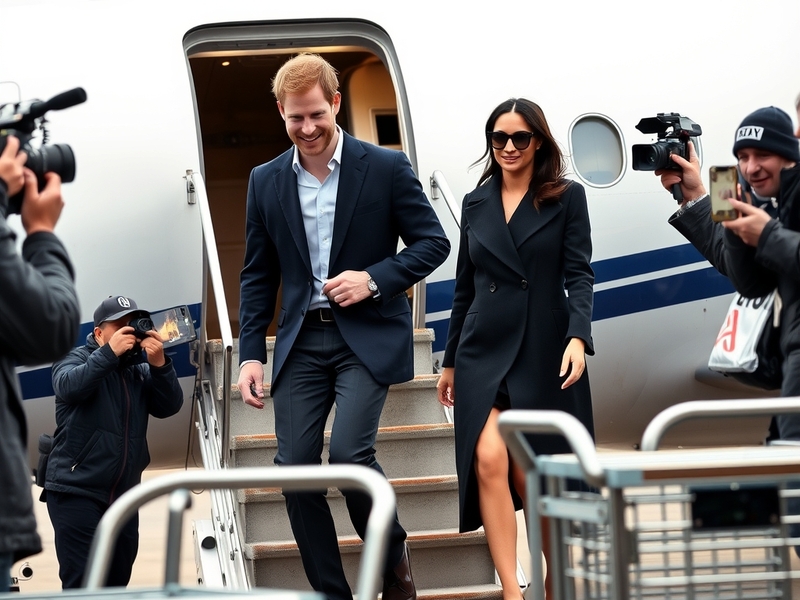
After years of stepping back from royal duties and relocating across the Atlantic, Prince Harry and Meghan, Duchess of Sussex, returned to the United Kingdom this month. Their visit marked one of their most significant public appearances since their departure from senior royal life in early 2020. The trip was brief but closely watched, with every movement dissected by media outlets and social platforms alike.
The couple’s first stop was London, where they were seen attending a private event at a historic venue in Kensington Palace. Later, they traveled north to Edinburgh, Scotland, where they visited a community center and met with local leaders. The carefully planned itinerary suggested a balance between personal connection and public engagement—something they have emphasized in their post-royal roles as advocates for mental health, charitable causes, and media reform.
Why this return matters beyond the royal bubble
The Duke and Duchess of Sussex’s visit is not merely a family reunion or a nostalgic trip. It signals a strategic recalibration in their public presence and influence. After years of controversy and criticism—much of it centered on media portrayal and institutional reactions—their return to UK soil represents an attempt to reposition themselves within the British cultural and philanthropic landscape.
Harry and Meghan have spent the past four years building a parallel platform through their Archewell Foundation, focusing on mental health awareness, support for survivors of sexual violence, and community empowerment. Their UK visit allowed them to reconnect with grassroots organizations and donors who have supported their initiatives from afar. It also positioned them to leverage British institutions and networks in ways that strengthen their global advocacy work.
Moreover, the timing coincides with ongoing debates about monarchy, media ethics, and racial representation in the British establishment. By stepping back into the public eye in the UK, they are not just visiting—they are intervening in conversations that shape national identity and public trust.
A closer look at their itinerary and public reception
Their two-day visit was tightly curated but still left room for unscripted moments. In London, they attended an evening reception hosted by a well-known philanthropist at a private members’ club near Kensington Palace. While no official photos were released, several guests shared brief social media posts, confirming their presence. The event reportedly focused on mental health initiatives, aligning with Archewell’s core mission.
Their journey to Edinburgh was more visible. They visited The Welcoming, a community organization supporting refugees and migrants, and met with staff and service users. Video footage showed Meghan engaging warmly with children in a play area, while Harry spoke with local volunteers. The couple’s willingness to engage with frontline services—rather than high-profile gala events—reflected a deliberate choice to connect with everyday communities.
Public reaction was mixed. Some supporters praised their commitment to service and authenticity. Critics, including tabloid commentators, questioned the sincerity of their return, citing past tensions with the royal family and media. Social media saw predictable divides: some users celebrated their global impact, while others framed the visit as a publicity stunt ahead of an anticipated Netflix documentary or memoir release.
Despite the polarized response, one thing was clear: every interaction was framed through the lens of legacy. Whether they intended it or not, Harry and Meghan’s return served as a reminder that their influence extends far beyond royal protocol—it now resides in the realms of social change, digital culture, and independent philanthropy.
Broader implications: media, monarchy, and modern influence
Their visit raises important questions about the evolving role of the monarchy in a digital-first world. The British royal family has long relied on tradition, deference, and media control to maintain its image. Harry and Meghan’s decision to step away—and their subsequent strategy of building independent platforms—challenges that model. Their return to the UK is not a retreat but a redefinition of influence.
At the same time, their presence complicates the narrative of royal disengagement. While they are no longer working royals, they are still members of the family. Their ability to move through the UK—attending events, visiting charities, and meeting officials—demonstrates that royal status, while diminished in formal terms, still carries symbolic weight.
For the monarchy itself, their visit is a litmus test. How institutions respond—whether with warmth, distance, or silence—will be scrutinized. Some analysts suggest the Crown may be quietly recalibrating its public stance, recognizing that outright opposition could backfire in an era where public figures increasingly control their own narratives.
Then there’s the media. The British press, especially tabloids, has played a central role in shaping the Sussexes’ story. Their return to the UK puts journalists in a delicate position: cover them as public figures, or continue framing them as controversial outsiders? The answer will influence not just their reputation, but the future of royal coverage itself.
Their visit also underscores the growing power of digital storytelling. With millions following their every move online, their presence in the UK wasn’t just a physical event—it was a global media event. Platforms like Instagram and Twitter amplified every moment, turning a private family visit into a cultural signal.
What comes next?
While no major public engagements were announced beyond their confirmed schedule, the visit was widely interpreted as a soft launch for future initiatives. Speculation has already begun about a potential autumn tour, a new Archewell project, or even a return to advocacy within the Commonwealth. Whatever the case, one thing is certain: Harry and Meghan are not returning to the monarchy—they are returning to influence on their own terms.
For observers, the challenge is to see past the headlines and celebrity noise. Their visit wasn’t just about nostalgia or media optics. It was a strategic, values-driven move to reassert their place in a world where traditional power structures are being redefined every day.
As they left the UK, the question wasn’t whether they would return—but how their next steps would reshape the conversation around family, duty, and legacy in the 21st century.
Key takeaways from their UK visit
- Strategic repositioning: Their visit was less about nostalgia and more about reasserting influence through advocacy and independent platforms.
- Grassroots focus: They prioritized community organizations over high-profile events, aligning with their foundation’s mission.
- Media tension: Their presence reignited debates about royal media relations and the ethics of coverage.
- Symbolic power: Even as non-working royals, their movements still carry weight in cultural and political discourse.
- Digital amplification: Every moment was magnified online, turning a private trip into a global narrative.
If their return is any indication, the Duke and Duchess of Sussex are not just visiting the UK—they are redefining what it means to lead from the outside.