The Rise of Xiao Long: How a Small Dumpling Captured Global Kitchens
Few foods manage to cross oceans and cultures with the ease of xiao long, the delicate soup dumpling that has quietly become a global ambassador of Chinese cuisine. Unlike the louder, more flamboyant dishes that dominate food trends, xiao long thrives on subtlety—its thin skin, precise pleats, and hidden broth creating an experience that demands attention yet rewards patience. From Shanghai’s steam-filled alleys to Brooklyn’s trendy eateries, this unassuming dumpling tells a story of migration, adaptation, and culinary craftsmanship.
What makes xiao long so compelling is not just its taste but its cultural malleability. It adapts to local palates without losing its essence, a trait that has helped it thrive in cities where dumplings were once exotic. In cities like New York and London, chefs have reimagined xiao long with fillings like truffle pork or vegan mushroom, proving that tradition and innovation can coexist. Yet, even in these reinventions, the dumpling’s core identity remains intact: a burst of savory soup encased in a delicate wrapper, waiting to be savored.
A Brief History: From Shanghai Streets to Michelin Stars
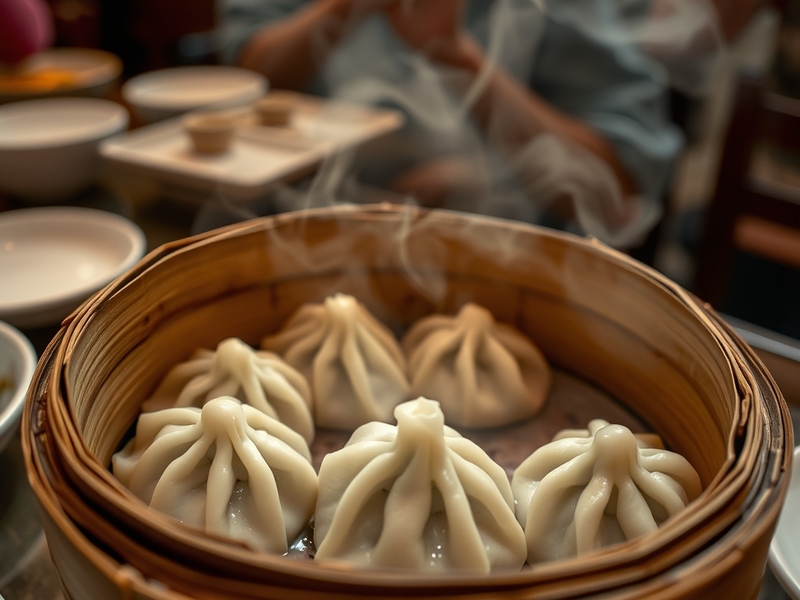
The origins of xiao long are as layered as the dumpling itself. Born in the Jiangnan region of China, particularly around Shanghai, xiao long (小笼包, xiǎo lóng bāo) emerged in the late 19th century as a street food favored by workers and merchants. Its name translates to “little basket bun,” a nod to the bamboo steamer baskets in which it is traditionally cooked. These baskets, stacked high in teahouses and market stalls, became symbols of communal dining, where groups gathered to share steaming baskets of dumplings.
The dumpling’s rise to global prominence began in the 1980s and 1990s, as Chinese immigration surged and Chinatowns worldwide expanded. Restaurants in San Francisco and Toronto introduced diners to xiao long, often serving it as an afterthought alongside more familiar dishes like fried rice or lo mein. But it wasn’t long before the dumpling’s unique appeal began to spread. Food critics and bloggers, drawn to its theatrical presentation—the careful biting and sipping of broth—helped elevate xiao long from a side dish to a must-try experience.
Today, xiao long occupies a rare space in the culinary world: both a comfort food and a gourmet delicacy. High-end restaurants in Shanghai now serve versions with gold-leaf accents or rare ingredients like Matsutake mushrooms. Meanwhile, in cities like Melbourne and Berlin, food trucks and pop-ups offer affordable, no-frills xiao long to crowds of curious eaters. Its journey from humble street snack to global phenomenon reflects broader trends in food culture, where authenticity and accessibility often go hand in hand.
The Art of Making Xiao Long: Precision and Patience
Creating xiao long is as much about skill as it is about passion. The process begins with the dough, which must be rolled thin enough to see through but sturdy enough to hold its shape. The filling, typically a mix of pork, ginger, and gelatinized broth, is chilled to form a jelly-like consistency. This step is crucial—it ensures that when the dumpling steams, the broth melts into a rich liquid rather than leaking out.
The pleating of the wrapper is where artistry truly shines. Master dumpling makers can fold a single xiao long in under 30 seconds, creating dozens of intricate pleats that resemble a tiny, edible flower. These pleats are not just decorative; they allow the dumpling to expand during steaming without bursting. In Shanghai, apprentices train for years to perfect this technique, often under the watchful eye of a mentor who critiques every fold.
Steaming is the final act of this culinary ballet. Traditional bamboo steamers are layered with cabbage leaves or parchment paper to prevent sticking, and the dumplings are arranged with space between each one to allow for even cooking. The timing is precise—too short, and the broth remains gelatinous; too long, and the dumpling dries out. For home cooks attempting xiao long for the first time, the learning curve is steep, but the reward is undeniable: a dumpling that delivers a perfect balance of savory broth and tender meat with every bite.
As demand for xiao long grows, so does innovation in its production. Factories in China now produce frozen xiao long for export, using machines to replicate the pleating process. While some purists argue that handmade dumplings are superior, frozen versions have democratized access to the dish, allowing anyone with a microwave to enjoy a taste of Shanghai at home. This tension between tradition and convenience mirrors broader debates in global cuisine, where authenticity often clashes with scalability.
Xiao Long Around the World: Adaptation and Reinvention
One of the most fascinating aspects of xiao long’s global journey is how it has been reinterpreted in different cultures. In the United States, for example, xiao long is often found in fusion restaurants where chefs experiment with non-traditional fillings. Duck confit xiao long, lobster xiao long, and even dessert versions with red bean or chocolate have appeared on menus from Los Angeles to Chicago. These adaptations cater to local tastes while introducing diners to the dumpling’s versatility.
In Europe, xiao long has found a home in cosmopolitan cities where food scenes thrive on diversity. In London, restaurants like Baozi Inn have built reputations on their xiao long, serving it alongside modern twists like crispy xiao long buns with foie gras. Meanwhile, in Berlin, underground food markets often feature xiao long stalls run by immigrant chefs, offering a taste of home to expat communities. These global variations highlight the dumpling’s ability to bridge cultures, acting as both a cultural artifact and a culinary chameleon.
Yet, not all adaptations are welcomed by purists. Some critics argue that fusion xiao long dilutes the dish’s essence, turning it into a novelty rather than a celebration of tradition. Others point to the rise of “xiao long-inspired” dishes—burgers with xiao long fillings, for example—as evidence of cultural appropriation. These debates reflect broader tensions in global food culture, where authenticity is increasingly commodified and contested.
Despite these challenges, xiao long continues to evolve. In Japan, for instance, xiao long has been adapted to local tastes with fillings like miso pork or shrimp. In Australia, food trucks serve xiao long with native ingredients like kangaroo or wattleseed. These innovations ensure that the dumpling remains relevant, even as it adapts to new environments. For many diners, the appeal of xiao long lies in its ability to surprise—to offer a familiar taste while introducing something unexpected.
The Future of Xiao Long: Tradition Meets Innovation
The next chapter of xiao long’s story will likely be written by technology. As plant-based diets grow in popularity, chefs are experimenting with vegan xiao long fillings made from mushrooms, tofu, or seitan. In 2023, a Shanghai-based startup unveiled a 3D-printed xiao long, complete with intricate pleats and a broth-like filling created from hydrocolloids. While the product is still in its early stages, it hints at a future where tradition and innovation collide in unexpected ways.
Yet, for all its modern adaptations, xiao long’s enduring appeal lies in its simplicity. It is a dish that rewards those who take the time to understand it, whether through a steaming basket in a Shanghai teahouse or a carefully crafted plate in a Michelin-starred restaurant. As global food culture becomes increasingly interconnected, xiao long serves as a reminder that some traditions are worth preserving—even as they evolve.
The dumpling’s journey from Shanghai’s streets to the world’s tables is a testament to the power of food as a cultural bridge. It invites diners to slow down, to savor, and to connect—not just with the flavors on their plate, but with the people and histories behind them. In an era where food trends come and go, xiao long endures because it offers something rare: a moment of pause in a fast-paced world.