Understanding Singapore’s Tropical Climate
Singapore is known for its vibrant culture and bustling economy, but the weather plays a significant role in the daily lives of its residents and visitors. Situated just one degree north of the equator, the city-state experiences a tropical rainforest climate, characterized by high humidity and abundant rainfall throughout the year.
The temperature in Singapore typically ranges from 25°C to 31°C (77°F to 88°F). This consistent warmth is a result of its geographical location. However, the real challenge lies in the humidity levels, which can reach up to 90% at times, making the heat feel even more intense.
Seasons and Rainfall Patterns
Unlike many countries that experience four distinct seasons, Singapore has two main seasons: the wet season and the dry season. The wet season usually occurs from November to January, while the dry season generally spans from February to October. During the wet season, heavy downpours are common, often accompanied by thunderstorms.
Here are key points regarding Singapore’s seasonal weather:
- Wet Season: November to January, with the highest rainfall.
- Dry Season: February to October, with less frequent rain.
- Temperature: Consistently warm, averaging 26-30°C (79-86°F).
- Humidity: Generally high, often exceeding 80%.
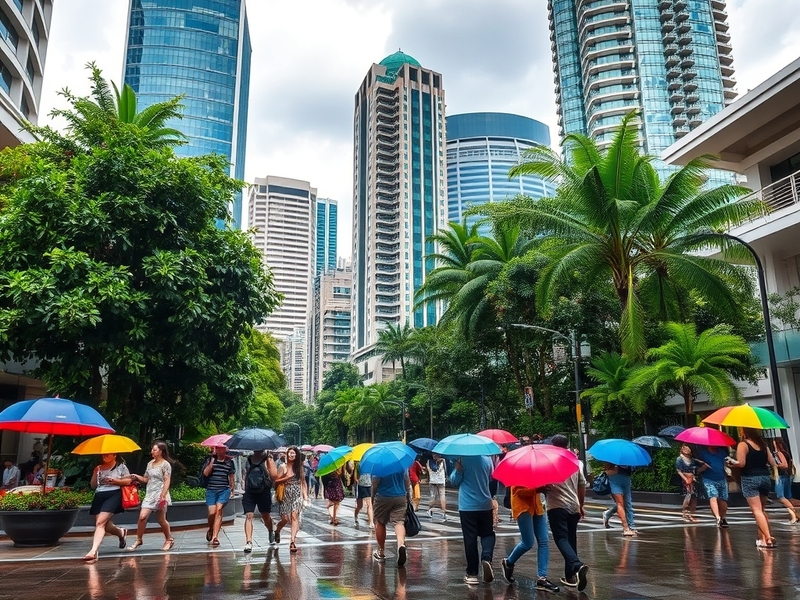
The rainfall can sometimes be unpredictable, leading to sudden downpours that might disrupt outdoor plans. It’s advisable for visitors to carry an umbrella or raincoat at all times.
Impact on Lifestyle and Activities
The weather in Singapore significantly impacts lifestyle choices and daily activities. For instance, the high humidity and heat can deter outdoor activities during the day. Many residents prefer to engage in outdoor sports or activities during the cooler evening hours. Additionally, many public spaces, such as shopping malls and restaurants, are equipped with air conditioning to provide relief from the heat.
Moreover, the weather conditions influence tourism. Tourists are often attracted to Singapore’s attractions, such as the Gardens by the Bay and Sentosa Island. However, the unpredictable rain can lead to changes in itineraries, making it essential for visitors to plan accordingly.
Adapting to Singapore’s Weather
Adapting to Singapore’s climate involves understanding its unique weather patterns and preparing accordingly. Here are some practical tips for both residents and tourists:
- Dress in lightweight, breathable clothing to stay comfortable.
- Stay hydrated by drinking plenty of water throughout the day.
- Plan outdoor activities for early mornings or late afternoons to avoid peak heat.
- Utilize public transportation, which is air-conditioned, to travel comfortably.
- Keep an umbrella handy to deal with sudden rain showers.
By taking these steps, individuals can enjoy their time in Singapore without being overly hindered by the weather conditions.
In conclusion, understanding Singapore’s weather is crucial for anyone looking to spend time in this dynamic city-state. The tropical climate, while often challenging due to high humidity and sudden rain, also contributes to the lush greenery and vibrant atmosphere that Singapore is known for. By adapting to these conditions, residents and visitors alike can fully appreciate the unique experiences that Singapore has to offer.