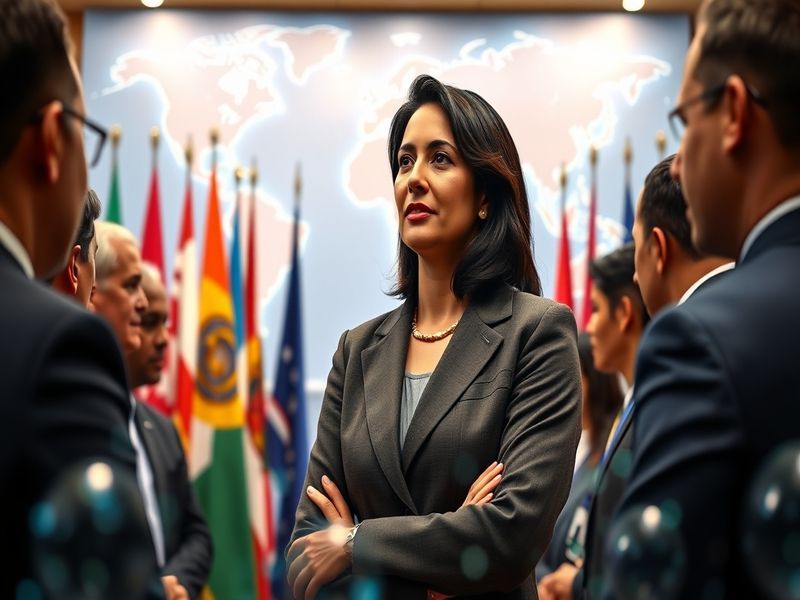
Tulsi Gabbard: From Military Service to Political Influence
Tulsi Gabbard’s career has been defined by contrasts—between military discipline and political idealism, between bipartisan cooperation and partisan division. Born in 1981 in Leloaloa, American Samoa, Gabbard spent much of her childhood in Hawaii, where her father, Mike Gabbard, served in the state legislature. These early experiences shaped her worldview, blending service to community with a deep commitment to public office.
Gabbard enlisted in the Hawaii Army National Guard at 17, becoming one of the first women to complete infantry training in the state. Her deployment to Iraq in 2004 and Kuwait in 2009 exposed her to the realities of war, experiences that later influenced her foreign policy stances. This background set her apart in Congress, where she served as a Democratic representative for Hawaii’s 2nd congressional district from 2013 to 2021. Her military service wasn’t just a résumé highlight; it became a lens through which she analyzed global conflicts, often advocating for restraint in U.S. military interventions.
The 2020 Presidential Campaign: A Candidacy That Challenged the Status Quo
Gabbard’s bid for the 2020 Democratic presidential nomination was one of the most unconventional in modern history. Running as an anti-interventionist progressive, she positioned herself against the establishment, criticizing both major political parties for their foreign policy failures. Her campaign emphasized ending regime-change wars, addressing climate change, and reforming the Democratic Party’s approach to grassroots movements.
While her campaign ultimately failed to gain significant traction—winning only a handful of delegates—it sparked conversations about the role of veterans in politics and the viability of progressive foreign policy in mainstream politics. Gabbard’s critiques of U.S. interventionism resonated with a segment of the electorate disillusioned by decades of military engagements in the Middle East. Yet, her refusal to fully align with progressive orthodoxy on issues like healthcare and social justice also alienated some traditional Democratic voters.
From the Democratic Party to Independent Advocacy: A Shifting Political Identity
In October 2022, Gabbard left the Democratic Party, citing its shift toward what she described as “progressive authoritarianism.” Her departure marked a turning point in her political career, as she transitioned from a party insider to an independent voice. Gabbard’s criticism of the Democratic establishment intensified, particularly regarding issues like gender ideology and free speech, which she argued were being suppressed in the name of progressive values.
This move aligned her with a growing faction of disaffected voters who feel estranged from both major parties. Her critiques of censorship, particularly on social media platforms, have drawn both praise and backlash. Supporters view her as a defender of free expression, while critics argue her positions on certain social issues align more closely with conservative perspectives. Gabbard’s political evolution reflects broader trends in global politics, where traditional party loyalties are increasingly fluid.
Global Influence: Gabbard’s Role in International Discussions
Beyond domestic politics, Gabbard has engaged in global conversations, particularly on issues like U.S.-Russia relations and the war in Ukraine. Her 2017 meeting with Syrian President Bashar al-Assad drew widespread condemnation, with critics accusing her of legitimizing a dictator. Gabbard defended the meeting as an attempt to understand the complexities of the Syrian conflict, arguing that diplomacy should not be abandoned even with adversarial leaders.
Her perspectives on Ukraine have also sparked debate. While she has condemned Russia’s invasion, she has criticized the U.S. government’s approach to the conflict, arguing that prolonged war benefits defense contractors more than the Ukrainian people. These stances have placed her at odds with both the Biden administration and many in her former party, further cementing her role as a contrarian voice in international affairs.
Cultural Impact: How Gabbard Resonates with Diverse Audiences
Gabbard’s appeal spans multiple demographics, from military veterans to libertarian-leaning independents. Her emphasis on ending foreign wars has attracted support from both left-leaning anti-war activists and right-leaning isolationists. Meanwhile, her defense of traditional values—such as her opposition to transgender rights in sports—has endeared her to social conservatives.
Her presence in media and public discourse has also been notable. Gabbard has appeared on platforms like Fox News and Joe Rogan’s podcast, where she has discussed her political views with a mix of intellectual rigor and blunt candor. This cross-platform engagement has helped her reach audiences beyond traditional political circles, solidifying her as a polarizing yet influential figure.
Legacy and Future: What’s Next for Tulsi Gabbard?
As Gabbard continues her political journey, her legacy remains a subject of debate. To her supporters, she is a principled leader unafraid to challenge the status quo. To her detractors, she is a figure who has abandoned progressive ideals in favor of populist rhetoric. What is clear, however, is that her influence extends beyond party lines, shaping conversations about war, free speech, and the future of American democracy.
Speculation about her future political ambitions persists. Some pundits suggest she could run for office again, while others believe her role as a commentator and advocate will take precedence. Regardless of her next move, Gabbard’s career offers a case study in how individual voices can shape global discourse—even when they defy conventional wisdom.
Key Takeaways from Tulsi Gabbard’s Career
- Military Service and Leadership: Gabbard’s background in the Hawaii Army National Guard has been a defining aspect of her public identity, influencing her political views on war and foreign policy.
- Anti-Interventionism: Her opposition to U.S. regime-change wars has made her a unique voice in both domestic and global politics.
- Political Independence: By leaving the Democratic Party, Gabbard has positioned herself as a bridge between disaffected voters across the political spectrum.
- Cultural and Media Influence: Her appearances on diverse media platforms have expanded her reach, making her a fixture in conversations about free speech and political dissent.
For those interested in the intersection of military service and politics, Gabbard’s career offers valuable insights. To explore more about veterans in public office, visit our Politics section.