Howard University: Location, Legacy and Impact in Washington D.C.
Locating Howard University in Washington, D.C.
Howard University stands as one of the nation’s most storied institutions of higher learning, and its campus is situated in the heart of Washington, D.C. Specifically, the university’s main campus occupies 256 tree-lined acres in the upper Northwest quadrant of the city, near the neighborhoods of Adams Morgan, Dupont Circle, and Woodley Park. The campus is bordered by Georgia Avenue to the west and Columbia Road to the north, placing it within walking distance of major landmarks such as Meridian Hill Park and the National Zoo.
This location is no accident. Founded in 1867, Howard was established shortly after the Civil War with a mission to provide education to newly emancipated Black Americans. Its founders chose Washington, D.C.—a city already central to national politics and culture—as the ideal setting to build an institution that would shape leaders, scholars, and activists for generations. Today, the campus remains a hub of intellectual and cultural life, just a short Metro ride from the U.S. Capitol and the White House.
The Campus and Its Architectural Legacy
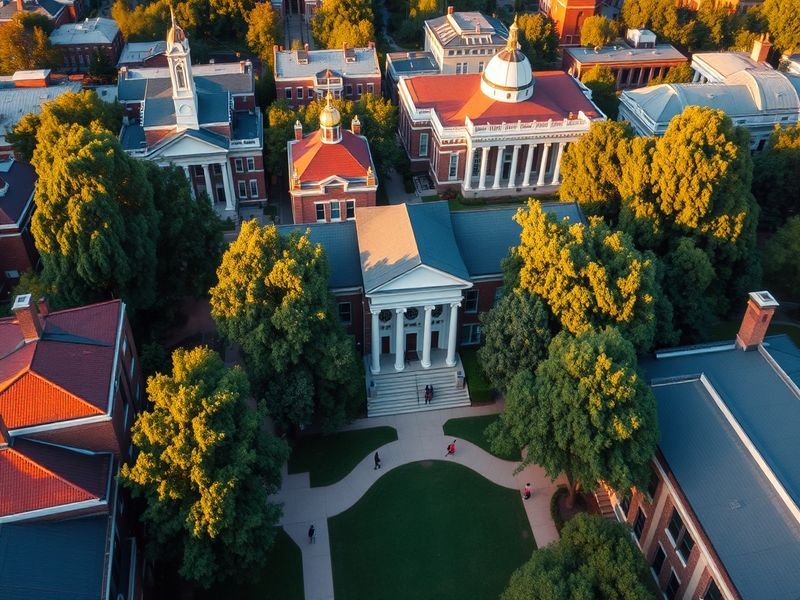
Howard University’s campus is not just a place of learning; it is a living museum of American history and architectural achievement. The university’s buildings span styles from late 19th-century Romanesque Revival to modernist design, reflecting its growth across 150-plus years. Among the most notable is the Founders Library, completed in 1939, which serves as a symbol of academic ambition and institutional pride. Its Gothic-inspired towers and grand reading rooms evoke the ideals of education and enlightenment that have defined Howard since its inception.
The campus also includes landmarks like the Andrew Rankin Memorial Chapel, a spiritual center that has hosted civil rights leaders, presidents, and cultural icons. The Blackburn Center, named for Lucy Diggs Slowe, the first dean of women at Howard, stands as a testament to the university’s commitment to gender equality and student leadership. These structures are more than buildings; they are monuments to the struggles and triumphs of Black Americans in higher education.
In recent years, Howard has invested in modernizing its facilities while preserving its historic character. New residence halls, research labs, and student centers blend contemporary design with the university’s storied aesthetic, ensuring that Howard remains both a place of tradition and innovation.
Why Howard’s Location Matters in Higher Education
Howard University’s position in Washington, D.C., gives it a unique role in American academia. Unlike many historically Black colleges and universities (HBCUs) located in the South, Howard sits in the nation’s capital—a city that offers unparalleled access to government, international organizations, and cultural institutions. This proximity allows students to intern at the State Department, work with global NGOs, or engage with policymakers, bridging the gap between education and real-world impact.
The university’s location also amplifies its voice in national conversations. Howard has long been a center for civil rights advocacy, hosting pivotal figures like Thurgood Marshall, Stokely Carmichael, and Toni Morrison. Its proximity to federal institutions enables students and faculty to influence policy, from education reform to social justice initiatives. This positioning has made Howard not just an educational institution, but a catalyst for change.
Moreover, Howard’s urban setting challenges students to navigate real-world complexities—from gentrification in nearby neighborhoods to the pressures of political polarization. These experiences shape graduates who are not only academically prepared but socially conscious, ready to lead in diverse environments.
Key Aspects of Howard University’s Location
- Central D.C. Campus: Situated in Northwest D.C., near Adams Morgan and Dupont Circle, providing urban accessibility.
- Historic Architecture: Buildings like Founders Library and Rankin Chapel reflect the university’s legacy and cultural significance.
- Proximity to Power: Close to government agencies, embassies, and cultural institutions, enhancing internship and career opportunities.
- Urban Learning Environment: Students engage with real-world issues, from policy to community development, in a dynamic city setting.
Howard’s Broader Influence and Global Reach
While Howard’s campus is rooted in Washington, D.C., its influence extends far beyond the city limits. As one of the top producers of Black doctorates in the U.S., Howard plays a critical role in diversifying academia and scientific research. Its graduate programs in medicine, law, and the sciences are nationally ranked, attracting students from across the African diaspora and beyond.
The university’s location in D.C. also makes it a natural partner for international organizations. Howard collaborates with the World Bank, the United Nations, and global health initiatives, sending students and faculty to work on projects ranging from climate policy to public health. This global engagement ensures that Howard’s legacy of leadership is felt worldwide.
In the realm of culture, Howard has produced generations of artists, musicians, and writers who have shaped American arts. Alumni like Ta-Nehisi Coates, Chadwick Boseman, and Zora Neale Hurston are just a few who carry the university’s intellectual and creative spirit into the world. This cultural output reinforces Howard’s status as a cradle of Black thought and expression.
Conclusion: A Campus with a Mission
Howard University’s location in Washington, D.C., is more than a point on a map—it is the foundation of its historic mission. From its founding days during Reconstruction to its modern role as a global leader in education and activism, Howard has leveraged its urban setting to train leaders, challenge injustices, and redefine what it means to be a historically Black institution in the 21st century. Its campus is not just a place to study; it is a place to change the world.
As Howard continues to grow, its location will remain central to its identity. In a city where power is debated and history is made daily, Howard University stands as a reminder that education and activism are inseparable. For students, faculty, and visitors alike, the campus offers a rare blend of tradition, opportunity, and purpose—one that resonates far beyond the boundaries of Northwest D.C.
For those interested in exploring how Howard’s legacy intersects with broader trends in education and culture, visit our Education and Culture sections for more insights.