college basketball tournament
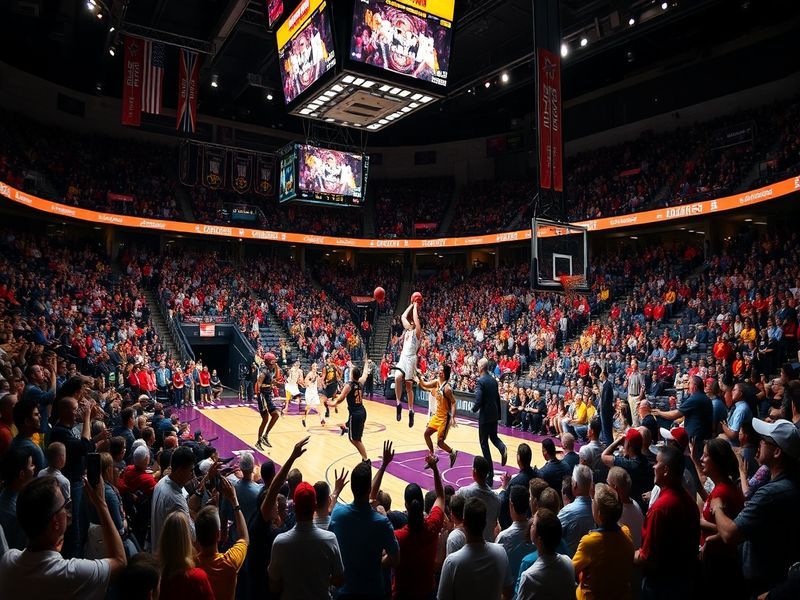
The NCAA Division I Men’s Basketball Tournament, better known as March Madness, is more than a sporting event. It’s a cultural reset, an economic engine, and a proving ground for young athletes on the national stage. With 68 teams vying for 67 elimination games over three weeks, the tournament reshapes communities, boosts local economies, and defines careers—both on and off the court.
This year’s edition arrived at a crossroads. The sport is grappling with realignment, NIL (Name, Image, Likeness) compensation, and the growing influence of transfer portals. Yet, through the chaos, March Madness remains a unifying spectacle. It offers a rare moment of collective attention in an era of fractured media consumption and partisan divides.
The Tournament’s Economic and Social Ripple Effect
Host cities don’t just roll out the welcome mat—they invest millions. From Indianapolis to San Antonio, communities transform basketball arenas into temporary economic engines. Hotels fill up months in advance. Restaurants extend hours. Local businesses report surges in revenue that can last beyond the Final Four.
According to the NCAA, the 2023 tournament generated over $1.2 billion in economic impact across 28 host cities. That figure includes ticket sales, tourism, and broadcast revenue, but it doesn’t capture the intangibles. Small businesses gain exposure to national audiences. College towns experience a rare influx of energy and pride. For many, it’s the first time their city appears on the national sports map.
Beyond dollars and cents, the tournament fosters social cohesion. Fans gather in bars, dorms, and public squares to watch together. The shared experience—rooting for underdogs, lamenting upsets—creates fleeting moments of unity. In an age of algorithm-driven echo chambers, these in-person gatherings are increasingly rare.
How Host Cities Prepare
Preparation begins years in advance. Cities submit bids detailing infrastructure, security, and fan experience plans. The NCAA evaluates everything from airport capacity to hotel availability. Once selected, local organizers coordinate with law enforcement, public transit, and hospitality groups to stage a seamless event.
- Security: Enhanced police presence and surveillance systems are deployed to manage crowds and prevent incidents.
- Transportation: Shuttle services and ride-sharing partnerships ease traffic congestion around venues.
- Fan Zones: Pop-up fan experiences—often free to the public—feature interactive games, merchandise vendors, and live music.
- Legacy Projects: Some host cities use the tournament to fund youth sports facilities or community centers.
For smaller cities, the exposure can be transformative. Consider Boise, Idaho, which hosted tournament games in 2023. The event put the city on the map as a viable destination for future sporting events. Similarly, in 2021, San Antonio leveraged its tournament hosting to attract corporate events and tourism long after the final buzzer.
The Athlete’s Journey: From Campus Hero to National Spotlight
For players, the tournament is a career-defining crucible. One week can vault unknown guards into NBA draft conversations or cement a coach’s legacy. But the path to the big stage is more complicated than ever.
The rise of the transfer portal means rosters are in constant flux. Players switch schools mid-season, chasing playing time, better facilities, or NIL deals. This year, nearly 2,000 men’s players entered the portal, setting a record. The tournament now serves as a proving ground not just for teams, but for individual players navigating an unstable system.
NIL has also changed the calculus. Top recruits no longer just consider playing time or tradition—they weigh potential earnings. Programs like Duke and Kentucky leverage their tournament histories to attract recruits with promises of exposure and endorsement opportunities. Meanwhile, mid-major schools like Saint Peter’s and Oral Roberts use Cinderella runs to boost their profiles and recruit top talent.
Yet, the pressure on athletes has intensified. Social media amplifies every mistake. NIL deals create financial expectations early in their careers. And the tournament’s unforgiving nature means one bad game can overshadow a season’s worth of work. The result? A generation of players who must balance performance, branding, and mental health in a way previous cohorts never had to.
The Transfer Portal’s Impact on Team Dynamics
The portal has disrupted traditional team-building. Coaches no longer have the luxury of four-year commitments from recruits. Instead, they must adapt to constant roster turnover. This year, several top-seeded teams entered the tournament with transfer-heavy lineups. Villanova, for example, started four transfers, a far cry from the blue-blood programs of the past.
- Roster Fluidity: Teams with multiple transfers often lack cohesion, leading to inconsistent performances in high-pressure games.
- Coaching Challenges: Coaches must quickly integrate new players while maintaining defensive schemes and offensive sets.
- Recruiting Pitches: Programs now sell NIL opportunities as heavily as playing time and tradition.
- Fan Engagement: Loyalty is tested when star players leave mid-season, forcing fanbases to adjust expectations.
The Media Landscape: How March Madness Dominates the Airwaves
Television ratings for the tournament remain a crown jewel for broadcasters. In 2023, the NCAA Tournament averaged 10.7 million viewers across all platforms, making it the most-watched college basketball event in history. CBS and Turner Sports split coverage, with the Final Four drawing over 20 million viewers.
But the way fans consume the tournament is evolving. Streaming services, social media clips, and fantasy sports platforms have fragmented the audience. Younger fans increasingly turn to platforms like TikTok for highlights rather than watching full games. The NCAA has responded by expanding digital content, including in-game social media features and interactive bracket tools.
This shift has forced networks to rethink their approach. Instead of relying solely on traditional broadcasts, they now invest in second-screen experiences. Apps like NCAA March Madness Live offer live stats, player tracking, and alternate camera angles. Broadcasters also prioritize storytelling—highlighting players’ backgrounds, coaches’ strategies, and underdog narratives to keep audiences engaged.
Sponsorships have followed suit. Brands like AT&T, Capital One, and Wendy’s have shifted from static ads to integrated campaigns. Capital One’s “Bracketville” campaign, for example, blends humor with interactive challenges, encouraging fans to engage beyond just filling out brackets.
The Rise of Alternative Viewing Experiences
For fans who can’t watch live, alternatives have emerged. Podcasts dissect every game within hours of tip-off. YouTube channels curate highlight reels tailored to specific teams or players. Even esports platforms have entered the fray, with NCAA-themed video games allowing fans to simulate tournament runs.
The tournament’s digital footprint extends its reach globally. International markets, particularly in Asia and Europe, have shown growing interest, thanks to streaming platforms and social media. The NCAA’s international broadcasts now include commentary in multiple languages, further expanding its audience.
What’s Next for March Madness?
The tournament stands at a crossroads. The expansion to 96 teams has been proposed multiple times, though logistical challenges remain. The NBA’s growing influence—with top prospects skipping college for the G League or overseas leagues—threatens the pipeline that fuels March Madness. Meanwhile, legal battles over athlete compensation continue to simmer in the background.
Yet, the tournament’s cultural significance endures. It remains a rare space where amateur athletes receive the spotlight usually reserved for professionals. It’s a stage where HBCUs (Historically Black Colleges and Universities) and mid-majors can compete with blue bloods. And it’s a tradition that connects generations of fans through shared rituals—office pools, chalk talks, and buzzer-beaters.
As the NCAA navigates these challenges, one thing is clear: March Madness is more than a basketball tournament. It’s a mirror reflecting the sport’s past, present, and future. For players, it’s a chance to etch their names into history. For cities, it’s an economic and social catalyst. And for fans, it’s a fleeting but vital connection to something larger than themselves.
In an era of division and distraction, the tournament offers a simple, unifying truth: for three weeks each March, college basketball takes center stage. And that’s worth watching.
For more on the intersection of sports and culture, visit Dave’s Locker Trending. To dive deeper into the business of college sports, check out Dave’s Locker Analysis.