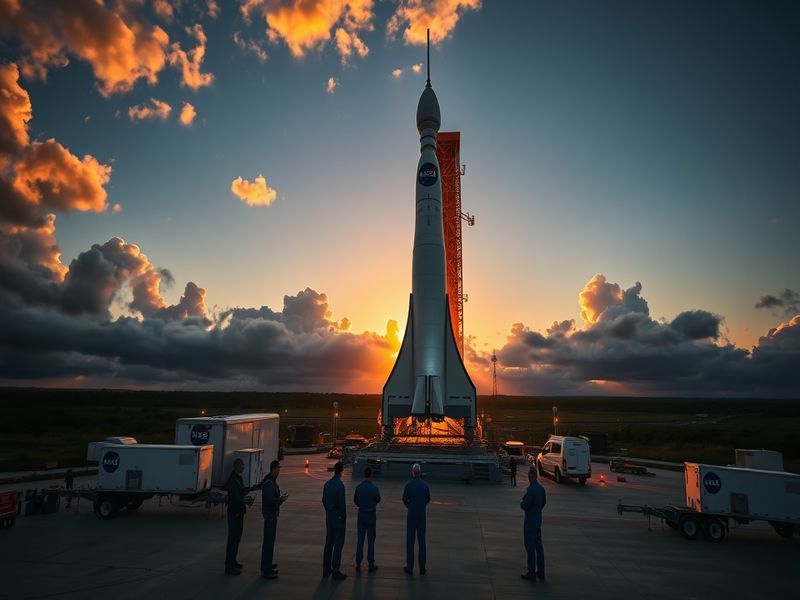
Navigating the Future: NASA’s Artemis II Mission
The Artemis II mission marks a significant milestone in NASA’s efforts to return humans to the Moon. Scheduled for launch in the coming years, this mission will serve as a precursor to future lunar exploration and establish a foundation for sustained human presence on the Moon. As humanity sets its sights beyond our planet, the implications of Artemis II extend far beyond the immediate goals of lunar exploration.
Understanding Artemis II: Key Objectives
Artemis II aims to achieve several key objectives that will pave the way for the Artemis program’s long-term vision. This mission will not only test critical systems but also set the stage for future missions to Mars and beyond. Here are the primary goals of Artemis II:
- Human Crew Test: Artemis II will carry astronauts aboard the Orion spacecraft for a lunar flyby, marking the first crewed mission of the Artemis program.
- System Validation: The mission will validate the performance of the Space Launch System (SLS) and the Orion spacecraft in a real-world environment.
- Lunar Flyby: The crew will perform a flyby of the Moon, gathering data and testing navigation systems.
- Preparation for Artemis III: Insights gained from this mission will inform the subsequent Artemis III mission, which aims to land astronauts on the lunar surface.
Broader Implications of Lunar Exploration
The Artemis II mission is not just about reaching the Moon. Its implications are far-reaching, affecting various sectors such as science, technology, and international cooperation. A successful Artemis II mission could lead to:
- Scientific Advancements: The mission will enhance our understanding of lunar geology and potentially uncover resources that could be utilized for future missions.
- Technological Innovation: Developing the technologies needed for Artemis II will likely yield advancements that can be applied to other fields, including telecommunications and materials science.
- International Collaboration: Artemis II is expected to involve partnerships with various countries and private organizations, fostering global cooperation in space exploration.
- Inspiration for Future Generations: The mission aims to inspire young people to pursue careers in STEM fields, ensuring a new generation is prepared for the challenges of space exploration.
The Path Forward: Challenges and Opportunities
While the Artemis II mission presents exciting opportunities, it also comes with its share of challenges. Ensuring the safety of the crew is paramount, and rigorous testing of systems must be conducted. Additionally, budget constraints and technological hurdles could impact the timeline and objectives of the mission.
Despite these challenges, the mission represents a significant step forward in NASA’s Artemis program. By focusing on collaboration with international partners and the private sector, NASA can potentially overcome some of the obstacles it faces. This collaborative approach not only enhances the mission’s success likelihood but also fosters a spirit of unity in the pursuit of exploration.
Conclusion: A New Era of Exploration
The Artemis II mission stands as a beacon of hope and determination in humanity’s quest for knowledge beyond our planet. By testing new technologies and involving international partners, NASA is laying the groundwork for a sustainable presence on the Moon and beyond. As we look forward to the launch, the implications of this mission will resonate across various fields, inspiring future generations and expanding our understanding of the cosmos.
For more information on space exploration, visit our Science and Technology sections.