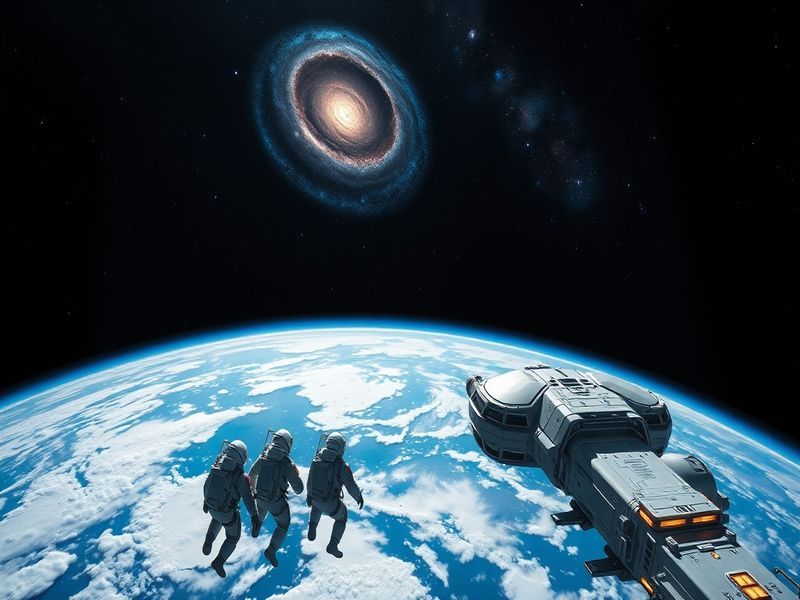
Exploring the Cosmos: The Global Journey of Space Exploration
The Rise of Space Exploration: A Global Perspective
Space exploration has become a focal point of human curiosity and ambition. Over the past few decades, nations around the globe have invested heavily in technologies and missions aimed at understanding our universe. From the early days of the Space Race to the current era of commercial space travel, the journey of humanity into the cosmos reflects not only scientific advancement but also cultural and political motivations.
Historical Context of Space Exploration
The quest to explore space began in earnest in the mid-20th century. The launch of Sputnik 1 by the Soviet Union in 1957 marked the dawn of the Space Age. This event was not merely a technological triumph; it was a significant political statement during the Cold War. The United States quickly responded with its own missions, culminating in the Apollo moon landings. These early missions set a precedent for international cooperation and competition in space.
As the years progressed, the focus of space exploration expanded. The establishment of the International Space Station (ISS) in 1998 became a symbol of collaborative effort among various nations. Countries like Russia, the United States, Japan, Canada, and members of the European Space Agency worked together to create a platform for scientific research and international collaboration.
Modern Developments in Space Exploration
Today, space exploration is entering a new chapter. With advancements in technology and a growing interest from private companies, the landscape is rapidly changing. Companies like SpaceX, Blue Origin, and Virgin Galactic are pioneering commercial space travel, making it more accessible than ever before. This shift has led to several significant developments:
- Commercial Space Travel: Private companies are developing spacecraft that can carry tourists and researchers into orbit.
- Mars Missions: NASA, along with other international agencies, has set ambitious goals for human missions to Mars, aiming for the 2030s.
- Satellite Technology: Advancements in satellite technology have transformed communication, weather forecasting, and global positioning systems.
- Space Mining: The potential for mining asteroids and other celestial bodies is being explored, with implications for resource availability on Earth.
These developments not only signify technological progress but also raise ethical and philosophical concerns. Questions about the sustainability of space exploration and the potential for space debris are increasingly relevant as activities in orbit grow.
Cultural Impact of Space Exploration
Space exploration resonates deeply across various cultures. It serves as a source of inspiration for generations, prompting questions about humanity’s place in the universe. In countries like India, the successful Mars Orbiter Mission in 2013 showcased technological prowess and fostered national pride. Similarly, the European Space Agency’s Rosetta mission to comet 67P has captivated scientists and the public alike, emphasizing the collaborative spirit of European countries in science.
Moreover, space exploration has influenced art, literature, and education. Movies like “Interstellar” and “The Martian” have popularized scientific concepts, while educational programs encourage young students to pursue careers in STEM fields. This cultural interplay highlights the significance of space exploration beyond the confines of science, blending art, philosophy, and education.
The Future of Space Exploration
Looking ahead, the future of space exploration is full of possibilities. As technology continues to evolve, so too will our understanding of the universe. The potential for establishing colonies on other planets, such as Mars, is no longer confined to the realm of science fiction. Additionally, international collaborations may become more crucial as countries recognize the benefits of shared knowledge and resources in tackling the challenges of space travel.
However, the future also requires careful consideration of ethical implications. As humanity ventures further into space, the responsibility to protect our own planet and the celestial bodies we explore must not be overlooked. Sustainable practices in space exploration will be essential to ensure that we do not repeat the mistakes made on Earth.
In conclusion, space exploration is an ever-evolving field that intertwines science, culture, and international relations. The efforts of countries and private entities alike have opened new frontiers, fostering a sense of global unity and shared purpose. As we continue to push the boundaries of what is possible, the legacy of space exploration will undoubtedly shape the future of humanity.