Lyrid Meteor Shower UK: Best Viewing Spots and Tips for 2024
“`html
The Lyrid Meteor Shower: When and How to Watch the Celestial Display in the UK
The Lyrid meteor shower is one of the oldest known annual meteor showers, with records dating back nearly 2,700 years. Originating from the debris trail of Comet Thatcher, this celestial event offers stargazers a reliable opportunity to witness shooting stars. For observers in the UK, the Lyrids provide a chance to connect with a tradition shared by cultures across the globe.
Unlike more dramatic meteor showers, the Lyrids are modest in number but rich in history. They appear every April when Earth passes through the dusty remnants left by Comet C/1861 G1 Thatcher, which was discovered in 1861 and orbits the sun once every 415 years. The shower is named after the constellation Lyra, where its radiant point—the apparent origin of the meteors—is located near the bright star Vega.
The Science Behind the Lyrids: What Makes Them Unique
The Lyrid meteor shower is not the most intense, producing around 10 to 20 meteors per hour at its peak. However, it is one of the few annual showers consistently visible from both the Northern and Southern Hemispheres. Occasionally, the Lyrids surprise observers with outbursts that can deliver up to 100 meteors per hour, a phenomenon recorded in 1803, 1922, and 1982.
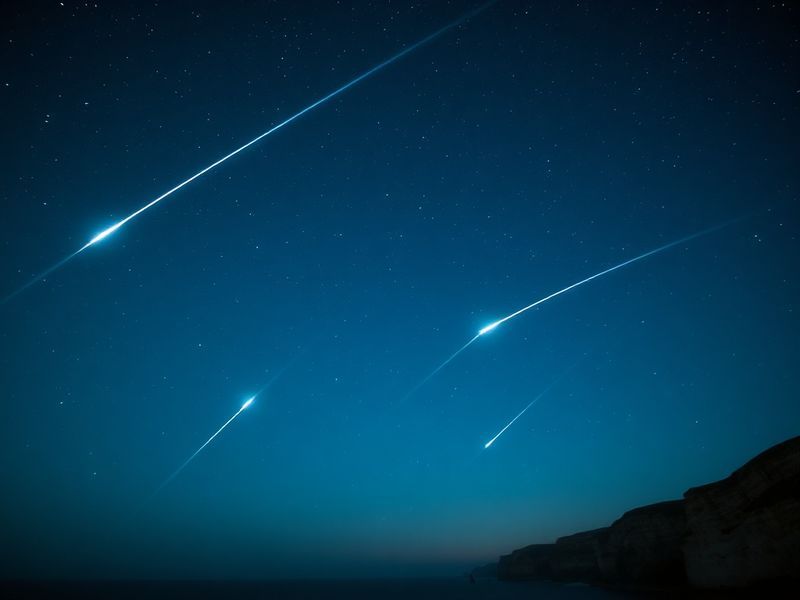
These outbursts are unpredictable, making the Lyrids a source of excitement for seasoned astronomers and casual skywatchers alike. The meteors themselves are fast-moving, entering Earth’s atmosphere at speeds of around 49 kilometers per second. They often leave behind glowing trails that can linger for several seconds, creating a memorable visual experience.
While the Lyrids are best observed in the Northern Hemisphere, they are also visible in tropical and subtropical regions of the Southern Hemisphere. This global visibility highlights the shared human fascination with the night sky, a connection that transcends cultural and geographical boundaries.
Cultural and Historical Significance Across the World
Ancient Chinese astronomers recorded the Lyrid meteor shower as early as 687 BCE, describing them as “stars that fell like rain.” In Korean folklore, the Lyrids were sometimes associated with the legend of the celestial weaver and the herdsman, a tale that also involves the star Vega. Meanwhile, in Western astronomy, the Lyrids have been observed and documented for centuries, contributing to our understanding of periodic meteor showers.
In many cultures, meteor showers were seen as omens or messages from the gods. The Lyrids, occurring in mid-April, often coincide with spring festivals in various traditions. For example, in some Native American cultures, the appearance of the Lyrids marked the time for renewal and planting. In Japan, historical records from the eighth century mention “falling stars” during this period, linking the phenomenon to seasonal transitions.
Today, the Lyrids continue to inspire festivals and gatherings centered around astronomy. Events like the Star Parties in the UK and astronomy festivals in the United States bring communities together to celebrate the wonder of the night sky. These gatherings reflect a modern continuation of the ancient tradition of sky-watching, uniting people across cultures in a shared experience.
How to Watch the Lyrid Meteor Shower in the UK: Tips for the Best View
For observers in the UK, the Lyrid meteor shower is best seen in the early hours before dawn. The shower typically peaks around April 21–22, though meteors can be visible from April 16 to 25. To maximize your chances of spotting shooting stars, follow these practical steps:
- Find a dark sky location. Light pollution can significantly reduce visibility, so head to rural areas, national parks, or designated Dark Sky Reserves. The South Downs, Exmoor, and Snowdonia are among the best spots in the UK.
- Check the weather forecast. Clear skies are essential. Websites like the Met Office or Clear Outside provide real-time updates on cloud cover and visibility.
- Allow your eyes to adjust. It takes about 20–30 minutes for your eyes to adapt to the darkness. Avoid looking at screens or bright lights during this time.
- Dress warmly. April nights in the UK can be chilly, especially in exposed locations. Layered clothing and a warm drink will make the experience more comfortable.
- Use a reclining chair or blanket. You don’t need any special equipment. Simply lie back and look toward the constellation Lyra, which rises in the northeast after midnight.
Unlike lunar eclipses or planetary transits, meteor showers do not require telescopes or binoculars. In fact, using optical aids can limit your field of view. The naked eye is the best tool for observing the Lyrids, allowing you to take in the full expanse of the night sky.
Photographers looking to capture the Lyrids should use a tripod and a camera with manual settings. A wide-angle lens and a high ISO setting (around 1600–3200) can help capture faint meteors. Long exposure times of 15–30 seconds will increase the chances of catching a shooting star streaking across the frame.
Why the Lyrids Matter: A Reminder of Our Place in the Universe
The Lyrid meteor shower is more than just an astronomical event; it is a reminder of humanity’s enduring relationship with the cosmos. In an age dominated by digital distractions, moments like these offer a chance to reconnect with the natural world and appreciate the vastness of space.
For many, the Lyrids also represent a form of quiet activism. By stepping outside and looking up, individuals are participating in a global tradition that spans millennia. This act of observation connects us to ancient stargazers in China, medieval scholars in Europe, and indigenous communities around the world who once relied on the stars for navigation, timekeeping, and storytelling.
The unpredictability of the Lyrids—especially their occasional outbursts—adds an element of surprise that keeps the tradition alive. Whether you’re an amateur astronomer, a photography enthusiast, or simply someone who enjoys the beauty of the night sky, the Lyrids offer a moment of wonder that is both personal and universal.
As we look ahead to future meteor showers, including the Perseids in August and the Geminids in December, the Lyrids serve as a gentle introduction to the joys of skywatching. They remind us that the universe is not just a distant spectacle but a living, breathing part of our shared experience on Earth.
So, set your alarm, find a dark spot, and prepare to be amazed. The Lyrids are waiting.