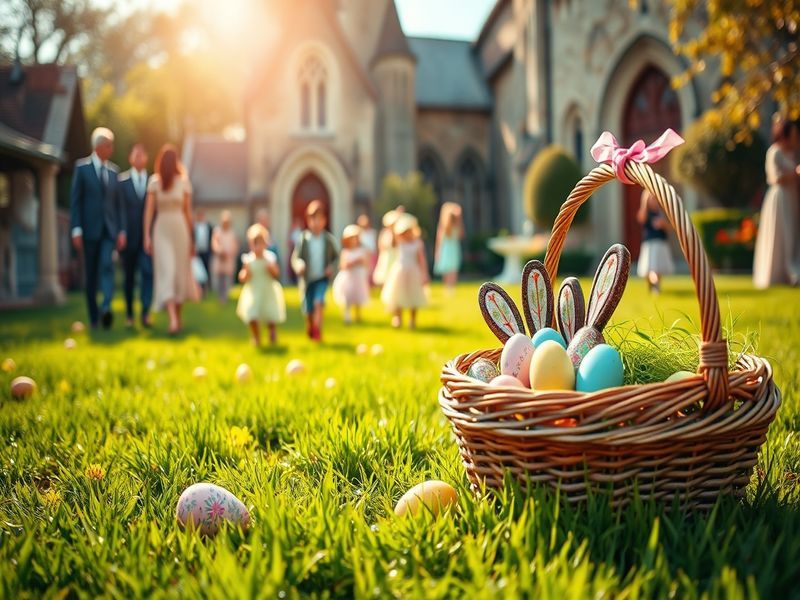
Easter is one of the most widely observed religious holidays, yet its traditions vary dramatically across continents. While many associate it with chocolate eggs and the Easter Bunny, the holiday’s roots stretch back thousands of years, intertwining pagan rituals, Christian theology, and cultural customs. This year, millions will gather for sunrise services, family feasts, and spring festivals—each tradition reflecting a unique blend of history and local identity.
Unlike fixed-date holidays, Easter’s timing shifts annually, falling on the first Sunday after the first full moon following the spring equinox in the Northern Hemisphere. This movable date creates a ripple effect across global calendars, influencing everything from school breaks to tourism. From the candlelit processions of Spain to the vibrant parades of Brazil, Easter’s global footprint reveals how faith and folklore evolve in different societies.
The Pagan Origins and Christian Transformation
Long before Christianity spread across Europe, ancient civilizations celebrated spring’s arrival with festivals honoring fertility and renewal. The name “Easter” may derive from Eostre, a Germanic goddess associated with dawn and rebirth, whose symbols—eggs and hares—still endure today. Similarly, the Babylonians marked the resurrection of Tammuz, while the Egyptians revered Osiris, both gods tied to cycles of life and death.
By the 2nd century, early Christians sought to distinguish their holy day from pagan rites. The Council of Nicaea in 325 CE formalized Easter as a movable feast, aligning it with the Jewish Passover while distancing it from its polytheistic past. This strategic adaptation allowed the holiday to absorb local traditions, ensuring its survival as Christianity expanded. The result is a patchwork of customs where ancient symbols took on new meanings—eggs representing Christ’s tomb, and the hare symbolizing his resurrection.
Regional Traditions: A Study in Contrasts
In Greece, Orthodox Christians observe Easter with midnight church services and the cracking of red eggs, a ritual symbolizing Christ’s victory over death. Meanwhile, in Ethiopia, the holiday is celebrated with a three-day fast followed by a communal feast featuring injera and spicy stews. These differences highlight how geography and history shape religious practice.
Consider the following traditions observed worldwide:
- Poland: Święconka, or the blessing of food baskets, is a cornerstone of Easter Saturday. Families fill wicker baskets with eggs, bread, and sausage, then take them to church for consecration.
- Philippines: Some devotees reenact the crucifixion with actual nails, a stark contrast to the playful Easter egg hunts of Western cultures.
- Sweden: Children dress as Easter witches, a tradition blending folklore with the Christian narrative of resurrection.
These examples underscore Easter’s adaptability. Whether through solemnity or whimsy, communities reinterpret the holiday to fit their cultural narratives, proving that religion is as much about identity as it is about doctrine.
The Commercialization of Easter: A Modern Dilemma
By the 19th century, Easter had become entangled with consumer culture. Chocolate manufacturers like Cadbury and Hershey’s transformed the holiday into a lucrative season, replacing homemade treats with mass-produced confections. Today, the Easter candy industry generates billions annually, with marshmallow peeps alone accounting for over $200 million in sales.
This commercialization has sparked debates about authenticity. Critics argue that the holiday’s spiritual essence is overshadowed by marketing, while others see it as a natural evolution—one that ensures the holiday remains relevant in an increasingly secular world. The tension between faith and commerce is evident in everything from egg-decorating kits to luxury chocolate bunnies priced at $100 or more.
Even the Easter Bunny, a 17th-century German import, has been repackaged as a corporate mascot. Brands like Pepsi and McDonald’s now tie Easter promotions into their advertising strategies, blurring the line between celebration and consumption. This shift raises questions: Can a holiday rooted in resurrection and rebirth coexist with today’s hyper-capitalist economy?
Easter in the Digital Age: Virtual Celebrations and Global Connections
The COVID-19 pandemic accelerated a trend already underway: the digitization of religious observance. Livestreamed services allowed worshippers to participate in Easter Mass from anywhere in the world, while social media platforms became hubs for sharing holiday greetings and recipes. Apps like Hallmark’s Easter card generator and Zoom’s virtual egg hunts cater to a tech-savvy generation seeking convenience without sacrificing tradition.
Yet, this digital transformation has its drawbacks. Virtual communion lacks the tactile warmth of shared bread, and algorithm-driven content often prioritizes novelty over meaning. As one priest noted, “The challenge isn’t reaching people—it’s making them feel the sacred in a world of pixels.”
Despite these hurdles, digital Easter celebrations have fostered unexpected connections. Diaspora communities, once separated by oceans, now gather online to share meals and prayers. For many, the holiday has become a bridge between the old world and the new, proving that tradition can evolve without losing its soul.
The Future of Easter: Preserving Meaning in a Changing World
As societies become more secular and diverse, Easter faces both challenges and opportunities. In countries like Japan, where Christianity accounts for less than 1% of the population, Easter is celebrated more for its springtime themes than its religious significance. Meanwhile, in the United States, interfaith families blend traditions, creating hybrid celebrations that honor multiple heritages.
For Christians, the holiday’s core message—hope, renewal, and redemption—remains as vital as ever. Yet, its expression must adapt to contemporary realities. Whether through eco-friendly egg hunts or community service initiatives, modern celebrations are finding new ways to honor the holiday’s ancient roots while addressing present-day concerns.
One thing is certain: Easter’s power lies in its universality. It is a holiday that belongs to everyone and no one, a paradox that has allowed it to thrive for millennia. As the world continues to change, Easter will undoubtedly change with it—yet its essence will endure, a testament to humanity’s enduring search for meaning.
For more on how holidays intersect with culture, explore our Culture section.
Interested in the history behind other global traditions? Visit our Entertainment archives.