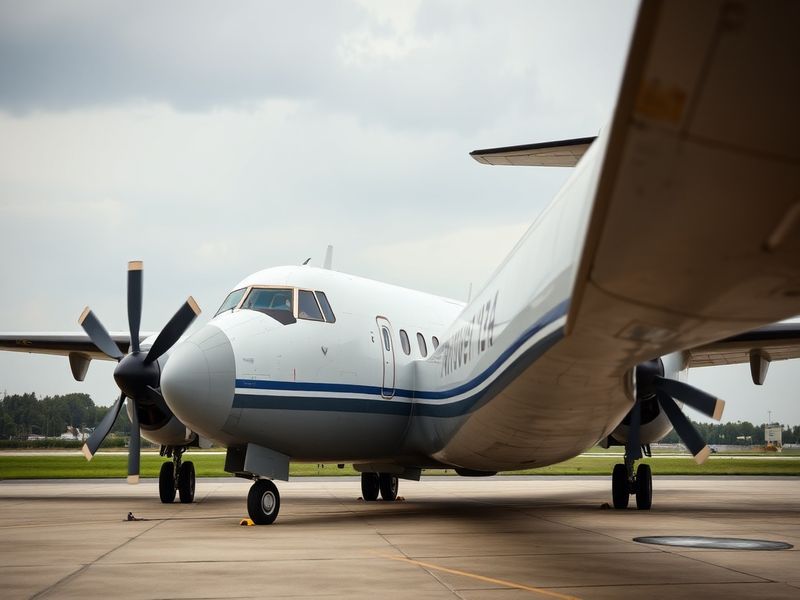
Antonov An-26B: The Soviet Transport Plane Still Flying Worldwide
“`html
The Antonov An-26B: A Soviet-Era Workhorse Still Serving Across the Globe
The Antonov An-26B, a twin-engine turboprop transport aircraft, remains one of the most resilient and versatile aircraft ever built. Designed during the Cold War era, this Soviet-era plane has outlasted many of its contemporaries, continuing to operate in some of the world’s most challenging environments. From the frozen tundras of Siberia to the dense jungles of South America, the An-26B has earned a reputation as a reliable workhorse in both civilian and military service.
Originally developed by the Antonov Design Bureau in Ukraine, the An-26 first took flight in 1969. It was an evolution of the earlier An-24, incorporating a redesigned rear fuselage with a cargo ramp and a more powerful engine. The “B” variant, introduced in the late 1970s, featured upgraded avionics and improved payload capacity, making it even more adaptable for a wide range of missions. Over 1,400 An-26s were built, and despite its age, many remain in operation today, particularly in regions where modern logistics infrastructure is lacking.
A Global Operator: Where the An-26B Still Flies
The An-26B’s longevity can be attributed to its rugged design and adaptability. Unlike many aircraft that become obsolete as technology advances, the An-26B thrives in environments where simplicity and durability are paramount. Its ability to operate from unpaved runways and in extreme weather conditions has made it indispensable in parts of Africa, Asia, and Latin America, where air travel is often the only reliable means of transport.
In Africa, the An-26B has become a lifeline for remote communities. Airlines such as Air Cargo Germany and several African operators continue to use the aircraft for cargo and passenger flights, particularly in countries like the Democratic Republic of Congo, Angola, and Sudan. Its short takeoff and landing (STOL) capabilities allow it to access airstrips that larger jets cannot, making it a critical asset for humanitarian missions and supply deliveries.
In South America, the An-26B has found a niche in the Amazon basin, where river transport is the primary mode of travel. Companies like LAS Cargo in Peru rely on the aircraft to carry goods to isolated villages and mining operations, bypassing the region’s challenging terrain. Similarly, in Southeast Asia, operators in Indonesia and the Philippines use the An-26B for inter-island cargo runs, where infrastructure is often underdeveloped.
The An-26B in Military Service: A Lasting Legacy
Beyond its civilian applications, the An-26B has played a significant role in military operations worldwide. The Soviet Union and its allies extensively used the aircraft for troop transport, medical evacuations, and paratrooper drops. Even after the collapse of the USSR, many former Warsaw Pact nations retained the An-26B in their air forces, appreciating its reliability and ease of maintenance.
In recent years, the An-26B has seen action in conflicts across the globe. Ukrainian forces, for example, have used the aircraft in both defensive and offensive operations, particularly during the ongoing war with Russia. The plane’s ability to operate from makeshift airstrips has made it a valuable asset in contested regions. Similarly, Russian forces have deployed the An-26B in Syria, where it has been used for troop movements and supply missions in a challenging operational environment.
The aircraft’s military service is not limited to former Soviet states. Countries like Angola, Cuba, and Vietnam have also relied on the An-26B for decades. Its versatility has allowed it to adapt to changing military needs, from transporting troops to conducting reconnaissance missions. Despite its age, the An-26B remains a cost-effective solution for nations with limited defense budgets.
The Challenges of Aging Aircraft: Maintenance and Modernization
While the An-26B’s durability is impressive, operating an aircraft built during the Cold War era comes with significant challenges. One of the biggest issues is the availability of spare parts. With production long since ceased, operators must rely on cannibalizing parts from retired airframes or sourcing them from specialized suppliers. This has led to a growing market for used An-26 components, particularly in Eastern Europe and Africa.
Maintenance is another critical concern. The An-26B’s airframe and engines require meticulous upkeep to ensure safe operations. Many operators have invested in modernization programs to extend the aircraft’s service life. These upgrades often include new avionics, improved navigation systems, and enhanced safety features. For example, some African operators have fitted their An-26Bs with modern GPS and communication systems to comply with international aviation standards.
However, modernization is not always feasible. In some cases, the cost of upgrading an aging An-26B exceeds the value of the aircraft itself. As a result, many operators are gradually phasing out the type in favor of newer, more fuel-efficient alternatives. Despite this trend, the An-26B continues to serve in niche roles where its unique capabilities are irreplaceable.
The Cultural Impact of the An-26B
The Antonov An-26B is more than just an aircraft; it is a symbol of resilience and adaptability. In many parts of the world, it represents the only link between remote communities and the outside world. Its presence in films, documentaries, and literature has cemented its place in popular culture, particularly in stories set in Africa and the Arctic.
The aircraft’s design has also influenced later models, including the Antonov An-32 and the Chinese-built Y-7. Its distinctive appearance—a high-wing configuration with a rear cargo door—has become iconic, recognizable even to those with little knowledge of aviation. For enthusiasts, the An-26B is a relic of a bygone era, a testament to the ingenuity of Soviet engineers.
Despite its age, the An-26B remains a vital part of global aviation. Whether it’s delivering supplies to a remote village, supporting military operations, or transporting cargo across vast distances, the aircraft continues to prove its worth. As the world moves toward more advanced and fuel-efficient aircraft, the An-26B serves as a reminder that sometimes, the simplest solutions are the most enduring.
For those interested in vintage aircraft and their stories, the Antonov An-26B is a fascinating subject. Its history reflects the broader geopolitical shifts of the 20th century, from the Cold War to the modern era. And while newer aircraft may dominate the skies, the An-26B’s legacy is secure as one of aviation’s true survivors.
—
Explore More Aviation Stories on Dave’s Locker
If you found the story of the Antonov An-26B compelling, you might also enjoy our deep dives into other iconic aircraft and their global impact. Check out our Technology section for more stories on aviation history, engineering marvels, and the machines that shaped the modern world.
—