La Gomera: Europe’s Hidden Whistling Isle Where Tradition Thrives
“`html
Europe’s Best-Kept Secret in the Atlantic
Tucked away in the eastern Atlantic, roughly 30 kilometers west of mainland Africa, lies La Gomera—a rugged Canary Island often overlooked by travelers racing to Tenerife or Gran Canaria. While the Canary Islands collectively draw millions annually, La Gomera remains a sanctuary for those seeking silence, authenticity, and a connection to nature that feels almost untouched by time.
The island’s isolation has preserved its traditions, landscapes, and way of life in ways few places in Europe can match. Unlike its more commercialized neighbors, La Gomera offers an experience rooted in the rhythms of rural life, where the past lingers in the air like the scent of wild herbs after summer rain. It’s a place where the modern world feels distant, and the ancient whispers of the island’s original inhabitants—the Guanches—still seem to echo through the laurel forests.
A Living Museum of Pre-Hispanic Culture
The Guanches, the indigenous people of the Canary Islands, left behind more than just archaeological sites. Their legacy is woven into the island’s identity, from place names like Agulo and Hermigua to the survival of their language, which survives in the island’s unique silbo gomero—a whistled form of communication recognized by UNESCO.
Silbo gomero isn’t just a quirky local tradition; it’s a linguistic marvel. Before the widespread use of telephones, islanders communicated across deep ravines and valleys using a complex system of whistles that could carry for up to five kilometers. The practice nearly vanished in the 20th century but has since been revived, with schools teaching it to new generations. This makes La Gomera one of the few places on Earth where a pre-modern form of communication remains not just alive, but actively practiced.
The island’s cultural heritage extends beyond language. Traditional farming techniques, such as the tagasaste windbreaks used to protect crops, and the distinctive casa rural architecture with its flat roofs and whitewashed walls, reflect a way of life adapted to the island’s volcanic terrain. Even the local cuisine—featuring gofio (a toasted cornmeal), queso asado (goat cheese), and papas arrugadas (wrinkled potatoes)—tells a story of resourcefulness and resilience.
The Geography That Shapes a Way of Life
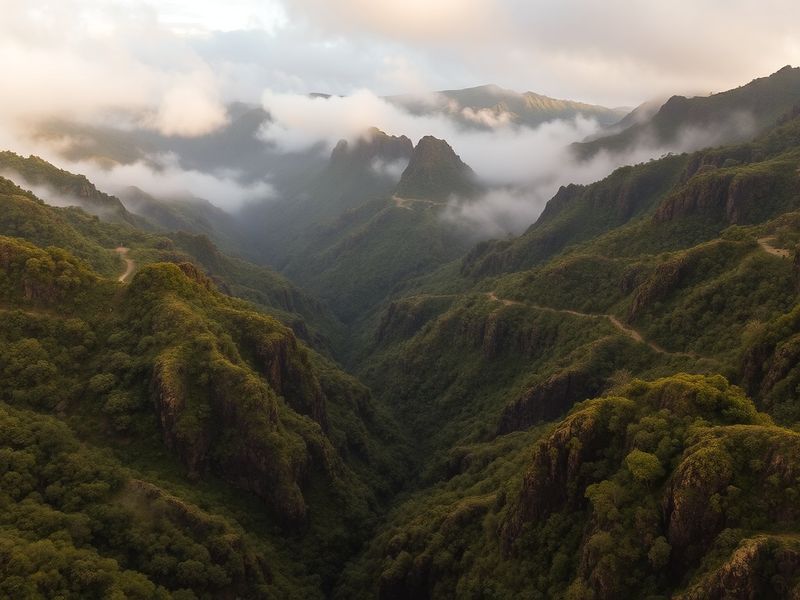
La Gomera’s dramatic landscapes are the result of volcanic activity that began over 12 million years ago. The island’s highest peak, Alto de Garajonay, reaches 1,487 meters, crowned by a laurel forest so ancient it’s considered a living relic of the Tertiary period. This UNESCO World Heritage Site, the Garajonay National Park, blankets nearly 10% of the island in misty, moss-draped trees that could belong to a fantasy novel.
But the island’s beauty isn’t confined to its peaks. The north coast is a labyrinth of deep ravines, or barrancos, carved by centuries of erosion, while the south offers sun-drenched cliffs plunging into the Atlantic. The contrast between the lush north and the arid south creates microclimates that support diverse ecosystems. Here, you can hike through cloud forests in the morning and find yourself on sunbaked volcanic plains by afternoon—a geographical diversity usually reserved for much larger islands.
The island’s volcanic origins also shape its coastline. The Los Órganos sea cliffs near Valle Gran Rey are a breathtaking example, their columnar basalt formations resembling the pipes of a colossal organ. These cliffs are best viewed from the sea, where boat tours reveal their full majesty, often accompanied by pods of pilot whales and bottlenose dolphins.
Beyond Tourism: La Gomera’s Quiet Resistance
In an era where overtourism threatens to homogenize destinations, La Gomera stands as a quiet resistance—a place that refuses to bend to the demands of mass tourism. The island’s tourism model prioritizes sustainability, with strict limits on hotel construction and a focus on eco-friendly activities. Hiking, birdwatching, and stargazing are the main attractions here, drawing a niche audience of travelers who prioritize experience over Instagram moments.
The island’s commitment to sustainability is evident in its energy production. La Gomera is one of the few places in the world where renewable energy—primarily wind and solar—meets over 30% of its electricity needs. This is a small but significant step toward energy independence, a model that other islands are now looking to replicate.
Yet, La Gomera’s resistance isn’t just environmental. It’s also cultural. The island has long been a refuge for artists, writers, and musicians seeking inspiration away from the noise of modern life. The surrealist painter Óscar Domínguez, born in La Gomera, drew from the island’s stark landscapes and mystical atmosphere in his work. Today, the island hosts festivals celebrating traditional music, such as the Festival de Música Popular, where locals and visitors gather to dance to the rhythms of isa and folía—folk styles with deep roots in the island’s history.
Why La Gomera Matters in a Global Context
La Gomera is more than just a destination; it’s a case study in how tradition and nature can coexist with modernity without sacrificing authenticity. In a world where cultural homogenization and environmental degradation are growing concerns, the island offers a blueprint for sustainable tourism and cultural preservation. Its story is a reminder that some places are not just worth visiting, but worth protecting.
The island also challenges the conventional narrative of the Canary Islands as a sun-and-sand playground. While Tenerife and Gran Canaria cater to package tourists, La Gomera appeals to those who see travel as an opportunity for deeper connection—whether with history, nature, or themselves. It’s a place where the pace of life slows to match the island’s natural rhythms, where a walk through a laurel forest can feel like a meditation, and where the absence of crowds allows for genuine encounters with locals.
For travelers tired of the same overcrowded hotspots, La Gomera is a revelation. It’s a place where the past isn’t just remembered; it’s lived. Where the landscape isn’t just seen; it’s felt. And where the silence isn’t just absence of noise; it’s a presence of something ancient and enduring.
As the world grows louder and faster, La Gomera remains a whisper—a reminder that some treasures are best discovered slowly, and some stories are best told in silence.