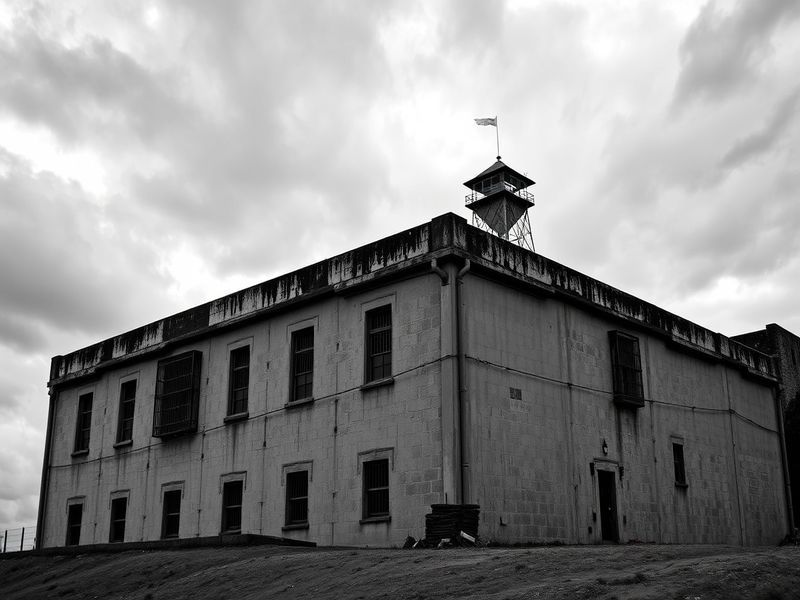
Alcatraz: The Dark Legacy of America’s Most Notorious Prison
Perched on a rocky outcrop in the middle of San Francisco Bay, Alcatraz Federal Penitentiary remains one of the most infamous prison complexes in American history. Opened in 1934 as a maximum-security facility, it quickly earned a reputation as an inescapable fortress for the nation’s most notorious criminals. Today, the island operates as a popular tourist destination, drawing over 1.5 million visitors annually who come to explore its eerie cellblocks and absorb its dark legacy.
The Birth of “The Rock”
Before becoming a prison, Alcatraz served multiple roles in its long history. Originally discovered by Spanish explorer Juan Manuel de Ayala in 1775, he named it “La Isla de los Alcatraces” (Island of the Pelicans) due to the large bird population. The island’s strategic location made it ideal for military use, first as a coastal defense fort in the mid-19th century and later as a military prison during the American Civil War.
The transformation into a federal penitentiary began in 1933 when the U.S. Department of Justice acquired the island. The Bureau of Prisons sought to create a facility that could hold inmates who were deemed too dangerous or escape-prone for other prisons. With its isolated location—surrounded by frigid, shark-infested waters and strong currents—Alcatraz seemed the perfect solution. The first group of 53 prisoners arrived on August 11, 1934, including notorious gangsters like Al Capone and George “Machine Gun” Kelly.
Life Inside the Concrete Walls
Inmates at Alcatraz lived under a strict regime designed to break their spirits and enforce absolute control. Days began at 6:30 a.m. with a wake-up call, followed by a headcount. Meals were eaten in silence, and any form of communication between prisoners was strictly prohibited. The prison’s harsh conditions were meant to serve as a deterrent, with inmates confined to their cells for up to 23 hours a day.
The cellblock itself was a study in psychological warfare. Cells measured just 5 feet by 9 feet, with a small sink and toilet. The thick concrete walls and steel bars amplified every sound, creating an environment where prisoners were constantly reminded of their isolation. Despite these conditions, Alcatraz never recorded an officially documented escape. However, the prison’s reputation for being inescapable was challenged multiple times, most famously in 1962 with the Frank Morris and Anglin brothers breakout attempt, which inspired the film Escape from Alcatraz.
The Myth and Reality of Alcatraz
Alcatraz’s legacy is shrouded in myth, much of it carefully cultivated by sensationalized media coverage. While the prison did house some of America’s most dangerous criminals, the reality of daily life there was more mundane than Hollywood portrayals suggest. Most inmates were not high-profile gangsters but rather repeat offenders who had disrupted order in other prisons. The harsh conditions were real, but the idea that Alcatraz was a “hell on earth” was partly exaggerated to serve the Bureau of Prisons’ goals of deterrence and control.
One of the most persistent myths is that no prisoner ever successfully escaped Alcatraz. While no inmates were confirmed to have made it to shore, evidence suggests that at least three—Frank Morris and the Anglin brothers—likely survived their attempt in 1962. Their bodies were never recovered, and the FBI officially closed the case in 1979, citing insufficient evidence to confirm their deaths. This ambiguity has fueled decades of speculation and conspiracy theories, keeping the prison’s story alive in popular culture.
Key Facts About Alcatraz
- Duration of Operation: 1934–1963 (29 years as a federal prison)
- Total Inmates: Approximately 1,576 over its lifetime
- Notable Inmates: Al Capone, George “Machine Gun” Kelly, Alvin “Creepy Karpis” Karpis, Robert Stroud (the “Birdman of Alcatraz”)
- Escape Attempts: 36, with none officially confirmed successful
- Closure Date: March 21, 1963, due to high operational costs and deteriorating facilities
- Native American Occupation: From 1969 to 1971, a group of Native American activists occupied the island, demanding rights for indigenous peoples
Alcatraz Beyond the Prison Walls
The story of Alcatraz doesn’t end with its closure as a prison. In 1969, a group of Native American activists from the American Indian Movement (AIM) seized the island, calling it “Alcatraz Island” and demanding it be turned into a cultural center and university for Indigenous peoples. The 19-month occupation became a symbol of Native American resistance and drew international attention to issues of sovereignty and discrimination. Though the activists were eventually removed by federal marshals, their protest highlighted the broader cultural and political significance of Alcatraz as a contested space.
Today, Alcatraz is managed by the National Park Service as part of the Golden Gate National Recreation Area. Visitors can take a ferry from San Francisco to explore the island’s history through guided tours, exhibits, and audio recordings featuring former inmates and guards. The site serves as a powerful reminder of America’s penal history, the complexities of incarceration, and the ongoing struggle for social justice.
The island’s transformation from a military fort to a federal prison to a cultural landmark reflects broader societal shifts. It challenges visitors to confront uncomfortable truths about punishment, rehabilitation, and the human cost of justice. Alcatraz may no longer be a place of punishment, but its story continues to provoke thought and debate about the nature of crime and punishment in America.
The Enduring Fascination with Alcatraz
What is it about Alcatraz that continues to captivate people nearly 60 years after its closure? Part of its allure lies in its paradoxical nature—a place of punishment that became a symbol of freedom for marginalized groups. The prison’s isolated location, combined with its infamous reputation, creates a compelling narrative that lends itself to books, films, and documentaries. Yet, the real power of Alcatraz lies in its ability to humanize its inmates, revealing stories of desperation, resilience, and, in some cases, redemption.
For historians and criminologists, Alcatraz offers a case study in the evolution of penal philosophy. The prison’s strict regime reflected the “lock ’em up and throw away the key” attitude of the early 20th century, but its eventual closure signaled a shift toward more humane and cost-effective alternatives. The Native American occupation, too, underscores the island’s role as a stage for broader social movements, from civil rights to Indigenous rights.
As climate change threatens coastal areas, Alcatraz’s vulnerability to rising sea levels adds another layer to its story. The island has already experienced significant erosion, prompting restoration efforts to preserve its historic structures. This intersection of history and environmentalism serves as a reminder that the past is not static—it is constantly reshaped by the forces of nature and society.
Alcatraz endures as more than just a relic of punishment. It is a place where history, mythology, and social justice intersect. Whether viewed as a cautionary tale or a symbol of resistance, the island’s legacy challenges us to look beyond the headlines and grapple with the deeper questions it raises about crime, punishment, and humanity.
For those interested in exploring more about America’s penal history, be sure to check out our True Crime Stories and Historical Sites categories on Dave’s Locker for further reading.