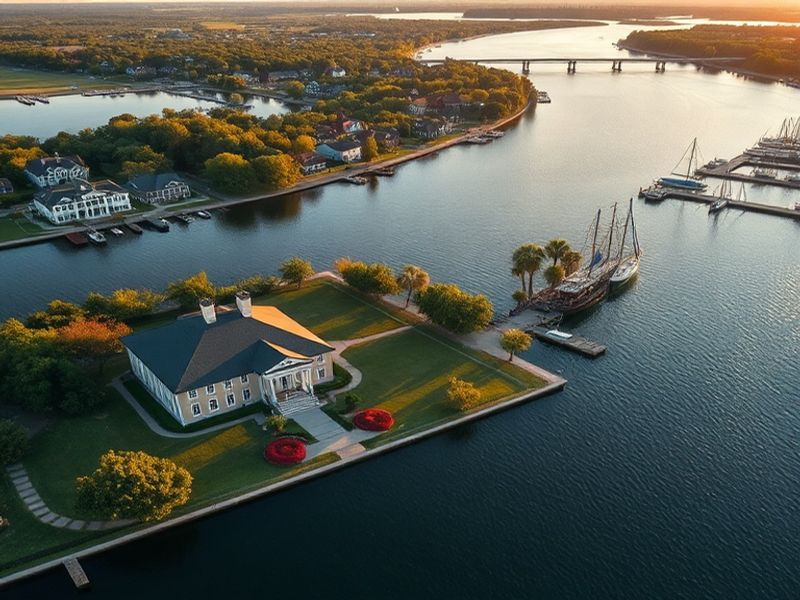
Nestled where the Neuse and Trent rivers converge in coastal North Carolina, New Bern offers a rare blend of history, culture, and natural beauty. Founded in 1710 by Swiss settlers, the city carries layers of colonial heritage, Civil War significance, and modern revitalization. Unlike its more tourist-heavy neighbors, New Bern maintains an authentic pace—where locals sip coffee along the waterfront and historic homes stand as living museums.
The Birthplace of Pepsi and a Colonial Legacy
New Bern’s claim as the birthplace of Pepsi-Cola is often its most famous introduction to outsiders. In 1893, pharmacist Caleb Bradham created the drink in his downtown pharmacy, originally naming it “Brad’s Drink” before rebranding it as Pepsi-Cola in 1898. Today, the original pharmacy site at 256 Middle Street has been preserved as the Pepsi Store, offering tours, vintage memorabilia, and free tastings of the classic cola.
But New Bern’s story begins long before soda fizzed in glasses. As one of the earliest permanent settlements in North Carolina, it served as the colonial capital from 1712 to 1776. Tryon Palace, reconstructed in the 1950s after a devastating fire, now functions as a state historic site. The palace and its 16 acres of gardens host candlelight tours, colonial reenactments, and seasonal festivals that draw history enthusiasts from across the country.
The city’s architecture reflects this layered past. Over 150 buildings in the downtown district are listed on the National Register of Historic Places, including the Attmore-Oliver House and the politically significant John Wright Stanly House. Walking tours wind past Federal-style mansions and early 20th-century storefronts, each narrating a chapter of resilience—from pirate raids to Union occupation during the Civil War.
Waterfront Revival and the Allure of the Neuse
The Neuse River has always been the lifeblood of New Bern. Once a hub for lumber, naval stores, and shipping, the waterfront fell into decline by the mid-20th century. But in the past two decades, a quiet renaissance has transformed the riverfront into a vibrant public space. The Union Point Park now hosts outdoor concerts, farmers’ markets, and sunset yoga sessions, while the newly renovated Union Station serves as a gateway for visitors arriving by boat or rail.
Kayaking and paddleboarding are increasingly popular thanks to the calm waters and scenic marshes. Local outfitters like Down River Canoe & Kayak offer guided excursions that glide past herons, osprey nests, and historic riverfront estates. The annual Neuse River Festival in May celebrates the waterway with art installations, food vendors, and a “Paddle the Neuse” race that draws hundreds of participants.
For those who prefer dry land, the Croatan National Forest lies just minutes away, offering 160,000 acres of pine forests, blackwater streams, and rare carnivorous plants. It’s a stark contrast to the city’s urban core—yet both ecosystems thrive in harmony around New Bern’s boundaries.
From Recovery to Renaissance: New Bern’s Resilient Spirit
New Bern has faced its share of challenges. In 1999, Hurricane Floyd caused catastrophic flooding that submerged entire neighborhoods, displacing thousands. The storm revealed both the fragility of coastal communities and the strength of local resilience. Over the next decade, recovery efforts focused not just on rebuilding homes, but on restoring the city’s cultural identity.
Today, New Bern’s recovery is evident in its growing food scene. Once limited to classic Southern diners and seafood shacks, the city now boasts a diverse culinary landscape. The Riverwalk Café serves farm-to-table dishes with river views, while the recent arrival of Crooked Hideaway—a speakeasy-style cocktail bar—has elevated the nightlife scene. Local breweries like Ghost Coast Brewing craft small-batch ales using regional ingredients like sweet potatoes and muscadine grapes.
Artists have also been drawn to New Bern’s affordable studios and galleries. The Bank of the Arts, housed in a former 1920s bank building, showcases rotating exhibits by regional artists. First Fridays downtown transform the city into an open-air gallery, with live jazz spilling from storefronts and pop-up studios inviting visitors to meet painters and potters.
A Year-Round Calendar of Traditions and Festivals
New Bern’s calendar reflects its deep community spirit. The Mum Festival in October is a 60-year-old tradition celebrating chrysanthemums—with a parade, garden tours, and a flower show that fills downtown with color. The Croatan Celtic Festival in March brings Scottish and Irish music, dance, and storytelling to Union Point Park, drawing visitors from beyond the state line.
Seasonal events highlight the city’s connection to the land and water. The Oyster Roast in November celebrates the Neuse’s bounty with steamed oysters, live bluegrass, and storytelling about the river’s ecological importance. During the summer, the Tryon Palace Amphitheatre hosts Shakespeare in the Park, where open-air performances draw families and theater lovers alike.
Winter brings the Candlelight Tour of Historic New Bern, where candlelit streets and costumed guides recreate colonial-era life. It’s a reminder that New Bern doesn’t just preserve its past—it invites visitors to step into it.
Why New Bern Stands Out
What makes New Bern truly special is its balance. It’s a city where history isn’t cordoned off in museums—it’s woven into daily life. You can sip a locally brewed IPA at a taproom built in a 19th-century warehouse, then take a sunset cruise past the same riverbanks where pirates once anchored. It’s a place where the pace slows, the stories linger, and the Neuse River continues to flow through the heart of the community.
For travelers tired of crowded tourist corridors, New Bern offers an alternative: a city that remembers its roots while quietly reinventing itself. Whether you come for the history, the water, or the warmth of a small Southern town, New Bern leaves a lasting impression—one that lingers long after the final river breeze.
And perhaps that’s why, after more than 300 years, New Bern still feels like a discovery. Not because it’s hidden, but because it’s waiting to be found by those who take the time to stop and listen.