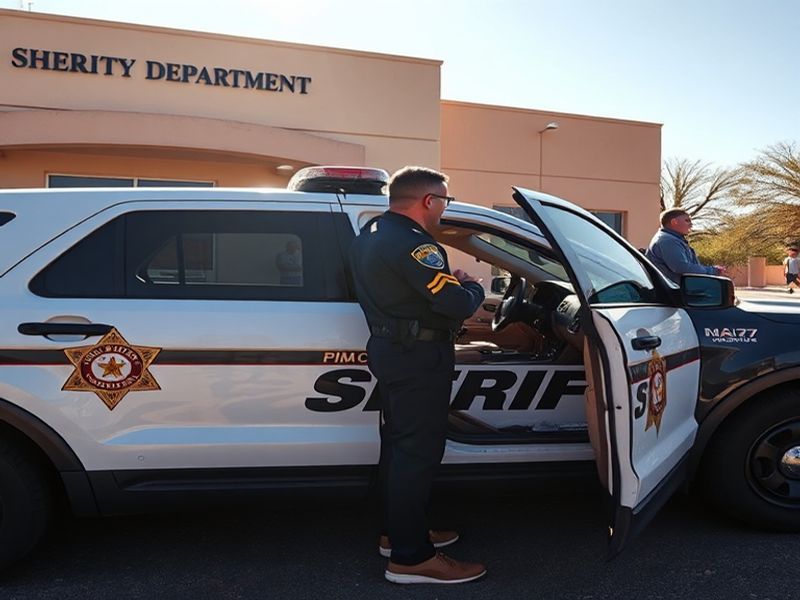
The Pima County Sheriff’s Department (PCSD) stands as a cornerstone of public safety in Southern Arizona, covering over 9,000 square miles with a population exceeding one million residents. As one of the largest law enforcement agencies in the state, PCSD operates with a dual role—serving as both the primary sheriff’s office for unincorporated areas and providing critical support to local municipalities through contracts and mutual aid agreements.
Unlike municipal police departments, which focus on city limits, sheriff’s offices in Arizona inherit statewide authority under Title 11 of the Arizona Revised Statutes. This gives PCSD deputies the unique responsibility of enforcing laws across vast deserts, rural communities, and rapidly growing suburban corridors. Their jurisdiction includes high-traffic corridors like Interstate 19, which connects Tucson to Nogales and the U.S.-Mexico border—positioning PCSD at the forefront of border security and cross-border crime prevention.
Structure and Operational Scope
PCSD is organized into several specialized divisions designed to address the diverse needs of Pima County. At its core, the agency maintains a patrol division responsible for day-to-day law enforcement in unincorporated areas. This includes responding to emergency calls, conducting traffic enforcement, and investigating criminal activity. Additionally, the department oversees a detective bureau that handles major crimes such as homicides, sexual assaults, and financial fraud.
A key component of PCSD’s structure is its detention division, which operates the Main Jail Complex in Tucson—one of the largest correctional facilities in Arizona. With a daily average population exceeding 2,000 inmates, the jail faces significant challenges, including overcrowding, mental health care demands, and the need for modernized infrastructure.
The department also maintains a dedicated Search and Rescue unit, essential in a region known for rugged terrain and extreme weather. This unit responds to hikers lost in the Sonoran Desert, missing persons in remote areas, and natural disaster scenarios. Given the region’s vulnerability to wildfires and flash floods, the unit’s role has grown increasingly vital.
- Patrol Division: Primary law enforcement in unincorporated areas, including traffic enforcement and emergency response.
- Detective Bureau: Investigates violent and property crimes, including homicides and cybercrime.
- Detention Division: Manages the Main Jail Complex, one of Arizona’s largest correctional facilities.
- Search and Rescue: Conducts wilderness and disaster response across Pima County’s diverse terrain.
Border Security and Transnational Crime
Pima County’s proximity to the U.S.-Mexico border places PCSD at the intersection of domestic law enforcement and national security. The agency collaborates closely with U.S. Customs and Border Protection (CBP), Immigration and Customs Enforcement (ICE), and other federal partners to combat human smuggling, drug trafficking, and transnational criminal organizations.
Despite these efforts, the region remains a primary corridor for illicit activity. According to CBP data, thousands of pounds of methamphetamine, fentanyl, and cocaine are seized annually in the Tucson Sector. PCSD deputies are often the first responders in remote desert corridors where smugglers operate, leading to high-risk encounters and tactical challenges.
In response, PCSD has expanded its Border Enforcement Unit, deploying deputies trained in tactical operations and intelligence gathering. These units conduct surveillance, interdiction patrols, and community outreach to disrupt criminal networks. However, resource constraints and the sheer scale of the border demand continued collaboration with state and federal agencies.
Community Policing and Public Trust
In recent years, PCSD has placed greater emphasis on community policing—an approach aimed at building trust and collaboration between law enforcement and residents. Programs such as the Citizens Academy and youth mentorship initiatives have been introduced to foster dialogue and transparency.
Yet, community relations remain complex. Like many law enforcement agencies nationwide, PCSD has faced scrutiny over use-of-force incidents and accountability. In 2022, the department implemented updated policies requiring body-worn cameras for all patrol deputies, a move praised by advocacy groups. However, concerns persist regarding the consistency of enforcement, particularly in neighborhoods with historically tense relationships between police and residents.
Recognizing these challenges, PCSD has partnered with local organizations to offer crisis intervention training for deputies. This program equips officers with de-escalation techniques for encounters involving mental health crises or homelessness—two issues increasingly visible in Tucson’s urban landscape.
Looking Ahead: Innovation and Reform
As Pima County continues to grow—projected to add over 200,000 residents by 2040—PCSD faces the dual pressures of rising service demands and evolving criminal threats. The department has begun exploring technological solutions, including automated license plate readers and predictive policing software, to enhance operational efficiency.
At the same time, calls for police reform and accountability remain strong. In 2023, PCSD established an independent Civilian Review Board, allowing community members to review critical incidents and recommend policy changes. This represents a significant step toward rebuilding public confidence and ensuring equitable law enforcement.
Looking forward, PCSD’s ability to adapt will determine its effectiveness in protecting a region marked by cultural diversity, economic disparity, and environmental extremes. From the Sonoran Desert to the urban core of Tucson, the department’s role extends beyond crime suppression—it is a guardian of public safety, a responder in crisis, and a bridge between communities.
With continued investment in training, technology, and community engagement, the Pima County Sheriff’s Department can navigate the complexities of the modern law enforcement landscape while upholding its mission: to serve and protect every resident, visitor, and community within its vast jurisdiction.
Relevant Resources
For more on local law enforcement trends and public safety initiatives, visit our News and Analysis sections.