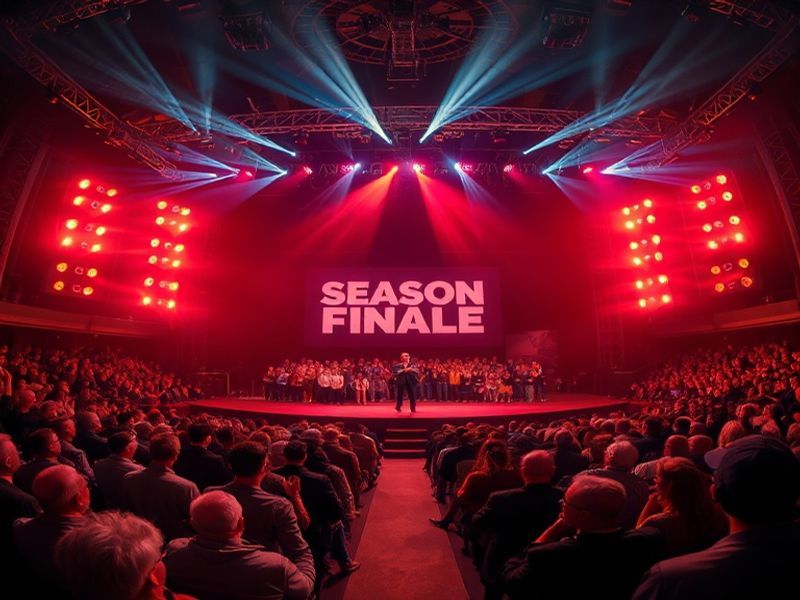
Season Finale: The Global Ritual That Keeps Audiences Hooked
“`html
Season Finale: The Global Ritual That Keeps Audiences Coming Back
The season finale is more than just the last episode of a television series. It is a cultural milestone, a communal experience, and often a moment of collective anticipation that spans continents and languages. Whether it’s a drama that has gripped millions, a reality show that divides opinion, or an animated series that defines a generation, the season finale serves as a punctuation mark in our shared cultural calendar.
Across the globe, broadcasters and streaming platforms carefully curate these finales to maximize impact. They understand that a strong finale can drive subscriptions, boost ratings, and spark conversations that ripple through social media for days. But what makes a season finale truly unforgettable? And how has this tradition evolved in the digital age?
The Anatomy of a Season Finale
The season finale is a carefully constructed piece of storytelling. Writers and directors spend months—or even years—crafting an ending that satisfies audiences while leaving enough ambiguity to fuel speculation and debate. These finales often feature heightened drama, emotional confrontations, and unresolved questions designed to keep viewers engaged until the next season.
In many cases, season finales are not just about closure. They are about setting up future storylines, introducing new characters, or even redefining the direction of the series. For example, entertainment juggernauts like Game of Thrones and Breaking Bad used their finales to deliver shocking twists that became instant talking points worldwide.
But not all finales are created equal. Some are celebrated for their emotional depth, while others are criticized for their rushed conclusions. The success of a season finale often depends on how well it aligns with audience expectations. When done right, it can elevate a series from good to iconic.
The Role of Suspense and Cliffhangers
Suspense is the lifeblood of the season finale. Writers use cliffhangers, unresolved plotlines, and last-minute revelations to keep viewers on the edge of their seats. A well-placed cliffhanger can turn a modestly successful series into a cultural phenomenon overnight. For instance, the Dallas episode “Who Shot J.R.?” in 1980 became a global obsession, proving that audiences crave mystery and intrigue.
In the digital age, suspense is no longer confined to the screen. Social media platforms like Twitter and Reddit allow fans to dissect every detail of a finale in real time. This collective engagement turns the season finale into a shared experience, where audiences around the world react simultaneously to the same events.
A Global Phenomenon
The tradition of the season finale is not limited to Western television. In South Korea, for example, K-dramas like Squid Game and Crash Landing on You have mastered the art of the cliffhanger, often ending seasons with shocking twists that send fans scrambling for theories. Similarly, in India, Bollywood films and television series like Sacred Games have adopted the season finale model to maintain audience interest in an increasingly competitive market.
In Japan, anime series like Attack on Titan and Demon Slayer use season finales to build hype for the next arc, often releasing them in cinemas to maximize impact. This approach turns the finale into an event, complete with merchandise, screenings, and fan gatherings.
The globalization of television has also led to cross-cultural finales that resonate with diverse audiences. Shows like Money Heist (Spain) and Lupin (France) have found massive international followings, proving that great storytelling transcends borders. Their finales are eagerly awaited by millions, regardless of language or cultural background.
The Economic Impact of a Strong Finale
For broadcasters and streaming platforms, a strong season finale is more than just artistic validation—it’s a business imperative. A well-received finale can boost subscriber numbers, increase ad revenue, and even revive interest in older series. For example, when Stranger Things Season 4 debuted in 2022, its finale drove a 30% increase in Netflix subscriptions in the weeks following its release.
Advertisers also recognize the value of season finales. A primetime slot during a major finale can command premium rates, as brands vie for the attention of a highly engaged audience. In 2023, the Super Bowl halftime show—which often features high-profile musical performances—drew over 100 million viewers, demonstrating the enduring power of live events tied to season finales.
However, the pressure to deliver a perfect finale can also backfire. A poorly received ending can alienate fans and damage a series’ reputation. For instance, the Lost finale in 2010 remains one of the most divisive in television history, sparking years of debate and disappointment among viewers.
The Digital Evolution of the Season Finale
The rise of streaming platforms has transformed the way we experience season finales. Unlike traditional television, where finales air at a fixed time, streaming services often release episodes at midnight, allowing global audiences to binge-watch at their convenience. This shift has democratized access to finales, making them available to fans in different time zones simultaneously.
Social media has also changed the dynamics of the season finale. Platforms like Twitter and TikTok allow fans to share reactions in real time, creating a virtual watercooler effect. Shows like The Crown and Stranger Things have leveraged this trend by releasing finales on Fridays, giving fans the weekend to dissect every detail.
But the digital age has also introduced new challenges. Spoilers spread faster than ever, and the pressure to please a global audience can lead to homogenized storytelling. Some critics argue that the focus on cliffhangers and twists has overshadowed character development and narrative coherence in modern television.
The Future of the Season Finale
As technology continues to evolve, so too will the season finale. Virtual reality (VR) and augmented reality (AR) could soon offer immersive viewing experiences, where fans feel as though they are part of the story. Imagine watching a Game of Thrones finale in VR, where you can explore the ruins of King’s Landing alongside your favorite characters.
Interactive storytelling is another frontier. Platforms like Netflix have already experimented with choose-your-own-adventure formats, where viewers influence the outcome of a story. In the future, season finales could become truly interactive, with audience choices determining the fate of characters and plotlines.
Despite these innovations, the core appeal of the season finale remains unchanged. It is a moment of shared anticipation, a collective sigh of relief or gasp of surprise. Whether it’s a Shakespearean tragedy, a superhero saga, or a reality show drama, the season finale continues to captivate audiences worldwide.
Conclusion
The season finale is a tradition that has stood the test of time. From the golden age of television to the streaming era, it remains a cornerstone of modern storytelling. It is where art meets commerce, where emotion meets suspense, and where fans come together to celebrate or debate the stories they love.
As we look to the future, one thing is clear: the season finale will continue to evolve, adapting to new technologies and audience expectations. But no matter how it changes, its power to unite and captivate audiences around the world will endure.