<!DOCTYPE html>
<html lang="en">
<head>
    <meta charset="UTF-8">
    <meta name="viewport" content="width=device-width, initial-scale=1.0">
    <title>North Sea Oil: Europe's Energy Lifeline and Its Future Challenges</title>
</head>
<body>
    <article>
        <h1>North Sea Oil: Europe's Energy Lifeline and Its Future Challenges</h1>

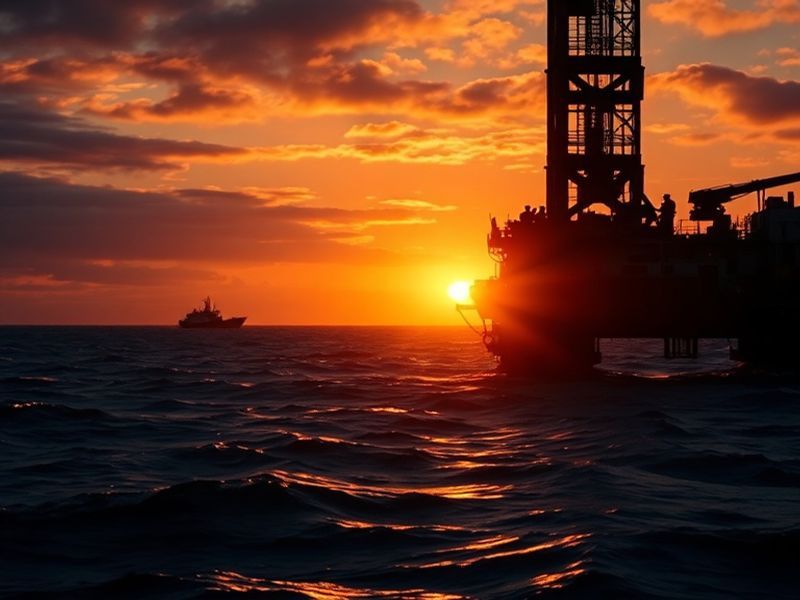
        <p>The North Sea has long been a critical artery for Europe's energy supply, providing a steady flow of crude oil and natural gas since commercial extraction began in the late 1960s. Stretching from the coasts of the United Kingdom and Norway to the Netherlands, Germany, Denmark, and beyond, this body of water holds one of the world's most significant offshore petroleum reserves. While its prominence has fluctuated with geopolitical shifts, technological advancements, and environmental pressures, the North Sea remains a vital component of Europe's energy security.</p>

        <p>Its significance became even more apparent after Russia's invasion of Ukraine in 2022, which severed Europe's reliance on Russian gas and forced a rapid reevaluation of domestic energy production. This article explores the history, economic impact, geopolitical dynamics, and future prospects of North Sea oil, offering a nuanced perspective on its role in the continent's energy landscape.</p>

        <h2>The Historical Rise of North Sea Oil Production</h2>

        <p>Oil was first discovered in the North Sea in 1959, but it wasn't until the mid-1960s that exploration and drilling operations gained momentum. The British and Norwegian governments began leasing exploration rights in the late 1960s, leading to a series of major discoveries in the 1970s. The Brent oil field, discovered in 1971, became one of the most influential, giving its name to the Brent crude benchmark that remains a global price reference today.</p>

        <p>The 1973 oil crisis accelerated investment in North Sea oil as countries sought to reduce dependence on Middle Eastern imports. By the 1980s, the region had become a key player in the global oil market, with the UK and Norway emerging as significant producers. The development of infrastructure such as pipelines and offshore platforms, including the iconic Brent Delta and Ekofisk fields, solidified the North Sea's role in the energy sector.</p>

        <p>Norway, in particular, leveraged its North Sea resources to build one of the world's most robust sovereign wealth funds, now valued at over $1.4 trillion. The country's strict regulatory framework and focus on sustainability have allowed it to balance production with environmental responsibility. Meanwhile, the UK, once Europe's top oil producer, has seen output decline as fields mature and new discoveries become rarer.</p>

        <h2>Economic and Geopolitical Importance</h2>

        <p>The North Sea oil industry has had a profound economic impact on the countries bordering it. In the UK, oil and gas revenues have funded public services, infrastructure projects, and social programs. The sector directly employs tens of thousands of workers and supports countless more in supply chain roles. However, the economic benefits have not been evenly distributed, with regions like Aberdeen in Scotland and Stavanger in Norway becoming hubs of wealth and innovation.</p>

        <p>Geopolitically, the North Sea has transformed Europe's energy security. Before the Ukraine war, Europe imported about 40% of its gas from Russia, leaving it vulnerable to supply disruptions. The sudden loss of Russian energy forced European nations to scramble for alternatives, and North Sea oil and gas became a crucial stopgap. The UK, for example, reopened licensing rounds for new oil and gas projects, while Norway ramped up production to meet European demand.</p>

        <p>This shift has also intensified debates about energy transition. While North Sea oil remains vital in the short term, its long-term role is uncertain. Countries like the UK have committed to net-zero emissions by 2050, which could spell the end for new oil and gas projects. Norway, however, continues to explore new fields, arguing that its high environmental standards and carbon capture technologies make it a responsible producer.</p>

        <h3>Key Players in the North Sea Oil Industry</h3>

        <p>The North Sea oil industry is dominated by a mix of national and international companies. Below is a list of the most influential players:</p>

        <ul>
            <li><strong>Equinor (Norway)</strong> - Norway's state-owned energy giant, responsible for a significant portion of North Sea production. Equinor is also a leader in carbon capture and storage technologies.</li>
            <li><strong>Shell (UK/Netherlands)</strong> - One of the largest operators in the North Sea, with stakes in major fields like Brent and Buzzard.</li>
            <li><strong>BP (UK)</strong> - A long-standing operator in the region, BP is involved in several key projects, including the Clair field west of Shetland.</li>
            <li><strong>TotalEnergies (France)</strong> - A major player in Norwegian waters, with significant stakes in fields like Martin Linge.</li>
            <li><strong>Chrysaor (UK)</strong> - A relatively new but influential company focused on acquiring mature fields and maximizing their output.</li>
        </ul>

        <p>These companies, along with smaller independents, form a complex web of partnerships and joint ventures that keep the North Sea's oil industry running. Their strategies often reflect broader trends in the energy sector, from the push for renewables to the challenges of aging infrastructure.</p>

        <h2>Challenges and Environmental Concerns</h2>

        <p>Despite its economic and geopolitical importance, the North Sea oil industry faces significant challenges. One of the most pressing is the environmental impact of offshore drilling. Oil spills, though rare, may have devastating consequences for marine ecosystems. The Brent Delta platform, for instance, has faced criticism over its decommissioning plans, which involve leaving part of the structure in place—a practice that some environmental groups argue poses long-term risks.</p>

        <p>Another major issue is the carbon footprint of North Sea oil. Producing oil from the North Sea is more expensive and carbon-intensive than from many other regions, such as the Middle East or the US shale fields. This is due to the harsh conditions, aging infrastructure, and the need for energy-intensive extraction methods. As Europe tightens its climate policies, the cost of producing North Sea oil could become prohibitive.</p>

        <p>The industry is also grappling with the economic realities of declining production. In the UK, oil production peaked in 1999 and has been steadily declining ever since. While new discoveries and technological advancements (such as enhanced oil recovery) have slowed the decline, they have not reversed it. Norway, too, faces a gradual reduction in output as its major fields mature.</p>

        <h2>The Future of North Sea Oil</h2>

        <p>The future of North Sea oil is a subject of intense debate. On one hand, the industry remains a critical component of Europe's energy security, particularly as countries seek to reduce reliance on Russian energy. On the other hand, the push for net-zero emissions and the growing competitiveness of renewables pose existential threats to oil production in the region.</p>

        <p>Several scenarios could shape the North Sea's future. One possibility is a gradual phase-out of oil production, with a focus on decommissioning platforms and repurposing infrastructure for carbon capture or renewable energy projects. Another scenario involves a more rapid decline, driven by stricter climate policies and the economic unsustainability of high-cost production. Alternatively, advancements in technology—such as carbon capture and storage (CCS)—could allow the North Sea to continue producing oil with a lower environmental impact.</p>

        <p>Norway appears to be taking a pragmatic approach, balancing production with sustainability. The country has committed to reducing its greenhouse gas emissions while continuing to explore new oil and gas fields. Its sovereign wealth fund, which invests oil revenues globally, is also divesting from fossil fuel assets, signaling a long-term shift away from dependence on oil.</p>

        <p>The UK, meanwhile, is at a crossroads. The government has approved new oil and gas licenses in the North Sea, arguing that domestic production is necessary for energy security. However, environmental groups and some lawmakers argue that these licenses are incompatible with the country's climate goals. The ongoing debate reflects broader tensions between energy security and climate action.</p>

        <p>For Europe as a whole, the North Sea's role will likely diminish over time. Renewables, particularly wind and solar, are becoming increasingly cost-competitive, and Europe's energy transition is gaining momentum. However, oil and gas will remain part of the energy mix for decades to come, particularly in sectors that are hard to electrify, such as aviation and shipping.</p>

        <h3>What Lies Ahead for the North Sea?</h3>

        <p>The North Sea's future will depend on a combination of technological innovation, policy decisions, and global energy trends. Below are some key factors to watch:</p>

        <ol>
            <li><strong>Technological Advancements:</strong> Breakthroughs in carbon capture, enhanced oil recovery, and renewable energy integration could extend the life of North Sea oil while reducing its environmental impact.</li>
            <li><strong>Policy Shifts:</strong> Stricter climate policies in the EU and UK could accelerate the decline of North Sea oil, while supportive policies might extend its lifespan.</li>
            <li><strong>Global Energy Markets:</strong> Fluctuations in oil prices, geopolitical tensions, and the pace of the global energy transition will all influence North Sea production.</li>
            <li><strong>Public Opinion:</strong> Growing environmental awareness and pressure from advocacy groups could shape government and corporate decisions about North Sea oil.</li>
        </ol>

        <p>Ultimately, the North Sea's legacy will be defined by its ability to adapt to a changing world. Whether it becomes a cautionary tale of fossil fuel dependence or a model of responsible energy transition remains to be seen.</p>

        <p>For now, North Sea oil continues to flow, powering economies and shaping geopolitics. But its days as a dominant energy source are numbered, and the choices made today will determine its role in Europe's energy future.</p>

        <p>To learn more about Europe's energy policies, visit our <a href="https://www.daveslocker.net/category/news">News</a> section. For insights into the global oil market, check out our <a href="https://www.daveslocker.net/category/business">Business</a> category.</p>

        <p>The North Sea's story is far from over, but its next chapter may look very different from its past.</p>
    </article>

    ---METADATA---
    {
      "title": "North Sea Oil: Europe's Energy Lifeline and Future Challenges",
      "metaDescription": "Explore the history, economic impact, and future of North Sea oil, a vital energy source for Europe facing climate and geopolitical pressures.",
      "categories": ["News", "Business"],
      "tags": ["North Sea oil", "energy security", "oil production", "Europe energy", "geopolitics"],
      "imageDescription": "An offshore oil rig in the North Sea at sunset, with cranes and drilling equipment silhouetted against a golden horizon. The scene captures the industrial scale of the operation, set against the vast expanse of the sea and sky, evoking themes of energy