Neil Armstrong: The First Man on the Moon and His Lasting Impact
“`html
Neil Armstrong: The Man Who Defined Human Ambition Beyond Earth
On July 20, 1969, Neil Armstrong etched his name into history not with a brush or pen, but with a single boot print on the lunar surface. The first human to set foot on the Moon, Armstrong’s journey from a small-town Ohio boy to a global icon remains one of humanity’s most defining moments. His life was a study in precision, humility, and relentless curiosity—qualities that transcended the space race and continue to inspire generations. More than half a century later, his legacy endures as a testament to what can be achieved when determination meets opportunity.
The Early Years: From Wapakoneta to the Skies
Neil Alden Armstrong was born on August 5, 1930, in Wapakoneta, Ohio, a town where the rhythms of rural life set the pace for his formative years. His fascination with flight began early; at just six years old, he took his first airplane ride in a Ford Trimotor, an experience that ignited a lifelong passion. By the time he was a teenager, Armstrong was building model airplanes and earning his student pilot’s license at 16—before he even got his driver’s license. This early exposure to aviation foreshadowed a career that would eventually take him to the stars.
Academically, Armstrong was a standout. He excelled in science and mathematics, attending Purdue University on a U.S. Navy scholarship. His studies were interrupted by the Korean War, where he served as a naval aviator, flying 78 combat missions. The experience honed his reflexes and decision-making under pressure—skills that would later prove invaluable during the Apollo missions. After the war, he returned to Purdue, graduating with a degree in aeronautical engineering in 1955. His blend of practical experience and theoretical knowledge positioned him perfectly for the emerging field of space exploration.
The Right Stuff: Selection and Training for the Unknown
In 1962, Armstrong was selected as part of the second group of NASA astronauts, a cohort that included future legends like Jim Lovell and Buzz Aldrin. The selection process was grueling, but Armstrong’s calm demeanor and technical expertise set him apart. He was assigned to the Gemini program, where he served as a backup pilot for Gemini 5 before commanding Gemini 8 in 1966. This mission nearly ended in disaster when a thruster malfunction sent the spacecraft into a dangerous spin, but Armstrong’s quick thinking and steady hand saved the day. The incident demonstrated his ability to remain composed under extreme pressure—a trait that would define his most famous moment.
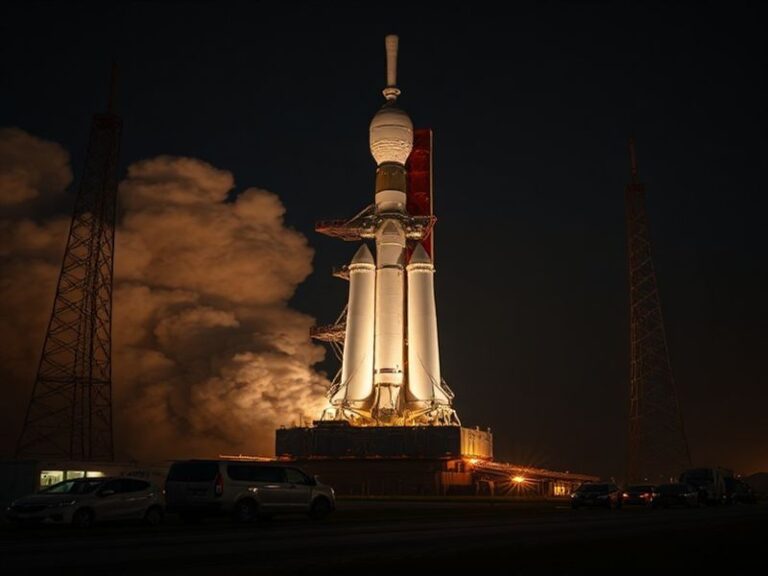
By 1969, Armstrong was the commander of Apollo 11, leading a crew that included Aldrin and Michael Collins. The mission was fraught with risks. The lunar module, code-named Eagle, had never been tested in actual flight conditions. The descent to the Moon’s surface was a white-knuckle affair, with alarms blaring and fuel running low. As Eagle descended, Armstrong realized the automated landing system was guiding them toward a field of boulders. With seconds to spare, he took manual control, landing the module with just 30 seconds of fuel remaining. The world held its breath as his voice crackled over the radio: “Houston, Tranquility Base here. The Eagle has landed.”
A Moment Frozen in Time: The First Step
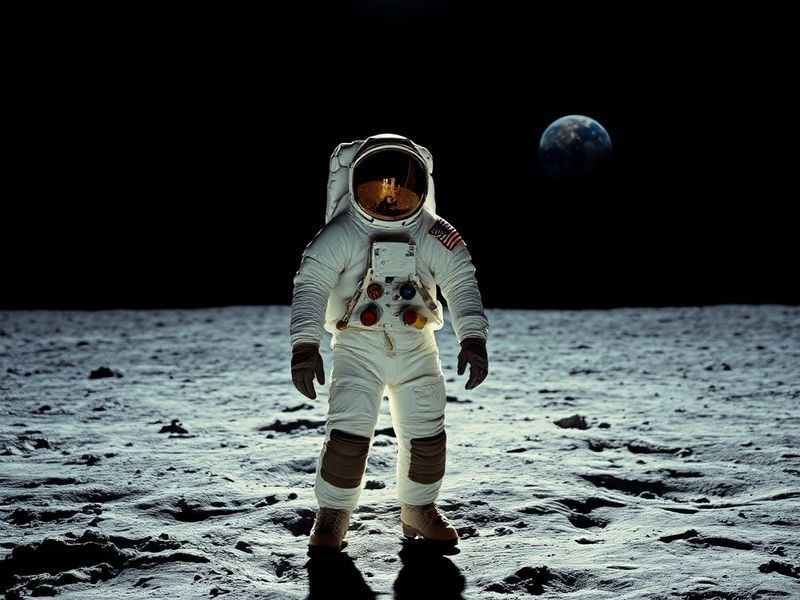
Six hours after landing, Armstrong descended the lunar module’s ladder and stepped onto the Moon’s surface. As he placed his left foot down, he uttered the now-iconic words, “That’s one small step for [a] man, one giant leap for mankind.” The phrase, though spontaneous, captured the essence of the moment. It wasn’t just about reaching the Moon; it was about what that achievement represented—a leap in human potential, a validation of scientific ingenuity, and a unifying moment for a world often divided by conflict.
The Apollo 11 mission lasted 21 hours and 36 minutes on the lunar surface, during which Armstrong and Aldrin collected 21.5 kilograms of lunar material, planted the American flag, and conducted experiments. The images beamed back to Earth—grainy, black-and-white, and profoundly human—showed Armstrong and Aldrin bounding across the Moon’s surface, their bulky spacesuits making even simple tasks look otherworldly. For many, these images were a reminder of Earth’s beauty and fragility, a blue marble suspended in the void.
Beyond the Moon: The Quiet Legacy of a Reluctant Hero
Despite his fame, Armstrong was famously private and avoided the spotlight. He refused to commercialize his legacy, turning down lucrative offers to endorse products or appear in advertisements. His post-NASA career reflected his lifelong values: teaching engineering at the University of Cincinnati, serving on corporate boards, and advocating for space exploration and education. He was a vocal proponent of the space program’s future, emphasizing the importance of inspiring the next generation of scientists and engineers.
Armstrong’s life was not without controversy. The 2012 biography First Man by James R. Hansen revealed a complex man—brilliant but reserved, driven but introspective. Some critics argued that the book humanized a figure who had been mythologized, while others praised its honesty. Armstrong himself rarely gave interviews, preferring to let his actions speak for him. His reluctance to engage with the public only added to his mystique, making him a figure who transcended celebrity.
The Armstrong Effect: How One Man Changed Perceptions of Possibility
The impact of Armstrong’s achievement extends far beyond the realm of space exploration. His journey demonstrated the power of perseverance, the importance of preparation, and the willingness to embrace the unknown. In an era when skepticism about government and technology was rising, Apollo 11 provided a rare moment of collective pride. It proved that humanity could achieve the extraordinary when united by a common goal.
Armstrong’s legacy is also a reminder of the human capacity for humility. In interviews, he often downplayed his role, attributing the success of Apollo 11 to the thousands of engineers, scientists, and technicians who made it possible. This ethos of collaboration and shared purpose is perhaps his most enduring lesson. It’s a philosophy that resonates today, in an age where individual achievement is often celebrated above all else.
Remembering a Pioneer: The Lessons for Future Generations
Neil Armstrong passed away on August 25, 2012, at the age of 82, following complications from heart surgery. His death was met with an outpouring of tributes from around the world, a testament to the global impact of his life’s work. In the years since, his legacy has only grown, serving as a touchstone for discussions about space exploration, technological innovation, and human ambition.
For those interested in exploring more about the intersection of technology and exploration, Dave’s Locker Technology category offers insights into how modern advancements are shaping our understanding of the universe. Similarly, the Science category delves into the ongoing quest to push the boundaries of what we know and can achieve.
Armstrong’s life challenges us to ask: What are the “giant leaps” we are capable of today? Whether it’s addressing climate change, curing diseases, or exploring Mars, his story reminds us that progress is possible when we dare to dream—and then take the steps to make those dreams a reality.
In the end, Neil Armstrong was more than a astronaut or a hero. He was a symbol of what humanity can achieve when it sets its sights beyond the horizon. His legacy invites us all to look upward—to the Moon, to Mars, and beyond—and ask, “What’s next?”