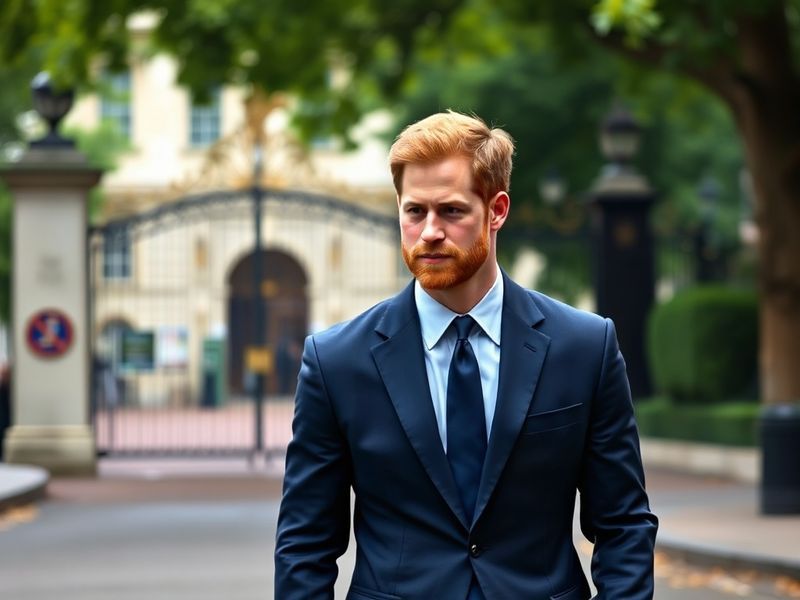
Prince Harry, Duke of Sussex, has spent his life navigating the complexities of royal duty, personal transformation, and global scrutiny. From his early years as the younger son of Prince Charles and Princess Diana to his current role as a global advocate and media figure, his journey reflects broader cultural shifts in monarchy, mental health awareness, and public engagement.
Born Henry Charles Albert David on September 15, 1984, he was the second child of the Prince and Princess of Wales. His upbringing—marked by both privilege and personal tragedy—set the stage for a life lived under intense public attention. The loss of his mother when he was just 12 years old became a defining moment, shaping his approach to duty, family, and public service.
Military Service and Global Influence
Prince Harry’s commitment to military service distinguished him early in life. Commissioned as a second lieutenant in 2006, he served two tours in Afghanistan, first as a forward air controller in 2007–2008 and again in 2012–2013. These deployments made him the first British royal to serve in a combat zone since the Falklands War. His service, often highlighted in the media, solidified his reputation as a dedicated public servant.
Beyond the battlefield, Harry’s influence extended into global humanitarian efforts. In 2014, he co-founded the Invictus Games, an international adaptive sports competition for wounded, injured, or sick armed services personnel. The event, now held biennially, has grown into a major cultural touchstone, blending sports, rehabilitation, and public engagement. The 2023 Invictus Games in Düsseldorf drew participants from 20 nations, demonstrating the event’s expanding reach.
Harry’s military service and advocacy work reflect a broader trend in modern monarchy: the blending of tradition with active participation in global causes. While earlier generations of royals often focused on ceremonial duties, Harry’s generation has embraced hands-on engagement with issues like mental health and veterans’ welfare.
Media Presence and Public Identity
Prince Harry’s relationship with the media has been a defining aspect of his public life. From childhood paparazzi encounters to recent interviews with Oprah Winfrey and Prince Harry and Meghan Markle’s Netflix documentary, The Sussexes, his story has been repeatedly shaped by public narratives.
His marriage to Meghan Markle in 2018 marked another turning point. The union of a biracial American actress and a British prince captured global attention, symbolizing a shift in the monarchy’s approach to modernity. Yet, the couple’s decision to step back as senior royals in 2020—dubbed “Megxit”—sparked intense debate about the pressures of royal life and the institution’s adaptability.
Since relocating to North America, the Duke and Duchess of Sussex have built a media brand centered on storytelling, activism, and financial independence. Their involvement with entertainment platforms like Netflix and Spotify has redefined how royals engage with global audiences. Their production company, Archewell, focuses on content that amplifies social causes, from gender equality to environmental justice.
Key Media Appearances
- 2021: Interview with Oprah Winfrey, discussing mental health and royal family dynamics.
- 2022: Netflix documentary The Sussexes, offering an intimate look at their lives post-royalty.
- 2023: Podcast appearances on platforms like Armchair Expert, blending personal narrative with advocacy.
Their media presence underscores a broader cultural shift: the rise of personal branding among public figures. Unlike earlier generations, Harry and Meghan have leveraged their fame to create platforms that extend beyond traditional royal duties.
The Duke’s Advocacy and Mental Health Focus
Mental health has been a cornerstone of Prince Harry’s advocacy. In 2016, he launched Heads Together, a mental health initiative aimed at reducing stigma and promoting open dialogue. The campaign, which includes partnerships with charities like Mind and Comic Relief, reflects a growing global emphasis on mental well-being.
Harry’s openness about his own struggles—particularly following his mother’s death—has resonated internationally. His 2023 appearance on the Huberman Lab podcast, where he discussed therapy, grief, and resilience, further amplified his role as a mental health advocate. The conversation reached millions, highlighting the intersection of celebrity, vulnerability, and public influence.
This focus aligns with a global trend: the normalization of mental health discussions in mainstream media. Figures like Harry are helping dismantle stigma, particularly among men, where traditional notions of emotional restraint often prevail.
A Global Perspective on Modern Monarchy
Prince Harry’s life and career offer a lens into the evolving role of monarchy in the 21st century. While institutions like the British royal family remain symbols of tradition, their ability to adapt is increasingly tested by public expectations and media scrutiny.
Harry and Meghan’s decision to step back from royal duties reflects a broader generational shift. Younger royals, such as Sweden’s Princess Madeleine or Norway’s Princess Märtha Louise, are also exploring paths that balance tradition with personal autonomy. The Sussexes’ journey—from palace to podcast—challenges conventional notions of royalty, blending public service with entrepreneurial ambition.
Globally, monarchies are grappling with similar questions. In Japan, Emperor Naruhito’s reign has seen efforts to modernize the imperial family’s role, while in Spain, King Felipe VI has worked to restore public trust after scandals. Harry’s story is part of this larger narrative: the tension between heritage and progress.
Yet, his influence extends beyond monarchy. His work with environmental organizations, including his 2019 visit to Malawi to support conservation efforts, highlights his commitment to global challenges. These actions position him as a figure who bridges royal tradition with contemporary activism.
Conclusion
Prince Harry, Duke of Sussex, embodies the complexities of modern royalty. His life—marked by service, personal reinvention, and global engagement—reflects broader cultural shifts in how we perceive tradition, duty, and identity. Whether through military service, mental health advocacy, or media entrepreneurship, he has redefined what it means to be a royal in the 21st century.
As the world watches, his journey raises important questions about the future of monarchy: Can institutions rooted in history adapt to the demands of a digital age? Can public figures balance personal authenticity with public expectation? For Harry, the answer may lie in the very platforms he has embraced—storytelling, advocacy, and connection.
The Duke of Sussex’s story is far from over. As he continues to shape his legacy, one thing is clear: his impact extends far beyond the borders of the United Kingdom, resonating with a global audience navigating the same tensions between past and future.