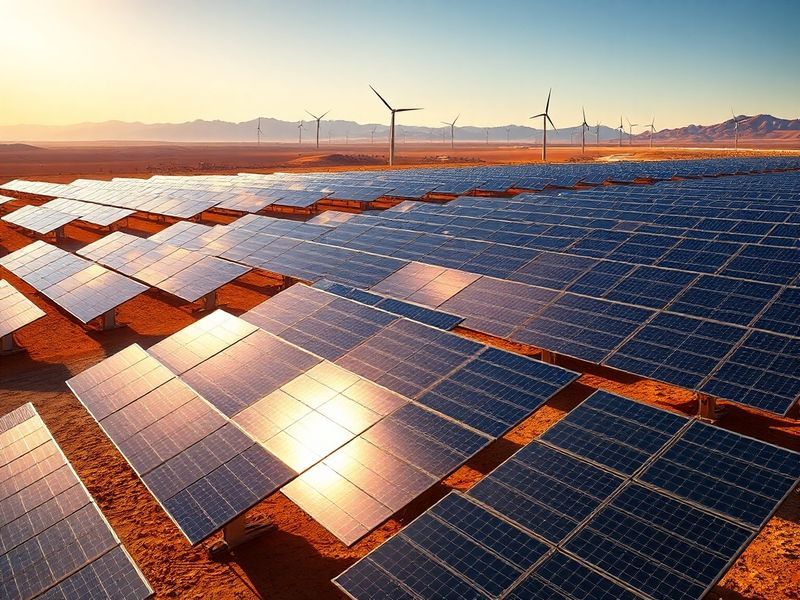
The global push toward sustainability has accelerated the development of renewable energy technologies. From solar farms that double as wildlife habitats to wind turbines with built-in storage, innovations in this space are redefining how we generate and consume power. The urgency to curb carbon emissions has made these advancements not just desirable but necessary.
Traditional energy sources like coal and natural gas are increasingly seen as relics of the past. In their place, a wave of technological breakthroughs is emerging—each promising greater efficiency, scalability, and environmental benefits. The transition isn’t happening overnight, but the momentum is undeniable. Governments, corporations, and even individual households are investing in these solutions at an unprecedented rate.
The Rise of Next-Generation Solar Power
Solar energy has long been a cornerstone of renewable power, but recent innovations are pushing its potential even further. One of the most promising developments is perovskite solar cells. Unlike traditional silicon-based panels, perovskite cells are cheaper to produce, lighter in weight, and can achieve higher efficiency rates. Researchers have already demonstrated prototypes that convert over 25% of sunlight into electricity—compared to the 15-22% typical of conventional panels.
Another breakthrough comes from the field of agrivoltaics, where solar panels are installed above farmland. This dual-use approach allows crops to grow beneath the panels, reducing water evaporation and protecting plants from extreme weather. Early projects in Japan and the United States have shown up to 60% increases in land-use efficiency while maintaining agricultural output. These innovations could make solar power more accessible in densely populated or arid regions.
Key Advancements in Solar Technology
- Perovskite solar cells: Higher efficiency and lower production costs than silicon panels.
- Agrivoltaics: Combining solar farms with agriculture to maximize land use.
- Transparent solar windows: Building-integrated photovoltaics that turn windows into energy generators.
- Floating solar farms: Deploying panels on reservoirs and lakes to reduce land requirements and water evaporation.
Wind Energy Gets Smarter and More Efficient
Wind power has been a leader in renewable energy for decades, but the latest advancements are making it even more viable. Offshore wind farms, in particular, are gaining traction due to stronger and more consistent wind patterns. Projects like the Dogger Bank Wind Farm in the UK are set to become the world’s largest offshore installations, with capacities exceeding 3.6 gigawatts. These massive turbines, some standing over 260 meters tall, are capable of powering millions of homes.
Innovations aren’t limited to scale alone. Airborne wind energy systems, which use kite-like devices to harness high-altitude winds, are being tested by companies like Makani (acquired by Shell) and KitePower. These systems can operate at altitudes where winds are stronger and more consistent, potentially reducing costs by up to 50% compared to traditional turbines. While still in early stages, airborne wind could unlock new regions for wind energy generation.
The integration of artificial intelligence is also transforming wind farm operations. Machine learning algorithms optimize turbine placement, predict maintenance needs, and adjust blade angles in real time to maximize energy capture. These smart systems can increase energy output by 10-20% while reducing downtime.
Energy Storage: The Missing Link in Renewable Adoption
One of the biggest challenges with renewable energy is intermittency—solar and wind don’t produce power 24/7. Energy storage solutions are critical to solving this problem, and recent innovations are making batteries more efficient and affordable. Lithium-ion batteries remain the dominant technology, but alternatives like solid-state batteries and flow batteries are gaining ground.
Solid-state batteries, which replace liquid electrolytes with solid materials, promise higher energy density and improved safety. Companies like QuantumScape and Solid Power are racing to commercialize these batteries for both electric vehicles and grid storage. Meanwhile, flow batteries—such as those developed by Form Energy—use liquid electrolytes stored in external tanks, allowing for longer discharge durations (up to 100 hours) at a fraction of the cost of lithium-ion systems.
Beyond batteries, other storage methods are being explored. Pumped hydro storage, which uses excess energy to pump water uphill and releases it to generate power when needed, remains the most widely used large-scale solution. Innovative approaches like compressed air energy storage (CAES) and thermal energy storage are also being tested, offering additional flexibility for grid operators.
The Broader Implications of Renewable Energy Innovations
The shift toward renewable energy isn’t just about reducing carbon emissions—it’s reshaping global economies, geopolitics, and job markets. Countries that invest early in these technologies are positioning themselves as leaders in the 21st-century energy landscape. China, for example, dominates the solar panel supply chain, producing over 80% of the world’s panels. Meanwhile, the United States and Europe are racing to catch up, with the Inflation Reduction Act and European Green Deal offering substantial incentives for domestic production.
Job creation is another significant benefit. The International Renewable Energy Agency (IRENA) estimates that the renewable energy sector employed 12.7 million people worldwide in 2022, a number expected to grow to 42 million by 2050. These jobs span manufacturing, installation, maintenance, and research—offering opportunities in both urban and rural communities.
However, challenges remain. The supply chain for critical minerals like lithium, cobalt, and rare earth elements is still vulnerable to disruptions and ethical concerns. Recycling programs and alternative materials are being developed, but scaling these solutions will take time. Additionally, the transition requires significant infrastructure upgrades, from smart grids to charging stations for electric vehicles.
Despite these hurdles, the trajectory is clear: renewable energy is no longer a niche experiment but a cornerstone of global energy strategy. The innovations highlighted here are just a sample of what’s possible when science, policy, and industry align. The question isn’t whether the world will shift to renewables, but how quickly—and who will lead the charge.
For those interested in staying updated on the latest developments, following industry reports from organizations like the International Energy Agency (IEA) and BloombergNEF can provide valuable insights. On Dave’s Locker Technology and Science sections, we regularly cover breakthroughs in renewable energy and their broader societal impacts.
As these technologies mature, they will not only power our homes and vehicles but also redefine our relationship with the planet. The future of energy is renewable—and it’s arriving faster than many expected.