Croton Dam Michigan: History, Engineering & Recreation
“`html
Croton Dam Michigan: History, Engineering & Recreation
Croton Dam stands as a testament to early 20th-century engineering along Michigan’s Muskegon River. Completed in 1907, the dam was built primarily to generate hydroelectric power. Its construction marked a turning point in regional energy development and remains a key piece of infrastructure today. The dam’s location in Newaygo County, about 20 miles northeast of Muskegon, places it at the heart of one of West Michigan’s most scenic river corridors.
The dam was commissioned by Consumers Power Company (now CMS Energy) during a period when hydroelectricity was becoming central to industrial growth across the Midwest. At the time of its completion, Croton Dam was one of the largest earthen dams in the state. Its design drew on emerging engineering practices that prioritized both structural integrity and environmental adaptation—lessons that would influence future dam construction across the region.
Engineering & Design: A 1907 Marvel
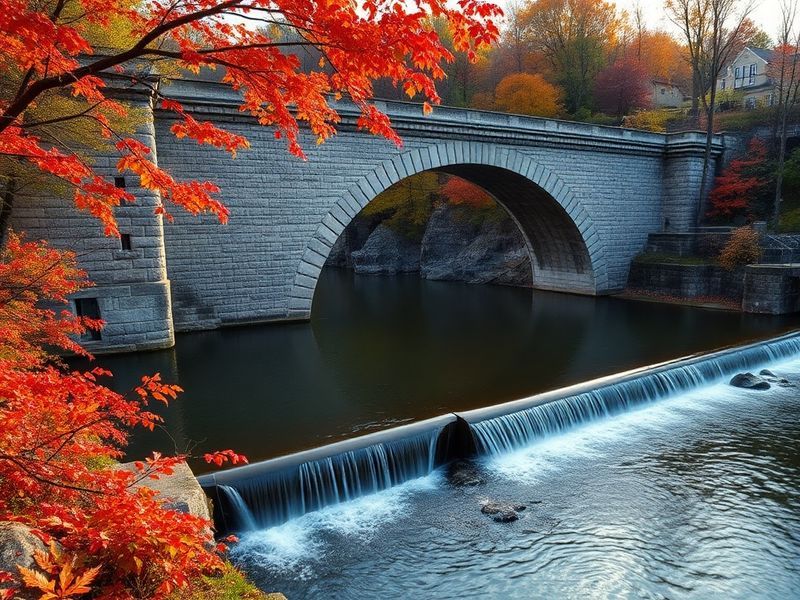
Croton Dam is a composite structure featuring a concrete spillway flanked by massive earthen embankments. The dam stands approximately 50 feet high and spans about 1,200 feet across the Muskegon River. Its powerhouse initially housed six turbine generators, which were later upgraded as technology advanced. The dam’s spillway was designed to handle flood conditions, a critical consideration given the river’s seasonal fluctuations.
One of the dam’s most innovative features was its use of a forebay—a controlled reservoir area upstream that regulated water flow into the turbines. This design improved efficiency and reduced wear on the machinery. The dam’s construction also involved significant earth-moving efforts, requiring thousands of cubic yards of clay, sand, and gravel to form the embankments. Workers used both manual labor and early steam-powered equipment, reflecting the transitional phase between manual and mechanized construction.
The dam’s powerhouse originally generated enough electricity to serve thousands of homes and businesses in West Michigan. Over the decades, upgrades have kept the facility operational, though its primary role has evolved. Today, while still producing clean energy, Croton Dam is valued as much for its historical significance as for its functional output.
Recreation & Environmental Impact
Beyond its industrial legacy, Croton Dam has become a hub for outdoor recreation and ecological preservation. The impoundment created by the dam—Croton Pond—covers approximately 500 acres and offers opportunities for fishing, kayaking, and shoreline walking. The area is especially popular with anglers targeting bass, pike, and panfish, while the river downstream remains a prime trout stream.
Environmental agencies have closely monitored the dam’s impact on fish migration and river ecology. In the early 2000s, fish ladders were installed to help restore passage for migratory species such as steelhead and salmon. These efforts reflect a broader trend in Michigan, where aging dams are increasingly evaluated not just for their utility, but for their role in restoring natural ecosystems.
The surrounding Croton Dam Pond Park, managed by Consumers Energy and local authorities, provides public access to hiking trails, picnic areas, and scenic overlooks. The park’s forested landscape and river views attract visitors year-round, making it a quiet yet valued retreat in a region known more for its urban centers and lakefront destinations.
Key Features of Croton Dam & Park
- Completed in 1907 as a hydroelectric dam by Consumers Power Company
- One of Michigan’s largest earthen dams at the time of construction
- Spans 1,200 feet with a 50-foot height; includes a concrete spillway and earthen embankments
- Original powerhouse housed six turbines; now upgraded for modern efficiency
- Created Croton Pond, a 500-acre impoundment popular for fishing and boating
- Features fish ladders installed in the 2000s to aid migratory species
- Public park with hiking trails, scenic overlooks, and picnic areas
- Part of the Muskegon River corridor, a key natural and recreational resource
Broader Implications: Dams in Michigan’s Energy & Ecological Landscape
Croton Dam represents a microcosm of Michigan’s complex relationship with its waterways. The state once relied heavily on hydroelectric dams to power its burgeoning industries, especially in the early 20th century. Many of these structures, including Croton, were built during a time when environmental regulations were minimal or nonexistent. As a result, modern assessments often reveal trade-offs between energy production, flood control, and ecosystem health.
Today, Michigan faces a wave of dam removals and retrofits. Aging infrastructure, combined with climate change and shifting environmental priorities, has led to debates over whether to modernize, repurpose, or remove dams like Croton. The state’s Department of Natural Resources has identified over 100 dams in need of rehabilitation or removal. Each decision carries implications for local economies, wildlife habitats, and recreational access.
In the case of Croton Dam, preservation has won out so far. Its continued operation supports renewable energy goals, while adaptive management—such as fish passage improvements—balances industrial use with ecological restoration. This approach may serve as a model for other aging dams across the Great Lakes region, where energy infrastructure meets environmental stewardship.
Visiting Croton Dam: What to Expect
Croton Dam is accessible year-round, though seasonal changes bring different experiences. In spring and summer, the area is alive with greenery, fishing activity, and family outings. Autumn draws visitors for the foliage and crisp air, while winter offers a serene, quiet landscape—though access to some areas may be limited due to snow or ice.
Parking is available at designated lots near the dam and powerhouse. Visitors are advised to stay on marked trails and respect posted boundaries, especially around the power infrastructure. While the dam itself is not open for public tours, informational plaques and observation platforms provide insight into its history and function.
For those interested in the broader Muskegon River system, Croton Dam serves as a gateway. Downstream, the river flows toward Lake Michigan, passing through forests, wetlands, and small communities. Upstream, it connects to smaller lakes and reservoirs, forming a network of waterways central to West Michigan’s identity.
As Michigan continues to reimagine its energy and environmental future, places like Croton Dam remind us that infrastructure is not just about function—it’s about legacy. Built over a century ago, it still powers homes, supports wildlife, and welcomes visitors. In an era of rapid technological change, such structures offer a rare bridge between past and present.
Whether you’re drawn by history, engineering, or simply the call of the river, Croton Dam stands as a quiet monument to human ingenuity and nature’s enduring presence.