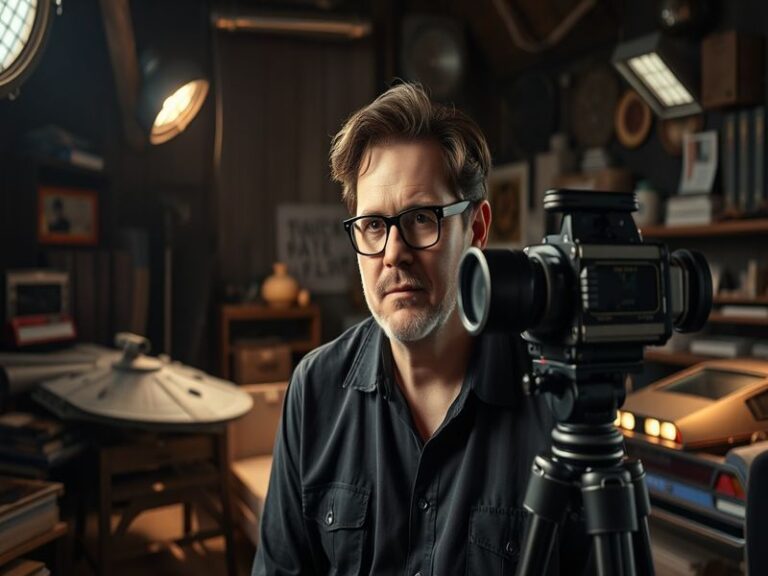
Lee Cronin’s The Mummy: A Fresh Horror Take on a Classic Icon
“`html
Lee Cronin’s The Mummy: Reinventing a Horror Legend for a New Generation
Universal Pictures’ The Mummy, directed by Lee Cronin, arrives as the latest attempt to resurrect a franchise that has long struggled to find its footing in the modern horror landscape. Cronin, best known for The Hole in the Ground, brings a measured intensity to this reimagining, balancing supernatural terror with grounded storytelling. The film arrives less than a decade after Tom Cruise’s ill-fated The Mummy reboot, signaling a shift in Hollywood’s approach to classic monsters.
Unlike its predecessors, Cronin’s film strips away the high-octane action of previous iterations in favor of a slower-burning, character-driven horror experience. This decision reflects a broader trend in contemporary horror, where atmosphere and dread take precedence over spectacle. The result is a film that feels less like a summer blockbuster and more like a deliberate homage to the Gothic horror of the 1930s and 1940s.
The Evolution of a Horror Icon
The mummy as a cinematic figure has undergone significant transformation since Boris Karloff first lumbered across the screen in 1932’s The Mummy. Early portrayals emphasized the creature’s tragic, almost sympathetic nature, a reanimated soul cursed to walk the earth. Later adaptations, particularly the 1999 Brendan Fraser film, leaned into adventure and comedy, transforming the mummy into a swashbuckling antihero.
Cronin’s version returns to the creature’s roots but with a modern twist. Here, the mummy is less a tragic figure and more a relentless force of nature, embodying the terror of the unknown. The design of the creature itself is a departure from previous versions, with Cronin opting for a more feral, less humanoid appearance. This choice aligns with contemporary horror sensibilities, where monsters are often depicted as grotesque and unsettling rather than romanticized.
The film’s setting—a remote, fog-shrouded village in Ireland—further reinforces its Gothic roots. Cronin and his team of writers craft a story that feels rooted in classic folklore, where superstition and fear govern the lives of the villagers. This setting serves as a stark contrast to the bustling modern cities that often serve as backdrops for horror films today.
A New Approach to Horror Storytelling
One of the most notable aspects of Cronin’s The Mummy is its pacing. Unlike the frenetic jump scares of contemporary horror or the set-piece-driven action of franchise films, this version unfolds at a deliberate, almost glacial pace. The first act is particularly slow, focusing heavily on character development and world-building. This approach may frustrate audiences expecting immediate thrills, but it pays dividends in the film’s second half, where the tension builds to a genuinely unsettling climax.
The film’s narrative structure is also noteworthy. Rather than relying on a traditional three-act structure, Cronin employs a more episodic approach, with each act feeling like a self-contained story that gradually converges into a cohesive whole. This technique allows for a deeper exploration of the characters and their motivations, though it occasionally results in a disjointed pacing that may not satisfy all viewers.
Another standout element is the film’s use of practical effects. In an era dominated by CGI, Cronin’s team delivers a mummy that feels tactile and real. The creature’s movements are unnervingly fluid, and its design is grotesque in the best way, avoiding the uncanny valley that plagues so many digital creations. This commitment to practical effects harks back to the golden age of horror, where the limitations of technology forced filmmakers to rely on creativity and craftsmanship.
Comparisons to Universal’s Monster Universe
Cronin’s The Mummy is part of Universal’s broader attempt to revive its classic monster franchise, which includes The Wolf Man and Frankenstein in various stages of development. Unlike the interconnected universe envisioned by the studio in the mid-2010s, Cronin’s film stands alone, a deliberate choice that allows it to carve its own identity. This approach is a refreshing change from the studio’s previous efforts, which often felt bogged down by convoluted lore and overstuffed narratives.
However, the film’s standalone nature also raises questions about its place within the larger monster universe. While Cronin’s The Mummy doesn’t directly tie into the interconnected continuity of Universal’s Dark Universe, it does leave room for future installments. The post-credits scene, in particular, teases the return of a familiar face, hinting at a larger world waiting to be explored. Whether this will be enough to satisfy fans eager for a cohesive franchise remains to be seen.
It’s worth noting that Cronin’s film diverges significantly from the tone and style of the 1999 version, which remains the gold standard for mummy-centric horror. While Fraser’s film was lighthearted and adventurous, Cronin’s is unapologetically dark and atmospheric. This tonal shift reflects a broader trend in modern horror, where nostalgia is often tempered by a desire to subvert expectations.
Critical Reception and Audience Response
Early reviews of Cronin’s The Mummy have been mixed, with critics divided over its pacing and narrative structure. Some praise the film’s commitment to horror fundamentals, noting its effective use of atmosphere and practical effects. Others, however, criticize its slow burn, arguing that it struggles to maintain tension throughout its runtime. The film’s reception at test screenings has reportedly been lukewarm, with audiences divided over its unconventional approach.
Despite these mixed reactions, there is a consensus that Cronin’s film is a step in the right direction for Universal’s monster franchise. By eschewing the trappings of a traditional blockbuster, the film carves out a niche for itself in the crowded horror landscape. Whether it will resonate with audiences in the long term remains to be seen, but it’s clear that Cronin has delivered a film that is distinctly his own.
The film’s box office performance will likely play a significant role in determining the future of the franchise. If it performs well, we can expect to see more standalone horror films from Universal, each exploring a different classic monster. If it underperforms, the studio may once again pivot toward a more action-oriented approach, as seen with the ill-fated Tom Cruise reboot.
The Future of Horror Franchises
Cronin’s The Mummy arrives at a pivotal moment for the horror genre. With audiences increasingly craving fresh, innovative storytelling, the success of this film could signal a shift away from the formulaic retreads that have dominated the genre in recent years. It’s a reminder that horror doesn’t always need to rely on jump scares or CGI spectacles to be effective.
For fans of classic horror, Cronin’s film is a welcome return to form. It’s a movie that respects the genre’s history while pushing it forward in new and exciting ways. Whether it will inspire a wave of similar films remains to be seen, but it’s clear that Cronin has taken a bold step in redefining what a horror franchise can be.
As Universal continues to explore its classic monster lineup, one thing is certain: the mummy is far from dead. Lee Cronin’s film may not be the definitive version of the character, but it’s a worthy addition to the canon, one that proves the genre is capable of evolution without sacrificing its roots.
Final Thoughts
Lee Cronin’s The Mummy is a film that defies easy categorization. It’s not the high-octane adventure of Brendan Fraser’s 1999 classic, nor is it the CGI-laden spectacle of Tom Cruise’s reboot. Instead, it’s a deliberate, atmospheric horror film that prioritizes dread and character over spectacle. Whether this approach will resonate with audiences remains to be seen, but it’s clear that Cronin has delivered a film that is both ambitious and flawed in equal measure.
For horror purists, The Mummy is a refreshing return to the genre’s roots. For casual viewers, it may feel like a slow burn that doesn’t quite pay off. Ultimately, it’s a film that demands patience and rewards those willing to embrace its unconventional approach. As the horror landscape continues to evolve, Cronin’s film serves as a reminder that sometimes, the best way forward is to look back.
If you’re a fan of classic horror or simply curious about Universal’s latest attempt to revive its monster franchise, The Mummy is worth a watch. Just don’t expect to be dazzled by CGI or high-octane action—this is a film that thrives on atmosphere, tension, and the slow unraveling of a classic horror icon.
For more on the evolution of horror franchises, check out our Horror Franchises category. To dive deeper into the history of classic monsters, visit our Classic Horror section.