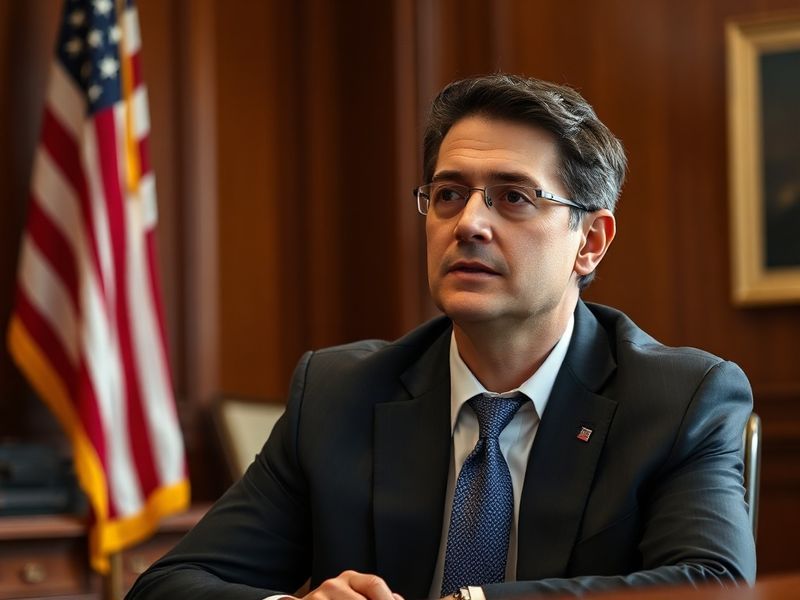
Xavier Becerra: How a Political Leader Shapes Health and Justice
Xavier Becerra: A Political Figure Shaping Global Health and Social Policy
Xavier Becerra has emerged as one of the most influential voices in American politics, particularly in the realms of health care, civil rights, and immigration reform. As the first Latino Attorney General of California and later as the United States Secretary of Health and Human Services, Becerra has consistently positioned himself at the intersection of policy, advocacy, and public service. His career reflects a broader shift in how governments address systemic inequities while navigating the complexities of a globalized world.
Born in Northern California to immigrant parents, Becerra’s upbringing shaped his commitment to social justice. His father worked in a battery factory, while his mother cleaned houses—jobs that underscored the struggles of working-class families. These experiences fueled his early interest in law, leading him to Stanford University and then to Harvard Law School. By the time he entered politics, Becerra had already established himself as a champion for marginalized communities, a theme that would define his decades-long career.
The Rise of a Political Leader
Becerra’s political journey began in 1990 when he was elected to the California State Assembly. His rapid ascent was marked by a focus on education reform, healthcare access, and immigrant rights. By 1992, he won a seat in the U.S. House of Representatives, becoming one of the first Mexican-American Democrats to represent a majority Latino district in Congress. During his 12-term tenure in Congress, he played a pivotal role in shaping policies that expanded health coverage for low-income families and protected undocumented immigrants from deportation.
His leadership extended beyond domestic policy. Becerra was a vocal advocate for international human rights, often criticizing U.S. foreign policy decisions that disproportionately affected vulnerable populations. He co-founded the Congressional Hispanic Caucus’ Task Force on Puerto Rico, addressing the island’s economic crisis and advocating for disaster relief after Hurricane Maria. These efforts highlighted his ability to merge local concerns with global perspectives, a rare quality in American politics.
Attorney General: A Legal Trailblazer
In 2017, Becerra made history by becoming California’s Attorney General, the first Latino to hold the position. His tenure was defined by aggressive legal battles against the Trump administration’s policies, particularly those targeting immigrants and environmental regulations. Becerra filed over 100 lawsuits against the federal government, challenging rollbacks on healthcare protections, clean air standards, and DACA (Deferred Action for Childhood Arrivals). His office became a bulwark for progressive values in an era of federal retrenchment.
One of his most notable cases involved defending the Affordable Care Act (ACA) in court. When the Trump administration sought to dismantle the law, Becerra led a coalition of states to protect it, arguing that millions of Americans would lose healthcare coverage without it. The Supreme Court ultimately upheld the ACA in 2021, a victory that underscored Becerra’s role as a defender of public health.
Beyond litigation, Becerra prioritized criminal justice reform. He established the Bureau of Children’s Justice to address disparities in foster care and juvenile detention systems. His office also launched investigations into police misconduct and racial bias in policing, reflecting a broader movement toward accountability in law enforcement.
Secretary of Health and Human Services: Navigating Crisis and Reform
In March 2021, President Joe Biden nominated Becerra to lead the Department of Health and Human Services (HHS), a role that placed him at the center of the nation’s response to the COVID-19 pandemic. The challenges were immense: coordinating vaccine distribution, expanding testing, and addressing the disproportionate impact of the virus on communities of color. Becerra’s leadership during this period was marked by a data-driven approach, emphasizing equity in healthcare delivery.
Under his guidance, HHS launched initiatives to reduce maternal mortality rates among Black women, who face a three-times higher risk of death during childbirth than white women. The department also expanded access to mental health services, recognizing the pandemic’s toll on Americans’ psychological well-being. Becerra’s tenure at HHS demonstrated his ability to balance crisis management with long-term policy reform, a dual focus that has defined his career.
His global perspective was evident in his advocacy for international cooperation on health crises. Becerra pushed for increased U.S. funding for the World Health Organization (WHO) and supported vaccine equity efforts, ensuring that low-income countries received fair access to COVID-19 treatments. These actions aligned with his broader belief that health is a universal right, not a privilege reserved for the wealthy.
Cultural Impact and Legacy
Becerra’s influence extends beyond policy into the cultural fabric of America. As one of the highest-ranking Latino officials in U.S. history, he has become a symbol of representation for millions of immigrants and people of color. His story—from a factory worker’s son to a cabinet secretary—resonates in communities where upward mobility often feels out of reach.
His impact is also felt in the arts and media. Filmmakers and writers have highlighted his career as a testament to the power of persistence in the face of adversity. Documentaries like The State of Arizona (2014) explored his legal battles against SB 1070, Arizona’s controversial anti-immigration law, while news outlets frequently profile him as a key figure in progressive politics.
Becerra’s legacy is still being written, but his contributions to health equity, immigrant rights, and social justice have already left an indelible mark. In an era where polarization often dominates political discourse, he has consistently advocated for policies that bridge divides rather than deepen them.
Looking Ahead: Becerra’s Vision for the Future
As Becerra continues to shape public policy, his priorities remain clear: expanding healthcare access, protecting civil rights, and fostering international cooperation. His work at HHS has set the stage for future reforms, including potential expansions of the ACA and Medicare. Meanwhile, his legal battles have established a blueprint for state-level resistance to federal policies that undermine progressive values.
Looking globally, Becerra’s emphasis on health equity could influence international aid and development strategies. His belief in universal healthcare as a cornerstone of democracy aligns with movements in Europe and Latin America, where similar reforms have gained traction. As the world grapples with pandemics, climate change, and economic inequality, leaders like Becerra offer a model for how governments can address these challenges with both urgency and foresight.
For those interested in the intersection of law, politics, and social justice, Becerra’s career provides a compelling case study. His ability to navigate complex systems while staying true to his values serves as an example of leadership in the 21st century.
To explore more about the intersection of law and social justice, visit our News section. For deeper analysis on political trends shaping healthcare, check out our Health category.
Xavier Becerra’s journey from a California assemblyman to a global health leader reflects the evolving priorities of American governance. His work reminds us that policy is not just about numbers and regulations—it is about people, their struggles, and their aspirations. As governments worldwide confront unprecedented challenges, figures like Becerra demonstrate what it means to lead with conviction and compassion.