The NASCAR Cup Series has always been a sport defined by speed, precision, and the occasional moment of raw unpredictability. On a late summer evening at Kansas Speedway, the racing world witnessed one such moment when Carson Kvapil’s No. 38 car lifted into a dramatic barrel roll during a high-speed collision. The crash, broadcast live to millions, became an instant focal point—not just for motorsports fans, but for a global audience accustomed to viral sporting moments.
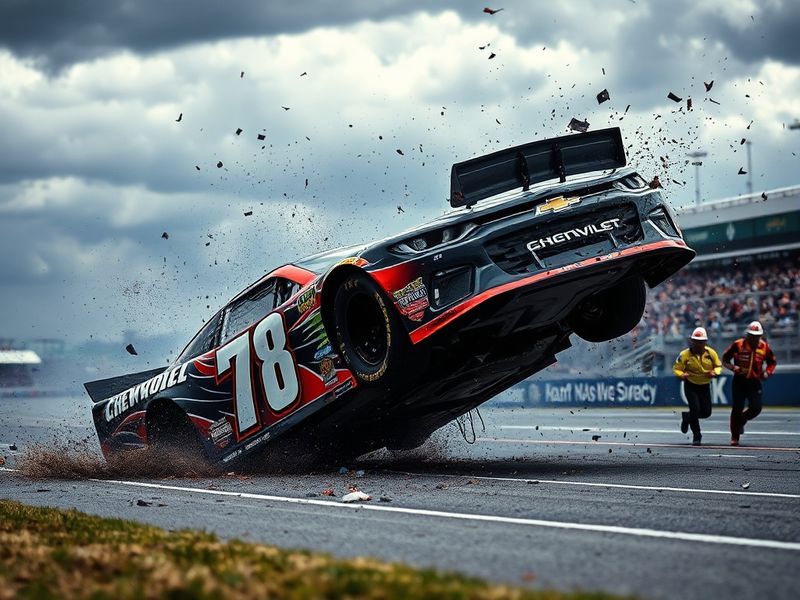
Kvapil, a 20-year-old rookie driver for Trackhouse Racing, was navigating Turn 3 when contact with another car sent his Chevrolet flipping end over end before landing on its roof. The force of the impact was so severe that the car tore in half at the firewall, a stark reminder of the dangers inherent in stock car racing. Yet, remarkably, Kvapil walked away with only minor injuries, a testament to advancements in driver safety and the structural integrity of modern race cars.
The Race and the Moment That Stole the Show
The incident occurred during the opening stage of the 2023 Hollywood Casino 400 at Kansas Speedway, a track known for its wide racing grooves and opportunities for aggressive maneuvering. Kvapil, who had started 18th, was running in the top 15 when the crash unfolded. Video footage from multiple angles captured the entire sequence in chilling detail—the initial contact, the violent lift, and the surreal sight of a race car somersaulting through the air. Fans in attendance and viewers at home held their breath as the car skidded to a stop.
Within seconds, safety crews were on the scene, and the red flag was waved. The immediate relief that Kvapil emerged under his own power was palpable, but the images of the crash lingered. Social media erupted with reactions ranging from awe to concern, with many praising Kvapil’s composure in the aftermath. The crash also reignited discussions about the balance between speed and safety in motorsports, a conversation that has evolved significantly over the past two decades.
A Global Perspective: Why This Crash Resonated Worldwide
While NASCAR remains a predominantly American sport, its fanbase spans continents, with strong followings in Canada, Mexico, Brazil, and even Europe and Australia. The accessibility of streaming services and international broadcasting deals has expanded NASCAR’s reach, making events like the Kansas flip more than just regional stories. The crash was covered not only by U.S.-based outlets like ESPN and NASCAR.com but also by international media outlets such as the BBC, Sky Sports, and motorsport-specific publications in Germany and Japan.
The global reaction highlighted several cultural nuances. In countries where motorsports are dominated by open-wheel series like Formula 1, the spectacle of a stock car flip—with its emphasis on close-quarters racing and mechanical durability—offered a different kind of thrill. Fans in Latin America, where NASCAR has growing popularity, saw Kvapil’s crash as a symbol of the sport’s intensity and unpredictability. Meanwhile, in Europe, where motorsports culture often prioritizes driver skill over car durability, the crash sparked debates about the structural safety of NASCAR vehicles.
Kvapil himself became a global talking point. As a young driver in a traditionally older driver’s sport, his presence in the Cup Series represents a shift toward youth and new perspectives. Social media platforms lit up with memes, tributes, and even parodies of the crash, further embedding the moment in popular culture. The hashtag #KvapilFlip trended on Twitter for nearly 24 hours, with fans and pundits alike dissecting every angle of the incident.
Safety Innovations and the Future of Stock Car Racing
The Kansas flip was a stark reminder of the inherent risks in motorsports, but it also underscored the progress made in driver safety. Since the tragic death of Dale Earnhardt in 2001, NASCAR has implemented a series of sweeping safety reforms, including the HANS device, stronger roll cages, and energy-absorbing walls. The survival of Kvapil—despite the severity of the crash—was a direct result of these advancements.
NASCAR’s safety evolution reflects broader trends in motorsports, where innovation in technology and design has become as critical as on-track performance. The Next Gen car, introduced in 2022, was designed with safety in mind, featuring a reinforced chassis and a larger cockpit area to reduce the risk of injury during rollovers. Kvapil’s crash provided a real-world test of these improvements, and the results were encouraging.
Looking ahead, the sport faces ongoing challenges, including the need to balance spectacle with safety. The Kansas flip may have been a dramatic moment, but it also served as a catalyst for discussions about how NASCAR can continue to evolve. Some advocates argue for even stricter regulations on car design, while others emphasize the importance of driver training and mental preparedness. One thing is clear: the sport’s commitment to safety will remain a defining feature of its future.
Lessons from the Track: What This Crash Teaches Us
The Kansas flip was more than just a viral moment—it was a case study in resilience, innovation, and the unpredictable nature of sports. For Kvapil, the crash was a baptism by fire, a stark introduction to the dangers of racing at the highest level. His ability to walk away unscathed was a relief to fans, but it also raised questions about the physical and mental toll of the sport. How do drivers process such traumatic events? What role does mental health play in a profession where a single mistake can be catastrophic?
For the broader audience, the crash offered a glimpse into the world of professional racing—a world where split-second decisions can mean the difference between glory and disaster. It also highlighted the importance of community in motorsports. From the safety crews who responded in seconds to the fans who rallied around Kvapil, the incident reinforced the idea that racing is a sport built on both individual skill and collective support.
As NASCAR continues to grow its global footprint, moments like the Kansas flip serve as both a warning and an opportunity. They remind us of the risks inherent in the sport while also showcasing the resilience of its athletes and the innovation that drives it forward. For Carson Kvapil, the crash will likely become a defining chapter in his career—a moment that tested his mettle and solidified his place in the sport. For fans, it was a reminder of why they love NASCAR: the drama, the danger, and the sheer unpredictability that makes every race a story worth watching.
Key Takeaways from the Kansas Flip
- Driver Safety: The crash demonstrated the effectiveness of NASCAR’s safety innovations, including the Next Gen car’s reinforced chassis and roll cage.
- Global Reach: The incident was covered by international media, highlighting NASCAR’s expanding global audience.
- Youth in Motorsports: Kvapil’s presence in the Cup Series represents a shift toward younger drivers in a traditionally older sport.
- Cultural Impact: The crash sparked debates about safety, technology, and the future of stock car racing worldwide.
- Community Response: The rapid response from safety crews and the outpouring of support from fans underscored the tight-knit nature of the racing community.
In the end, the Kansas flip was a reminder that motorsports are as much about human resilience as they are about speed and competition. For Carson Kvapil, the road to recovery and redemption is just beginning. For the rest of us, it’s a chance to reflect on the sport we love and the moments that define it.