United Arab Emirates: How the UAE Became a Global Powerhouse
“`html
United Arab Emirates: A Modern Oasis of Innovation and Tradition
The United Arab Emirates (UAE) has transformed from a collection of desert sheikhdoms into a global hub of commerce, technology, and culture. Since its formation in 1971 under the leadership of Sheikh Zayed bin Sultan Al Nahyan, the UAE has pursued a vision of progress while preserving its rich heritage. With cities like Dubai and Abu Dhabi redefining skylines and economic models, the country stands as a testament to what ambition and strategic planning can achieve.
The Economic Engine: Diversification Beyond Oil
While oil once dominated the UAE’s economy, today’s landscape reflects deliberate diversification. In 2023, non-oil sectors accounted for over 70% of the country’s GDP, a significant shift from the 1980s when hydrocarbons contributed nearly 50%. The UAE has invested heavily in tourism, finance, renewable energy, and logistics, positioning itself as a regional leader in economic innovation.
The UAE’s free zones, such as Dubai Internet City and Abu Dhabi’s Masdar City, have attracted multinational corporations and startups alike. These zones offer tax incentives, 100% foreign ownership, and streamlined business processes, making the UAE a preferred destination for global investors. In 2022 alone, foreign direct investment inflows reached $20.7 billion, a 10% increase from the previous year.
The country’s economic strategy includes long-term plans like Vision 2021 and Operation 300bn, which aims to double the industrial sector’s contribution to GDP by 2031. These initiatives emphasize advanced manufacturing, clean energy, and space technology, reflecting the UAE’s forward-thinking approach.
Cultural Fusion: Tradition Meets Global Ambition
The UAE’s identity blends deep-rooted traditions with cosmopolitan influences. The annual UAE Culture Week celebrates Emirati heritage through art, music, and cuisine, while institutions like the Louvre Abu Dhabi and the Dubai Opera showcase international collaborations. This fusion is evident in daily life, where modern skyscrapers coexist with traditional souks and falaj irrigation systems.
The country’s leadership has also prioritized education and cultural preservation. The Mohammed Bin Rashid Al Maktoum Knowledge Foundation funds research and innovation, while initiatives like the UAE Year of Tolerance promote social cohesion. Meanwhile, events such as the Abu Dhabi Grand Prix and the Dubai Shopping Festival highlight the UAE’s role as a global events destination.
Sustainability and the Future: Leading in Green Innovation
The UAE has emerged as a pioneer in sustainability, despite its arid climate. The country aims to achieve net-zero emissions by 2050, one of the most ambitious targets in the Middle East. Solar energy projects, such as the 2-gigawatt Al Dhafra Solar Plant, are among the largest in the world, while the Masdar City initiative in Abu Dhabi serves as a model for eco-friendly urban planning.
In 2023, the UAE hosted COP28, the United Nations climate conference, further solidifying its commitment to global environmental goals. The event underscored the country’s dual role as both a major energy producer and a champion of renewable solutions. Additionally, the UAE’s Green Visa program encourages entrepreneurs and skilled professionals to contribute to sustainable development.
Beyond energy, the UAE is investing in water security and circular economy models. The Barakah Nuclear Energy Plant, the first in the Arab world, provides clean electricity to hundreds of thousands of homes. These efforts reflect a broader strategy to balance economic growth with environmental stewardship.
Global Influence: Diplomacy, Tourism, and Soft Power
The UAE’s diplomatic reach extends far beyond the Gulf. It maintains strong ties with global powers, including the United States, China, and India, while also fostering partnerships across Africa and Latin America. The country played a key role in brokering the Israel-UAE Abraham Accords in 2020, normalizing relations between Israel and several Arab states.
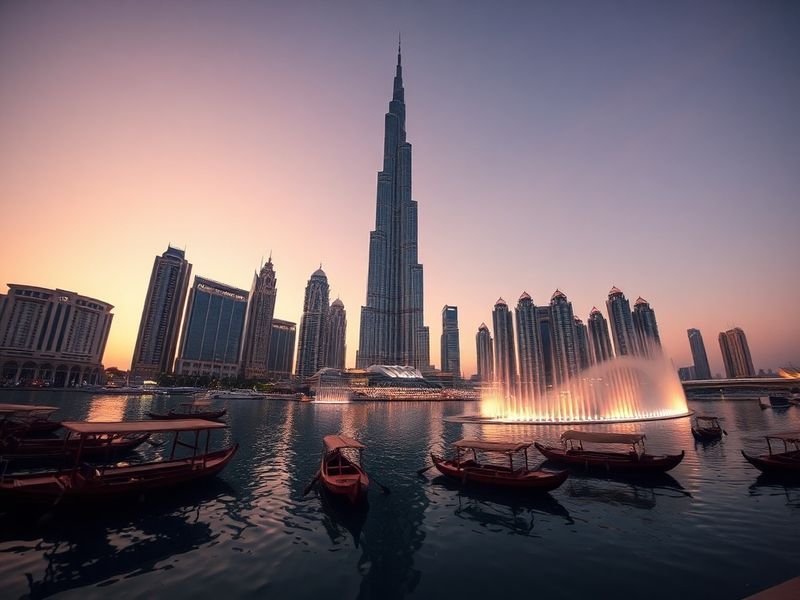
Tourism remains a cornerstone of the UAE’s global appeal. In 2023, the country welcomed over 24 million visitors, with Dubai alone attracting nearly 17 million. Iconic landmarks like the Burj Khalifa, Palm Jumeirah, and the Sheikh Zayed Grand Mosque draw millions annually. The UAE’s airline industry, led by Emirates and Etihad, connects the country to over 150 destinations worldwide.
The UAE’s soft power extends to sports, arts, and media. It hosts major events like the FIFA Club World Cup and the FIFA World Cup 2022, while its film industry, supported by entities like Image Nation Abu Dhabi, produces award-winning content. The country’s media outlets, including Sky News Arabia and The National, shape regional narratives and global discourse.
Key Challenges and Opportunities
The UAE’s rapid growth is not without challenges. Climate change poses a threat to water security and infrastructure, while geopolitical tensions in the region require careful navigation. The country must also address labor rights, particularly in its large migrant workforce, to ensure equitable development.
However, these challenges present opportunities. The UAE’s focus on technology, such as its UAE Space Agency and the Hope Probe mission to Mars, demonstrates its ambition to lead in science and innovation. The country’s youthful population, with over 60% under 30, provides a dynamic workforce ready to drive future growth.
Conclusion: A Model of Modernization
The United Arab Emirates has redefined what it means to balance tradition and progress. Through economic diversification, cultural preservation, and sustainability leadership, it has carved a unique path on the global stage. As it continues to innovate and adapt, the UAE serves as a model for other nations seeking to combine heritage with modernity.
With its eyes set on the future, the UAE remains a beacon of ambition, resilience, and vision—a testament to what can be achieved with determination and foresight.