Ballistic Missiles Explained: Tech, History & Global Threats
“`html
Ballistic Missiles: Technology, History, and Global Impact
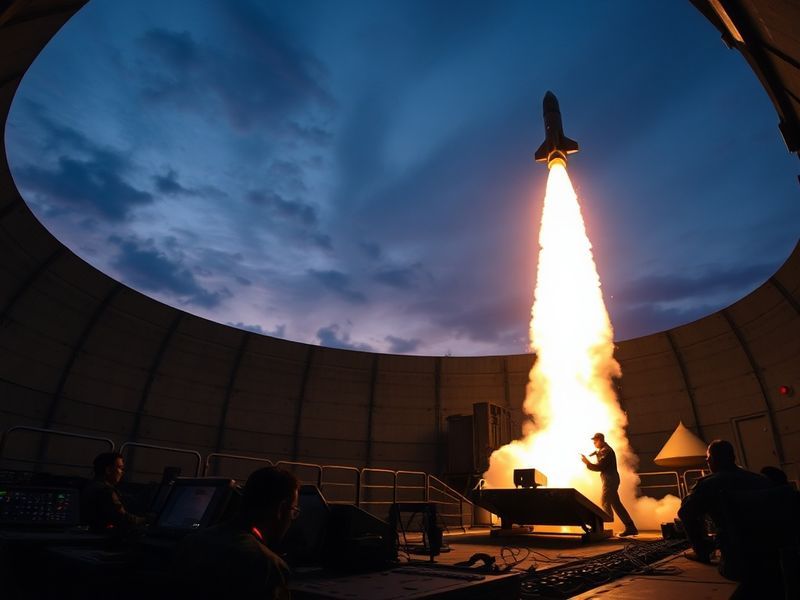
Ballistic missiles represent one of the most technologically advanced and strategically significant weapons developed in the 20th century. These weapons are designed to deliver payloads—typically conventional explosives, nuclear warheads, or chemical and biological agents—over long distances with high precision. Unlike cruise missiles, which rely on continuous propulsion and aerodynamic lift, ballistic missiles follow a parabolic trajectory after an initial powered ascent. This trajectory consists of three phases: boost, midcourse, and terminal, making them particularly difficult to intercept once launched.
The development of ballistic missiles began in earnest during World War II, with Germany’s Vergeltungswaffe 2 (V-2) rocket serving as the first operational example. Developed by Wernher von Braun and his team, the V-2 was used to target Allied cities late in the war. Its success demonstrated the potential of rocket technology for both military and civilian applications. Post-war, the United States and the Soviet Union raced to capture German scientists and rocket technology, laying the foundation for the Cold War-era arms buildup.
The Evolution of Ballistic Missile Technology
Since their inception, ballistic missiles have undergone dramatic evolution in both range and accuracy. Early models, like the Soviet R-7 Semyorka, had limited range and payload capacity. By contrast, modern intercontinental ballistic missiles (ICBMs) can travel over 15,000 kilometers and strike targets with a circular error probable (CEP)—a measure of accuracy—of less than 100 meters. Advances in inertial guidance systems, later supplemented by GPS and satellite-aided navigation, have drastically improved precision.
Ballistic missiles are typically categorized by their range:
- Short-range ballistic missiles (SRBMs): Range up to 1,000 km. Examples include the U.S. Army Tactical Missile System (ATACMS) and China’s DF-11.
- Medium-range ballistic missiles (MRBMs): Range between 1,000 and 3,500 km. The Soviet R-12 Dvina and India’s Agni-II fall into this category.
- Intermediate-range ballistic missiles (IRBMs): Range between 3,500 and 5,500 km. The U.S. Pershing II and North Korea’s Hwasong-12 are examples.
- Intercontinental ballistic missiles (ICBMs): Range over 5,500 km. The U.S. Minuteman III, Russia’s Topol-M, and China’s DF-41 are among the most advanced.
Beyond range, modern missiles incorporate multiple independently targetable reentry vehicles (MIRVs), allowing a single missile to strike multiple targets. This capability increases strategic deterrence but also complicates arms control negotiations. Additionally, hypersonic glide vehicles (HGVs) are being integrated into some ballistic missile systems, enabling warheads to maneuver at speeds above Mach 5, making interception nearly impossible with current technology.
Strategic Doctrine and Global Deployment
Ballistic missiles are central to the nuclear triad of the United States, Russia, and China—the three nations with the largest arsenals. The triad consists of land-based ICBMs, submarine-launched ballistic missiles (SLBMs), and strategic bombers. Each leg provides a survivable second-strike capability, ensuring that even after a surprise attack, a retaliatory strike remains possible. For example, the U.S. maintains approximately 400 Minuteman III ICBMs across silos in North Dakota, Wyoming, and Montana, while its Ohio-class submarines can launch up to 24 Trident II SLBMs each.
China has pursued a different strategy, focusing on a “limited deterrent” posture with around 300 nuclear warheads, many deliverable via DF-31 and DF-41 ICBMs. Meanwhile, regional powers like North Korea and Iran have developed ballistic missile programs primarily for coercive diplomacy and regional influence. North Korea’s Hwasong-14 and Hwasong-15 ICBMs, with estimated ranges of 10,000 km, pose a direct threat to the continental United States, while Iran’s Shahab-3 and Sejjil missiles extend its reach across the Middle East.
These developments have triggered responses from neighboring states. Japan, South Korea, and the United States have expanded missile defense systems, including the Terminal High Altitude Area Defense (THAAD) and Aegis Ashore. However, such systems remain controversial due to concerns about escalation and the limited interception rates against advanced threats like hypersonic missiles.
The Role of Ballistic Missiles in Modern Warfare
While nuclear deterrence remains the primary strategic role, ballistic missiles have also been used in conventional conflicts. In 1991, during the Gulf War, Iraq launched Scud missiles at Israel and Saudi Arabia in an attempt to fracture the U.S.-led coalition. Though largely ineffective militarily, the attacks caused widespread psychological and economic disruption. More recently, ballistic missiles have played a role in conflicts in Yemen and Syria, where Houthi forces and government troops have used modified Scud variants to target opposing forces and civilian areas.
Ballistic missiles are also increasingly seen as tools of coercion and signaling in peacetime. North Korea’s frequent missile tests serve as both military demonstrations and diplomatic pressure points. Similarly, Iran’s missile launches in the Persian Gulf are interpreted as warnings to regional rivals and global powers alike.
Technological proliferation remains a major concern. According to the Technology section of Dave’s Locker, over 30 countries now possess ballistic missile capabilities, a number that has grown steadily since the 1980s. The Missile Technology Control Regime (MTCR), established in 1987, seeks to limit the spread of such systems, but enforcement has been inconsistent. Loopholes in export controls and the dual-use nature of rocket technology continue to facilitate illicit transfers.
Future Challenges and Arms Control
The next decade will likely see ballistic missiles integrated with artificial intelligence, autonomous targeting, and cyber warfare capabilities. Hypersonic missiles, such as Russia’s Avangard and China’s DF-17, represent a new class of strategic threats that outpace defensive systems. These developments threaten to erode the stability provided by traditional arms control treaties, including New START, which expires in 2026 unless extended.
Efforts to regulate ballistic missiles face significant hurdles. Unlike nuclear weapons, which have a clear regulatory framework under the Nuclear Non-Proliferation Treaty (NPT), ballistic missiles lack a universal treaty. The proposed Fissile Material Cutoff Treaty (FMCT) could indirectly address missile proliferation by limiting fissile material production, but negotiations have stalled for decades.
Diplomatic initiatives, such as the Hague Code of Conduct Against Ballistic Missile Proliferation (established in 2002), provide voluntary transparency measures but carry no binding legal force. Meanwhile, emerging technologies like directed-energy weapons and space-based interceptors are being explored as potential solutions, though their deployment raises ethical and environmental concerns.
As geopolitical tensions rise in Eastern Europe, East Asia, and the Middle East, the role of ballistic missiles in global security architecture remains as critical—and as contested—as ever. The challenge for policymakers, military strategists, and international organizations will be to balance deterrence with diplomacy, innovation with restraint, and national security with collective stability.
Conclusion
Ballistic missiles have shaped the course of modern military history, from their origins in World War II to their current role as instruments of deterrence and coercion. Their technological sophistication continues to evolve, outpacing both defensive systems and diplomatic frameworks. While they remain essential to the strategic postures of major powers, their proliferation poses grave risks to global peace and security.
Moving forward, international cooperation, technological innovation in defense, and renewed arms control efforts will be essential to mitigating the threats posed by ballistic missiles. The challenge is not only to prevent their misuse but to ensure that they do not become the defining feature of a new arms race in the 21st century.