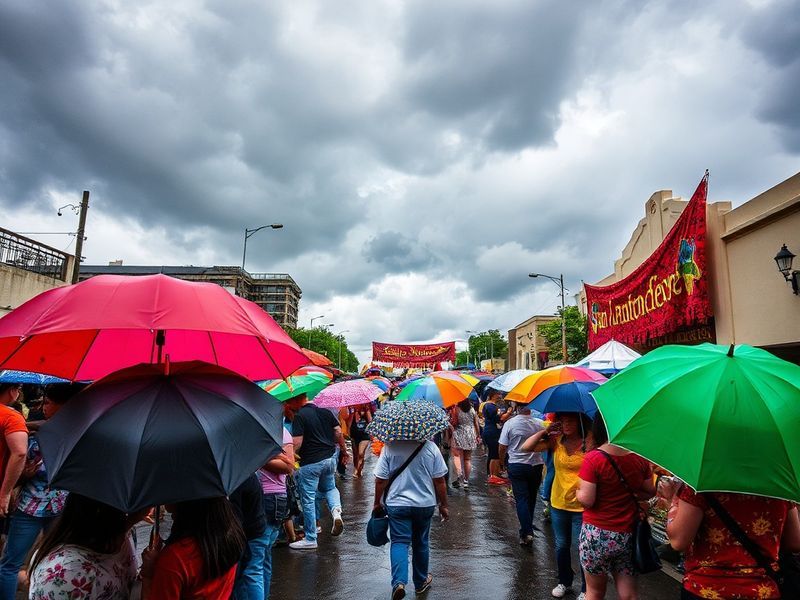
Fiesta San Antonio, one of Texas’s most vibrant cultural celebrations, has faced its share of challenges over the years. While the event is known for its parades, food, and community spirit, unpredictable weather has increasingly disrupted plans. Recent years have seen organizers adapt quickly to cancellations due to rain, wind, or extreme temperatures, forcing attendees and vendors to adjust on the fly.
Why Weather Disrupts Fiesta San Antonio
Fiesta, held annually in April, falls during a transitional season in South Texas. This means sudden thunderstorms, high winds, or even unseasonably cold snaps can derail outdoor events with little warning. Unlike larger festivals that may have indoor alternatives, many Fiesta events—like the Battle of Flowers Parade—rely entirely on outdoor logistics that are weather-sensitive.
The unpredictability isn’t just an inconvenience; it affects local businesses, nonprofit fundraisers, and the thousands of volunteers who dedicate months to preparation. When parades or concerts are canceled, the ripple effects touch everyone from street vendors to charities expecting donations.
Recent Incidents and Trends
In 2023, Fiesta’s signature Battle of Flowers Parade was postponed twice due to severe storms. The decision came just hours before the event, leaving spectators scrambling and vendors losing thousands in last-minute cancellations. Similarly, in 2022, high winds forced the cancellation of several Night in Old San Antonio (NIOSA) events, a major fundraiser for local preservation efforts.
These disruptions are becoming more frequent. Data from the National Weather Service shows that April—Fiesta’s traditional month—has seen a 20% increase in severe weather events over the past decade in Bexar County. While no single storm can be blamed on climate change, the pattern aligns with broader shifts in regional weather volatility.
How Organizers and Attendees Adapt
Fiesta’s leadership has responded with contingency plans, though flexibility is the name of the game. Some key strategies include:
- Real-time weather monitoring: Teams now use advanced radar tracking to make last-minute call decisions, often with just 2–4 hours’ notice.
- Hybrid event models: A few events, like NIOSA, have introduced partial or delayed entry options when conditions improve.
- Community communication: Social media and SMS alerts have become critical for rapid dissemination of updates.
For attendees, the lesson is clear: flexibility is essential. Many now plan schedules around weather apps and official Fiesta channels rather than fixed itineraries. Local hotels and restaurants also adjust, offering last-minute specials when crowds are rerouted or disappointed by cancellations.
Financial and Cultural Impact
The economic impact of Fiesta is substantial—estimated at over $35 million annually for San Antonio’s economy. When events are canceled, local vendors, nonprofits, and hospitality businesses feel the pinch. For example, the Battle of Flowers Parade alone draws over 350,000 spectators, with vendors selling food, drinks, and souvenirs along the route. A single cancellation can mean losses in the hundreds of thousands.
Beyond dollars, there’s a cultural cost. Fiesta is more than a party; it’s a tradition rooted in San Antonio’s history, dating back to 1891. The event supports over 100 nonprofit organizations, raising millions for local causes. When the parade or NIOSA is canceled, the community’s ability to rally around these causes takes a hit.
Looking Ahead: Can Fiesta Weather the Storm?
Organizers are exploring longer-term solutions. Some possibilities include:
- Scheduling shifts: Moving Fiesta to late March or early May could reduce weather risks, though it may conflict with school schedules and other local events.
- Permanent indoor venues: A few events have moved to covered locations like the Henry B. Gonzalez Convention Center, though this changes the outdoor festival atmosphere.
- Enhanced infrastructure: Investing in better drainage, wind barriers, or temporary shelters could help mitigate some risks.
Yet, cultural traditions are hard to modify. Fiesta’s open-air charm is part of its identity, and many locals resist changes that might dilute its authenticity. For now, the best defense remains adaptability—preparing for the worst while hoping for clear skies.
A Final Thought
Fiesta San Antonio’s weather challenges reflect a broader trend facing festivals nationwide. As climate patterns shift, communities must balance tradition with pragmatism. For San Antonio, the solution may lie in a mix of innovation and resilience—proving that even in the face of storms, the spirit of Fiesta endures.
For more on San Antonio’s cultural events and local happenings, visit Dave’s Locker Entertainment or Dave’s Locker Travel.