St. George’s Day: History, Global Celebrations & Modern Meaning
“`html
St. George’s Day: A Global Celebration of England’s Patron Saint
Every April 23rd, England pauses to honor its patron saint through a tradition that stretches back centuries. St. George’s Day is more than a national holiday; it is a cultural touchstone that binds communities across the globe. From the cobblestone streets of London to the vineyards of Catalonia, the feast of St. George unites people in remembrance, pride, and sometimes even protest.
The day’s significance extends far beyond England’s borders. In countries where St. George is venerated—such as Georgia, Portugal, and parts of Italy—April 23rd becomes a canvas for local customs, religious rites, and national identity. This global perspective reveals how a 4th-century martyr became a symbol of resilience, chivalry, and cultural pride.
The Historical Roots of St. George
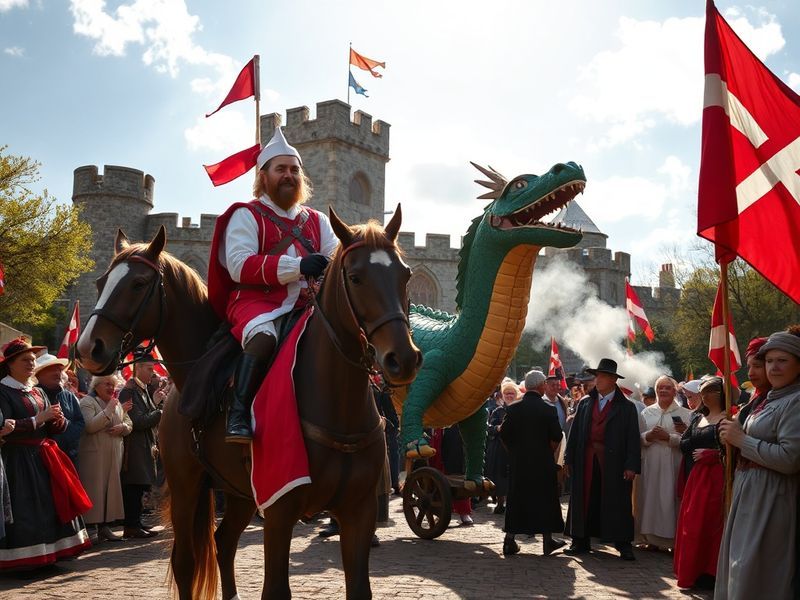
St. George was a Christian soldier in the Roman army, born in what is now Turkey around 275 AD. According to legend, he confronted a dragon terrorizing a village, slaying the beast and saving a princess in the process. Though historians debate the historical accuracy of this tale, its symbolism endures: a triumph of good over evil, courage over fear.
By the Middle Ages, St. George’s reputation as a warrior-saint grew. His cross—originally a red cross on a white background—became a rallying symbol during the Crusades. Kings and knights adopted it as their emblem, including the English monarchy. Richard the Lionheart famously carried the banner into battle, cementing St. George’s place in English lore.
- The Dragon Myth: The most enduring legend portrays St. George as a dragon-slayer, a metaphor for overcoming adversity.
- Crusader Symbolism: His cross adorned shields and banners, uniting Christian armies under a common cause.
- National Identity: By the 14th century, England’s flag incorporated the red cross, solidifying his role as a patron saint.
How St. George’s Day Is Celebrated Around the World
While England’s celebrations often focus on flag-waving and Morris dancing, other cultures infuse the day with unique traditions. In Catalonia, for example, St. George’s Day is a celebration of love and literature, mirroring Valentine’s Day. Men gift roses to women, while women present books in return—a tradition tied to the UNESCO-recognized Diada de Sant Jordi.
Georgia, where St. George is the patron saint, observes the day with solemn church services and family gatherings. Wine is poured, and feasts are shared, as Georgians honor the saint who, according to legend, saved their nation from drought. Meanwhile, in Venice, St. George’s feast coincides with the opening of the annual boat race, Festa della Sensa, blending religious and maritime heritage.
Even in non-English-speaking countries, St. George’s influence persists. In Lebanon, where he is a revered figure, churches hold processions and offer blessings. In Bulgaria, April 23rd is a public holiday, marked by folk dances and the blessing of new crops—a nod to St. George’s association with agriculture.
St. George’s Day in England: Tradition vs. Modernity
In England, St. George’s Day has struggled to compete with the commercial appeal of holidays like Christmas or Easter. For decades, it remained a low-key affair, observed primarily by traditionalists and expatriate communities. Yet, in recent years, there has been a resurgence of interest, driven by cultural pride and even political movements.
Some English cities now host parades, concerts, and historical reenactments. The flag of St. George—once a polarizing symbol due to its association with far-right groups—has been reclaimed by mainstream society. Schools incorporate lessons on St. George’s history, while pubs serve themed ales and dishes. Even the Sports world has embraced the day, with football clubs like Chelsea and Manchester City incorporating St. George’s imagery into their kits.
Yet, challenges remain. Critics argue that St. George’s Day lacks the unity of St. Patrick’s Day in Ireland or Burns Night in Scotland. While these celebrations are deeply tied to national identity, St. George’s Day often feels more like a historical footnote. Efforts to modernize the holiday—such as blending it with Earth Day themes—have sparked debate among traditionalists.
The Symbolism of St. George Today
Beyond the festivities, St. George’s legacy endures as a figure of moral and cultural significance. In literature, he appears as a symbol of heroism, from Shakespeare’s plays to modern fantasy novels. In art, his image graces cathedrals, museums, and even graffiti murals, a testament to his lasting appeal.
For diaspora communities, St. George’s Day is a lifeline to heritage. English expats in Australia, Canada, and the United States organize gatherings, serving fish and chips and singing patriotic songs. These events are not just about nostalgia; they are acts of cultural preservation in a globalized world.
The saint’s cross also appears in unexpected places. In the United States, cities like Chicago and New York fly the St. George’s flag as a nod to their English roots. In sports, the emblem is worn by athletes who see it as a symbol of determination. Even in technology, St. George has been invoked—tech companies have named products and projects after him, evoking themes of innovation and overcoming obstacles.
A Day of Reflection and Renewal
St. George’s Day is more than a historical observance; it is a mirror reflecting the values of the communities that honor it. Whether through religious devotion, national pride, or personal reflection, the day invites people to consider what it means to strive for greatness in the face of adversity.
As England and the world continue to evolve, St. George remains a bridge between the past and present. His story reminds us that legends endure not because they are true, but because they resonate. They give us heroes to emulate, stories to tell, and causes to champion.
For those who celebrate, April 23rd is a chance to reconnect with heritage, to honor a figure who transcended his time, and to embrace the qualities he represents: bravery, compassion, and unwavering resolve.