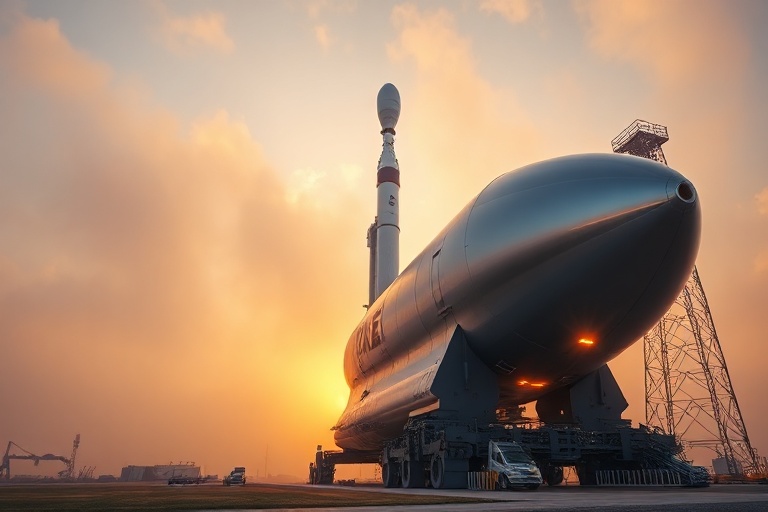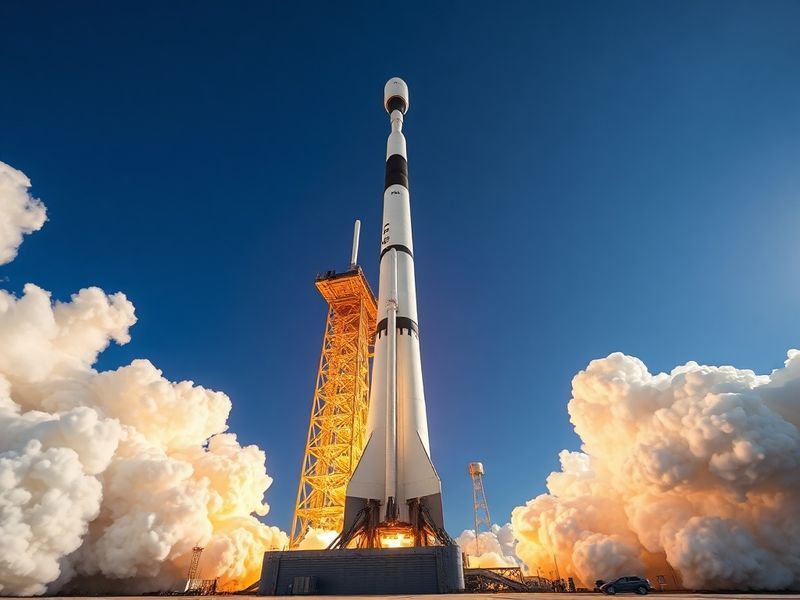
When SpaceX’s Falcon Heavy rocket first lifted off from Kennedy Space Center’s historic Launch Complex 39A, it wasn’t just another payload heading to orbit. It was a statement—a declaration that private enterprise had entered a new era of spaceflight. The Falcon Heavy, with its three core boosters and 27 Merlin engines, remains the most powerful operational rocket in the world, capable of carrying nearly 64 metric tons to low Earth orbit. That capacity opens doors to missions once considered impossible for commercial ventures, from deep-space probes to crewed lunar flybys.
The rocket’s design prioritizes reusability, a cornerstone of SpaceX’s philosophy. Unlike traditional expendable launch systems, the Falcon Heavy’s side boosters and central core are engineered to return to Earth for controlled landings. This innovation slashes mission costs dramatically. Where NASA’s Space Launch System (SLS) is projected to cost over $2 billion per launch, SpaceX estimates Falcon Heavy missions at roughly $90–150 million. Such pricing power is reshaping the economics of space, making ambitious projects like Mars colonization or extensive satellite constellations more financially viable.
The Launch That Changed the Game
The Falcon Heavy’s maiden flight on February 6, 2018, was more than a technical demonstration. It was a spectacle watched by millions worldwide. Strapped into the driver’s seat of a Tesla Roadster—Elon Musk’s personal vehicle—was a mannequin dubbed “Starman,” clad in a SpaceX spacesuit. As the rocket soared into the sky, the Roadster was sent on a trajectory toward Mars, carrying a plaque inscribed with the names of thousands of SpaceX employees. The image of Starman against the backdrop of Earth became an iconic symbol of the new space age.
That launch wasn’t flawless. The central core booster failed to land on its drone ship as planned and crashed into the Atlantic. Still, the mission achieved its primary objectives: delivering the payload into an Earth-Mars orbit and proving the rocket’s structural integrity under immense stress. Since then, the Falcon Heavy has completed multiple successful flights, including the launch of the U.S. Space Force’s X-37B spaceplane and the deployment of the Arabsat-6A communications satellite. Each mission has reinforced its reputation as a reliable heavy-lift vehicle.
Key Milestones in Falcon Heavy’s Development
- 2011: SpaceX announces plans for the Falcon Heavy, aiming to bridge the gap between medium-lift rockets like the Falcon 9 and super-heavy payload systems.
- 2017: The rocket undergoes rigorous static fire tests, validating the performance of its 27 Merlin engines working in unison.
- 2018: The maiden flight launches from Kennedy Space Center, carrying the Tesla Roadster as a demonstration payload.
- 2019: The Arabsat-6A mission marks the first commercial flight, deploying a communications satellite for Saudi Arabia.
- 2022: The rocket supports the U.S. Space Force’s USSF-44 mission, delivering multiple payloads to geostationary orbit.
Broader Implications for Spaceflight and Beyond
The Falcon Heavy isn’t just a rocket—it’s a catalyst. Its existence has accelerated several critical trends in the space industry. First, it has intensified competition among launch providers. Companies like Blue Origin with its New Glenn rocket and United Launch Alliance with the Vulcan Centaur are now racing to offer comparable heavy-lift capabilities, driving innovation and reducing costs across the board. This competitive pressure benefits governments and commercial clients alike, who gain more options and better pricing.
Second, the Falcon Heavy has made deep-space missions more accessible. NASA’s Psyche mission, set to explore a metallic asteroid, launched aboard a Falcon Heavy in 2023. The rocket’s power also enables advanced scientific payloads, such as the upcoming Europa Clipper mission to Jupiter’s moon, which requires a gravity assist from Earth to reach its destination. Without the Falcon Heavy’s lifting capacity, such missions might have required costly multi-launch strategies or been deemed unfeasible entirely.
Third, the rocket has implications for national security. The U.S. Space Force has increasingly relied on SpaceX for rapid deployment of classified payloads. The Falcon Heavy’s ability to launch multiple satellites in a single mission reduces the vulnerability of critical assets in orbit. This “rideshare” capability is becoming standard across the industry, with SpaceX’s Transporter missions offering small satellite operators affordable access to space.
What’s Next for the Falcon Heavy?
SpaceX continues to refine the Falcon Heavy, though its long-term role may evolve. The company’s Starship, currently under development, is designed to be even more powerful and fully reusable. Once operational, Starship could render the Falcon Heavy obsolete for many missions. Still, the Heavy is expected to remain in service for years, particularly for payloads that don’t require Starship’s full capacity or are constrained by schedule.
Looking ahead, potential missions include crewed lunar flybys, commercial space stations, and even the deployment of massive space telescopes. The Falcon Heavy could also play a role in supporting NASA’s Artemis program, delivering lunar landers or habitat modules to cislunar space. As private companies like SpaceX and Blue Origin push the boundaries, the line between government-led and commercial spaceflight continues to blur.
The Falcon Heavy’s legacy is already clear: it has redefined what’s possible in spaceflight. By proving that heavy-lift rockets can be both powerful and affordable, it has unlocked new opportunities for science, exploration, and commerce. As humanity sets its sights on Mars and beyond, the Falcon Heavy stands as a testament to what can be achieved when ambition meets engineering.
For enthusiasts and professionals alike, the rocket serves as a reminder that the future of space isn’t just reserved for governments or billionaires. It’s being built today—launch by launch—by a company that believes the cosmos should be within reach for everyone.
For more on the intersection of technology and space exploration, visit our Technology and Science sections.