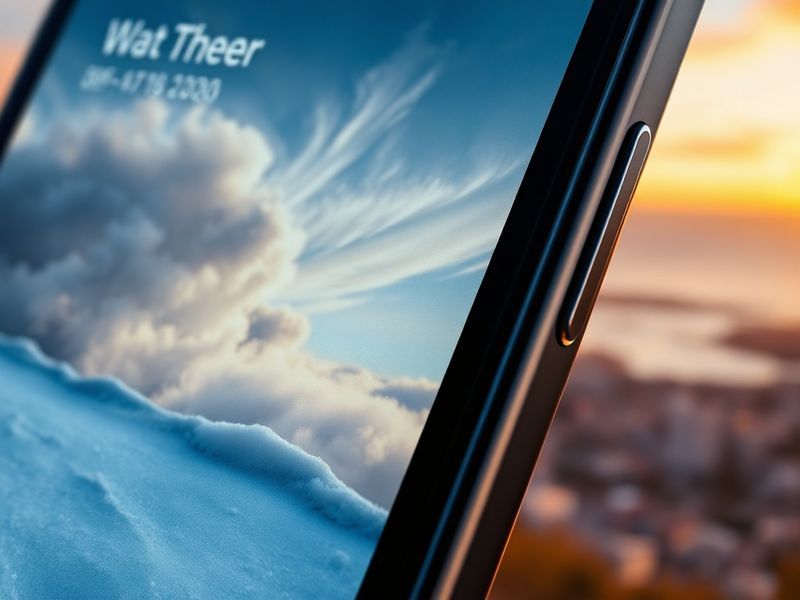
Apple Weather App: How It Became a Global Weather Essential
“`html
How the Apple Weather App Became a Global Standard
The Apple Weather app, once a simple utility built into iPhones, has evolved into one of the most widely used weather platforms in the world. With over a billion active users across more than 100 countries, it has quietly become a daily ritual for people checking forecasts, radar, and severe weather alerts. What began as a basic weather widget has transformed into a sophisticated tool backed by advanced data partnerships and Apple’s signature design philosophy.
Unlike standalone weather apps that rely on advertisements or subscription models, Apple’s approach prioritizes user experience. The app aggregates data from multiple providers, including the National Weather Service in the United States and the UK Met Office, ensuring reliability without cluttering the interface with third-party ads. This commitment to clean, ad-free information has helped it stand out in a crowded digital landscape.
From Widget to Powerhouse: A Decade of Evolution
When Apple first introduced the Weather app in 2007 with the original iPhone, it was little more than a static display of temperature and conditions. Over the years, updates introduced dynamic wallpapers that changed with the weather, hourly and 10-day forecasts, and interactive maps. The most significant shift came in 2016 with the integration of The Weather Channel’s data, followed by further enhancements in iOS 16, which added precipitation forecasts, severe weather notifications, and an improved radar interface.
These updates weren’t just cosmetic. They reflected broader changes in how people consume weather information. With climate change intensifying weather patterns globally, accurate and timely forecasts have become essential for safety and planning. The Apple Weather app’s ability to push real-time alerts for storms, hurricanes, and extreme temperatures has made it a trusted companion for millions, particularly in regions prone to natural disasters.
The Science Behind the Forecasts: Data and Partnerships
Apple doesn’t generate its own weather data. Instead, it relies on a network of meteorological institutions and private firms to deliver accurate forecasts. In the U.S., it partners with the National Weather Service, while in Europe, it draws from the European Centre for Medium-Range Weather Forecasts (ECMWF). For hyperlocal conditions, Apple integrates data from The Weather Channel and Dark Sky, which was acquired by Apple in 2020.
This multi-source approach ensures redundancy and precision. If one data provider’s models are off, another’s might compensate. The app also benefits from Apple’s vast ecosystem. Integration with the iPhone’s GPS, barometric sensor, and always-on display allows for location-specific forecasts that update dynamically as users move throughout the day. This level of personalization is difficult for standalone weather apps to match.
Critics argue that Apple’s reliance on external data could lead to inconsistencies. For instance, during Hurricane Ian in 2022, some users reported discrepancies between the Apple Weather app and local news forecasts. However, Apple’s rapid response—updating data sources and refining models—demonstrated its commitment to continuous improvement.
Cultural Impact: Weather as a Global Shared Experience
Weather apps are often overlooked as mundane tools, but they play a subtle yet profound role in daily life. They influence decisions ranging from wardrobe choices to travel plans, and in some cases, they even shape cultural narratives. For example:
- Japan and Typhoon Season: In a country where typhoons can disrupt entire regions, the Apple Weather app’s radar animations are closely monitored by commuters and businesses alike. The app’s integration with Japan’s Meteorological Agency data makes it a go-to resource during storm seasons.
- India and Monsoon Predictions: India’s monsoon season is critical for agriculture, and farmers increasingly rely on mobile apps for forecasts. The Apple Weather app’s support for regional languages and localized alerts has made it accessible to a broader audience beyond urban centers.
- Scandinavia and Polar Vortexes: In countries like Norway and Sweden, where sudden cold snaps can paralyze infrastructure, the app’s severe weather notifications are vital. Its minimalist design ensures that even in freezing temperatures, users can check conditions with a glance.
Beyond functionality, the app has also influenced how people discuss weather. Social media trends often emerge around its radar visualizations, with users sharing timelapses of storm systems or snowfall predictions. This shared experience fosters a sense of global connectivity, even as weather patterns become increasingly erratic due to climate change.
What’s Next for the Apple Weather App?
The Apple Weather app’s future likely lies in deeper integration with Apple’s broader ecosystem. Rumors persist about augmented reality (AR) features that could overlay weather data onto the real world via iPhone cameras. Imagine pointing your phone at the sky to see a storm’s trajectory in real time, or checking pollen levels by scanning a park.
AI could also play a larger role. Machine learning models might soon predict weather patterns with even greater accuracy by analyzing historical data alongside real-time inputs. Additionally, Apple’s push into health and wellness could see the app incorporate air quality indices or UV index alerts more prominently, aligning with its goal of becoming a holistic digital companion.
Another potential area of growth is global accessibility. While the app supports multiple languages, some regions with unique weather phenomena—such as Africa’s seasonal dust storms or South America’s sudden hailstorms—still lack hyperlocal data. Expanding partnerships with regional meteorological agencies could address these gaps.
The App That Stays With You, Through Every Season
In an era where digital tools come and go, the Apple Weather app has endured because it solves a fundamental human need: the desire to understand and prepare for the world around us. Its evolution from a simple widget to a sophisticated platform reflects broader trends in technology—personalization, reliability, and seamless integration into daily life.
As climate change continues to reshape weather patterns, tools like the Apple Weather app will only grow in importance. They are no longer just about knowing whether to carry an umbrella. They are about safety, community, and adapting to a planet that feels increasingly unpredictable. For over a billion users, the app is more than a feature on their home screen. It’s a quiet guardian, a daily advisor, and a reminder that even in a digital world, some things—like the weather—are universally shared.