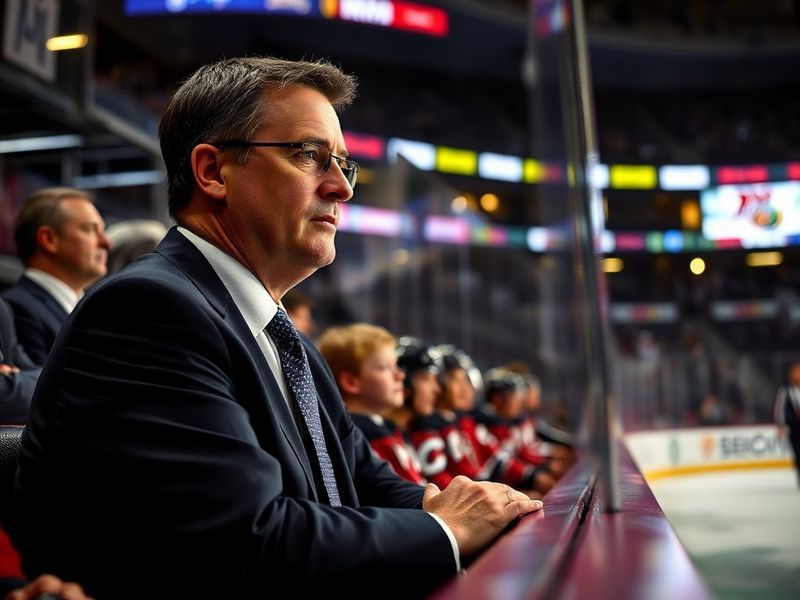
When Bruce Cassidy took over as head coach of the Boston Bruins in 2017, the franchise was searching for a new identity. The team had reached the Stanley Cup Final in 2011 under Claude Julien but struggled to recapture that form in subsequent years. Cassidy’s arrival marked a turning point—not just in terms of wins and losses, but in how the Bruins approached the game itself. His tenure, which lasted until 2022, was defined by tactical innovation, relentless competitiveness, and an unshakable belief in his players.
A Humble Beginning and Rapid Rise
Born in Ottawa in 1965, Bruce Cassidy’s hockey journey began as a defenseman in the NHL, where he played briefly for the Chicago Blackhawks and New York Rangers in the late 1980s and early 1990s. His playing career was modest, but his analytical mind and leadership qualities set him apart. After retiring, Cassidy transitioned into coaching, working his way up through junior hockey and later joining the Bruins’ organization as an assistant coach in 2008.
His first head coaching job came in the AHL with the Providence Bruins, where he led the team to a Calder Cup championship in 2013. This success caught the attention of the NHL brass, and when the Bruins needed a change in 2017, Cassidy was the obvious choice. At the time, the team was stuck in a transitional phase, with aging stars like Zdeno Chara and David Krejci still anchoring the lineup. Cassidy’s ability to blend veteran experience with youthful energy became a cornerstone of his early success.
The Cassidy System: Tactical Evolution in Boston
One of Cassidy’s most significant contributions was his adaptation of the Bruins’ playing style. Under his predecessor, the team relied heavily on a physical, defensive-first approach. While Cassidy maintained that foundation, he introduced a faster, more dynamic offensive system. The Bruins became known for their aggressive forechecking, seamless puck movement, and a willingness to push the pace in transition.
Key to this evolution was the development of players like David Pastrnak and Charlie McAvoy. Cassidy’s system allowed their offensive talents to flourish while still prioritizing defensive responsibility. The 2018-19 season was a prime example, as the Bruins finished with the best record in the NHL (107 points) and Pastrnak led the league in goals (38) before a late-season injury derailed their playoff run.
Cassidy also emphasized special teams, particularly the power play. During his tenure, the Bruins consistently ranked among the league’s top units, thanks to intricate setups and a focus on quick puck movement. His ability to adjust strategies mid-game—whether deploying an extra defenseman on the power play or tightening defensive gaps in key moments—made him one of the league’s most adaptable coaches.
Player Development and Trust in the System
Beyond tactics, Cassidy’s greatest strength was his relationship with his players. He earned their trust by being transparent, approachable, and unwavering in his support. Veterans like Patrice Bergeron and Brad Marchand thrived under his leadership, while younger players like Jake DeBrusk and Ryan Donato developed into key contributors.
The 2019 playoffs were a testament to Cassidy’s man-management. Despite losing Pastrnak to injury, the Bruins pushed the Carolina Hurricanes to seven games in the second round, showcasing their resilience. The following year, they reached the Stanley Cup Final, falling just short to the Tampa Bay Lightning. Cassidy’s ability to keep the team focused and motivated through adversity was a hallmark of his tenure.
Challenges and the End of an Era
By the 2021-22 season, the Bruins faced new challenges. Injuries to key players, including Pastrnak and McAvoy, exposed depth issues. The team’s playoff hopes dimmed, and internal debates about the direction of the franchise grew louder. In June 2022, the Bruins announced that Cassidy would not be retained as head coach, a decision that surprised many given his track record of success.
The move was controversial. Over five seasons, Cassidy compiled a 226-100-38 record, a .666 points percentage, and two Presidents’ Trophies (2019-20 and 2022-23). His teams were consistently competitive, and his players consistently praised his leadership. Yet, in a league where coaching changes often follow a single bad playoff series, the Bruins’ decision to part ways with Cassidy raised questions about the organization’s priorities.
Legacy and Where Cassidy Goes Next
Cassidy’s departure from Boston didn’t mark the end of his coaching career. In 2023, he was hired as the head coach of the Vegas Golden Knights, reuniting with general manager Kelly McCrimmon, who had previously worked with him in Boston. The move signaled a fresh start and an opportunity to build on his established philosophy in a new environment.
His impact on the Bruins, however, remains undeniable. Cassidy didn’t just coach a team; he redefined what it meant to be a Boston Bruin. His emphasis on speed, skill, and accountability set a standard that the organization continues to strive for. Even after his departure, players like Bergeron and Marchand cited his influence as pivotal in their careers.
Lessons from Cassidy’s Tenure
Cassidy’s career offers several takeaways for aspiring coaches and hockey minds:
- Adaptability: His willingness to evolve the team’s style while maintaining core principles allowed the Bruins to stay competitive in a changing NHL.
- Player Development: Cassidy’s knack for maximizing talent—whether developing draft picks or rejuvenating veterans—was a key to his success.
- Culture Over Everything: Beyond systems, his ability to foster trust and camaraderie created a culture of accountability and resilience.
- Resilience in Adversity: The 2019-20 season, cut short by the pandemic, and the 2020 playoffs, played in a bubble, tested his leadership. The Bruins’ consistency under such conditions spoke to his coaching.
For fans of the game, Cassidy’s story is a reminder that coaching is as much about relationships as it is about Xs and Os. His legacy in Boston may be defined by the games won and lost, but it’s equally rooted in the trust he built with his players and the identity he instilled in the franchise.
Looking Ahead: Cassidy’s Next Chapter
As Cassidy takes the reins in Vegas, the hockey world watches to see how his system will translate to a new roster. The Golden Knights, fresh off a Stanley Cup victory in 2023, already have a winning culture in place. Cassidy’s challenge will be to blend his structured approach with the team’s existing strengths.
For Boston fans, his departure leaves a void. The Bruins have yet to replace him with the same level of consistency, and the question of whether his system can endure without him lingers. Yet, Cassidy’s influence is woven into the fabric of the franchise. His ability to push players to their limits while maintaining their respect is a rare quality in coaching.
Whether he returns to Boston as an adversary or continues to build on his success elsewhere, Cassidy’s impact on the NHL is secure. He proved that coaching is more than just calling plays—it’s about shaping a team’s identity, instilling belief, and leaving a lasting mark on the game.
For now, the hockey world waits to see what’s next for Bruce Cassidy. One thing is certain: his journey is far from over.