How Trump Changed Media Forever: A Global Perspective
“`html
Understanding the Impact of Trump’s Media Presence
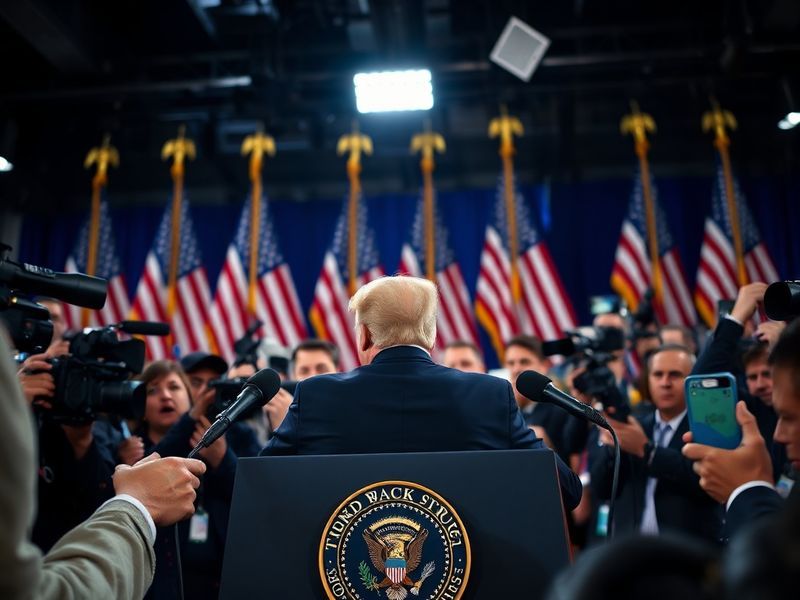
Donald Trump’s relationship with the media has been one of the most scrutinized dynamics of the 21st century. Long before his presidency, Trump cultivated an image as a brash, unfiltered communicator who bypassed traditional gatekeepers. This approach only intensified during his time in the White House and continues in his post-presidency era. His use of social media, particularly Twitter, reshaped how political communication operates on a global scale.
Trump’s media strategy has consistently prioritized direct engagement with his base over mainstream outlets. This tactic has had profound effects on public discourse, journalistic practices, and even the structure of political campaigns. By leveraging platforms like Truth Social and Truth Social’s predecessor, he has maintained a direct line to millions of followers while simultaneously challenging the credibility of traditional news organizations.
The Evolution of Trump’s Media Strategy
Trump’s media approach didn’t emerge fully formed during his presidential campaign. It developed over decades in the public eye. As a real estate mogul and reality television star, he understood the value of media attention long before entering politics. His 1987 book The Art of the Deal served as an early template for his self-mythologizing through media appearances.
During his presidency, Trump weaponized his Twitter account to set news agendas, attack opponents, and bypass critical coverage. This strategy created a feedback loop where mainstream media coverage often centered on his tweets, amplifying their reach. Studies showed that Trump’s tweets received more media coverage than policy announcements from other world leaders combined.
The creation of Truth Social in 2022 represented an attempt to consolidate his media ecosystem. While initially framed as an alternative to Big Tech censorship, the platform has struggled to attract users beyond his core supporters. Nevertheless, it demonstrates Trump’s continued commitment to controlling his own narrative.
Global Reactions to Trump’s Media Tactics
Trump’s approach to media has elicited varied responses around the world. In some countries, his unorthodox communication style has been emulated by populist leaders seeking to challenge established political norms. In others, it has reinforced concerns about the erosion of democratic norms and the spread of misinformation.
European leaders have generally reacted with dismay to Trump’s media strategies. German Chancellor Angela Merkel notably criticized his habit of attacking the press, while French President Emmanuel Macron has warned about the dangers of “digital populism.” Meanwhile, leaders like Brazil’s Jair Bolsonaro and the Philippines’ Rodrigo Duterte have adopted similar tactics, creating what some analysts call a “global playbook” for anti-establishment leaders.
In authoritarian regimes, Trump’s attacks on the media have been cited as justification for crackdowns on press freedom. His frequent use of the term “fake news” has been echoed by leaders from Russia to Turkey, who cite his rhetoric to justify their own restrictions on independent journalism.
The Psychological Appeal of Trump’s Media Persona
Trump’s media presence taps into deep psychological and cultural currents. His communication style—simple language, repetitive messaging, and emotional directness—resonates with segments of the population who feel alienated from establishment institutions. This approach mirrors techniques used in marketing and advertising, where repetition and emotional appeal often trump complex messaging.
Research has shown that Trump’s tweets, while often grammatically simple, employ linguistic patterns that maximize engagement. His use of superlatives (“the best,” “the worst”), personal attacks, and rallying cries (“Let’s make America great again”) create a sense of urgency and belonging among his followers.
The psychological appeal extends beyond his base. His media presence has become a cultural touchstone, referenced in everything from entertainment to academic discourse. This omnipresence ensures that even those who oppose him cannot ignore his influence on the media landscape.
The Role of Social Media in Trump’s Media Empire
Social media platforms have been both enablers and constraints for Trump’s media strategy. While they allowed him to bypass traditional gatekeepers, they also subjected him to platform moderation policies that eventually led to his suspension from major platforms like Twitter and Facebook.
This ban created a paradox: Trump’s exclusion from mainstream social media platforms accelerated his followers’ migration to alternative platforms like Truth Social, Parler, and Gab. These platforms, while smaller in scope, have become echo chambers for his most devoted supporters.
The shift to alternative platforms has had several consequences:
- It has further polarized online discourse, with Trump’s supporters congregating in spaces where his narrative goes unchallenged.
- It has made it easier for misinformation to spread, as these platforms often lack the fact-checking mechanisms of mainstream social media.
- It has created a media ecosystem where Trump can control the narrative without interference from journalists or fact-checkers.
This evolution raises important questions about the future of digital democracy. If political leaders can effectively remove themselves from mainstream platforms, what does that mean for public discourse and accountability?
Conclusion: The Legacy of Trump’s Media Revolution
Donald Trump’s relationship with the media has fundamentally altered how political communication works in the digital age. His unorthodox approach has challenged traditional journalistic norms while creating new pathways for political engagement. Whether through Twitter, Truth Social, or mainstream outlets, Trump has demonstrated the power of direct communication in shaping public opinion.
The long-term consequences of this media revolution remain uncertain. On one hand, it has empowered individuals to bypass traditional gatekeepers and engage directly with audiences. On the other, it has eroded trust in institutions and contributed to the fragmentation of public discourse. As social media platforms continue to evolve, the lessons of Trump’s media strategy will undoubtedly influence future political campaigns and public debates.
For journalists, the challenge lies in adapting to this new landscape without compromising core values of accuracy and accountability. For citizens, the challenge is to navigate an information ecosystem where truth often competes with narrative control. One thing is certain: the media landscape of the future will bear Trump’s imprint for years to come.