Farringdon Station: London’s Hidden Transport Hub Explained
“`html
Farringdon Station: London’s Hidden Transport Hub
Farringdon Station is one of London’s most underrated yet essential transport hubs. Tucked between bustling Clerkenwell and Smithfield’s historic meat market, it quietly connects multiple lines while serving as a gateway to the City’s financial district. Despite its unassuming exterior, the station is a marvel of modern engineering, blending historic architecture with cutting-edge infrastructure.
Opened in 1865 as part of the Metropolitan Railway—the world’s first underground line—Farringdon has evolved from a steam-powered stop to a sleek, fully accessible transport interchange. Today, it links Thameslink, Elizabeth Line, and London Underground services, making it a critical node for commuters and travelers alike. Its strategic location also places it within walking distance of landmarks like St. Paul’s Cathedral and the Barbican Centre.
The Evolution of Farringdon Station
Farringdon’s history reflects London’s growth as a global city. The original station, designed by John Fowler, opened as part of the Metropolitan Railway’s first stretch between Paddington and Farringdon. This was the birthplace of the London Underground, a legacy that still defines the station today.
In the 20th century, Farringdon underwent several upgrades to accommodate changing demands. The 1980s saw the addition of the Thameslink platforms, connecting north and south London directly. Then, in 2018, the Elizabeth Line (then Crossrail) integrated the station into its vast network, transforming it into a key east-west connector.
These expansions weren’t just about capacity—they were about reimagining urban mobility. Farringdon now handles over 25 million passengers annually, a figure that continues to rise as more people rely on rail transport to navigate the capital.
Why Farringdon Stands Out Among London Stations
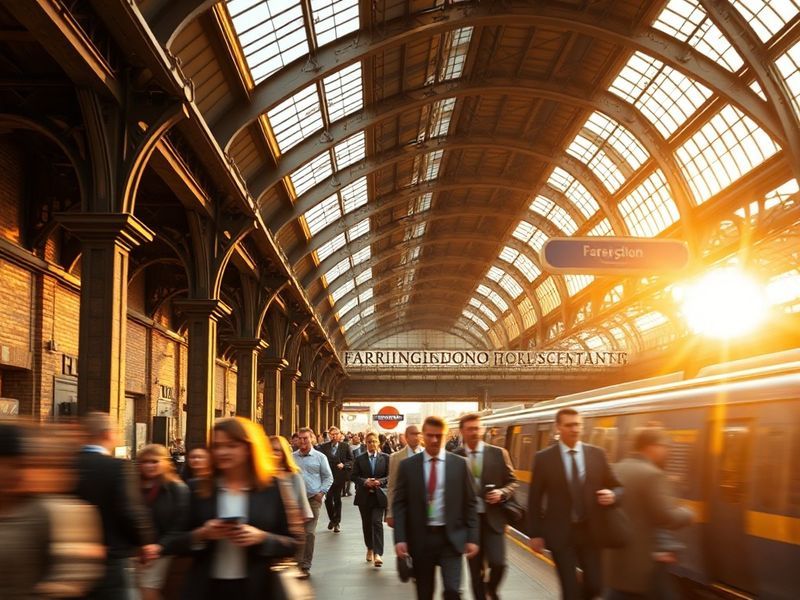
What makes Farringdon unique is its blend of old and new. The station’s facade retains elements of its Victorian origins, including the iconic arched windows and brickwork. Yet, inside, travelers encounter state-of-the-art facilities: step-free access, digital signage, and a spacious concourse that feels more like a modern shopping mall than a traditional tube stop.
Another standout feature is its connectivity. Unlike many London stations burdened by outdated layouts, Farringdon was designed with efficiency in mind. Passengers can switch between Thameslink, Elizabeth Line, and Circle, Hammersmith & City, and Metropolitan lines in under five minutes—an impressive feat in a city where transfers often feel like navigating a maze.
For business travelers, Farringdon is a lifeline. Its proximity to the City means short walks to offices in Moorgate and Aldgate, while its direct links to St Pancras International provide seamless connections to Eurostar services. Even tourists benefit, as the station sits within walking distance of cultural hotspots like the Museum of London and Smithfield’s medieval market.
Accessibility and Passenger Experience
Accessibility has been a priority in Farringdon’s recent upgrades. All platforms now feature lifts, tactile paving, and clear signage for visually impaired passengers. The station’s concourse is spacious enough to accommodate prams, wheelchairs, and luggage, reducing the usual rush-hour chaos found at other central London stations.
Crowd management is another area where Farringdon excels. Its wide corridors and multiple entry/exit points help distribute foot traffic, preventing bottlenecks that plague stations like Oxford Circus or King’s Cross. Even during peak hours, the flow remains orderly, a testament to thoughtful design.
Future Plans and Challenges
Farringdon isn’t resting on its laurels. Transport for London (TfL) has outlined plans to further enhance the station, including expanded retail spaces and improved digital wayfinding systems. There’s also talk of integrating bike-sharing and e-scooter drop-off points to support sustainable travel.
However, challenges remain. The station’s increasing passenger volume strains its infrastructure, particularly during major events like the London Marathon or New Year’s Eve celebrations. TfL is exploring solutions such as off-peak pricing incentives and additional staffing to mitigate congestion.
Another concern is the ongoing cost-of-living crisis, which has led some commuters to question whether rail fares remain affordable. While Farringdon offers a mix of travelcards and pay-as-you-go options, the broader debate about London’s transport affordability continues to simmer.
Farringdon as a Cultural and Economic Lifeline
Beyond its transport functions, Farringdon plays a vital role in London’s economy. The area surrounding the station has transformed from an industrial backwater into a thriving hub for tech startups and creative industries. Companies like Monzo and Deliveroo have set up offices nearby, attracted by the station’s connectivity and relatively lower rents compared to central hotspots like Shoreditch.
Foodies also flock to Farringdon, drawn by its concentration of independent cafes, Michelin-starred restaurants, and historic pubs. The nearby Smithfield Market, one of London’s oldest, adds to the area’s unique character, blending tradition with innovation.
For culture seekers, Farringdon provides easy access to the Barbican Centre, home to the London Symphony Orchestra and the Royal Shakespeare Company. The station’s location also makes it a convenient starting point for exploring the City’s hidden gems, from the ancient church of St. Bride’s to the modern skyscrapers of the Walkie-Talkie and Cheesegrater buildings.
Hidden Gems Near Farringdon
If you find yourself with time to spare, Farringdon offers plenty to explore:
- St. John’s Gate: A 16th-century Tudor gatehouse that once belonged to the Knights Hospitaller. Today, it houses the Museum of the Order of St. John, a free museum detailing the order’s fascinating history.
- Exmouth Market: A lively street lined with restaurants, bars, and boutique shops. It’s particularly vibrant on Friday evenings when locals gather for drinks and live music.
- Charterhouse Square: A tranquil oasis in the heart of the City, this historic square is home to a 700-year-old Carthusian monastery and a charming garden.
- Fitzrovia: Just a short walk away, this bohemian neighborhood is known for its artistic heritage, indie bookshops, and the iconic Fitzroy Tavern.
Conclusion: Farringdon’s Enduring Relevance
Farringdon Station may not have the glamour of St. Pancras or the grandeur of King’s Cross, but its importance to London cannot be overstated. It is a station that works—efficiently, quietly, and without fanfare. As the city’s transport network continues to evolve, Farringdon remains a model of how to integrate history with modernity.
For commuters, it’s a reliable lifeline. For visitors, it’s a gateway to some of London’s best-kept secrets. And for the city itself, it’s a reminder that great infrastructure doesn’t always need to shout to be heard. Whether you’re a daily traveler or a first-time visitor, Farringdon Station proves that sometimes, the best things in London come without a grand entrance.
Next time you pass through, take a moment to appreciate the station’s legacy. You’re walking in the footsteps of Victorian engineers, modern city planners, and millions of Londoners who’ve relied on this unassuming hub to get where they need to go.