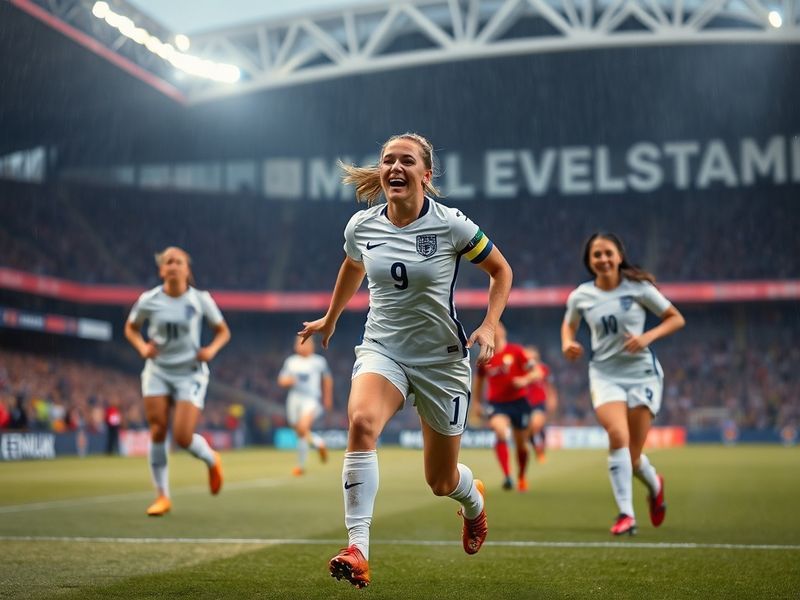
Leah Williamson stands as one of the most influential figures in modern women’s football. As the captain of Arsenal Women and the England national team, she has become a symbol of leadership, resilience, and technical brilliance on the pitch. Her career reflects the rapid evolution of women’s football, both in terms of athletic standards and cultural impact.
Born in Milton Keynes in 1997, Williamson’s journey to the top of the game began in local youth teams before joining Arsenal’s academy at 12. Her rise has mirrored the growth of women’s football in England, a sport that has gained unprecedented visibility and investment in recent years. Williamson’s story is not just one of individual achievement but also a reflection of broader societal shifts in how women’s sports are perceived and celebrated.
From Milton Keynes to the World Stage
Williamson’s early years in Milton Keynes were marked by a deep passion for football. She played in mixed teams throughout her youth, often being one of the few girls on the pitch. This experience shaped her competitive mentality and adaptability. By the age of 16, she had already made her senior debut for Arsenal, a testament to her technical ability and tactical awareness.
Her breakthrough came during the 2017-18 season when she became a regular starter for Arsenal. That year, she helped the team secure the FA Women’s Cup, a pivotal moment in her development. Williamson’s ability to read the game, combined with her composure on the ball, set her apart from her peers. These qualities would later make her an indispensable part of both club and country.
The cultural context of Williamson’s early career cannot be understated. Women’s football in England was still recovering from decades of underfunding and marginalization. The FA’s decision to lift the ban on women playing on official pitches in 1971 had been followed by decades of neglect. However, by the time Williamson emerged, the landscape was changing. The 2015 FIFA Women’s World Cup, where England reached the semi-finals, had sparked renewed interest in the sport. Williamson’s generation benefited from this growing momentum.
The Captaincy and Leadership in Transition
Williamson was named captain of Arsenal Women in 2020, a role that came with immense responsibility. Leading a team with a storied history required more than just footballing ability; it demanded emotional intelligence and a deep understanding of the club’s ethos. Under her leadership, Arsenal regained the FA Women’s Super League title in the 2022-23 season, ending a seven-year trophy drought.
Her captaincy of the England national team began in 2020, following in the footsteps of legends like Steph Houghton. Williamson’s leadership style is often described as calm and measured, a stark contrast to the fiery intensity of some of her predecessors. This approach has resonated with a new generation of players, many of whom see her as a mentor and role model.
The England team’s performance under Williamson’s captaincy reached its zenith at UEFA Women’s Euro 2022. The tournament, held in England, was a defining moment for the Lionesses. Williamson’s composed performances in midfield were instrumental in England’s success, culminating in a historic victory over Germany in the final. The cultural impact of that win cannot be overstated. The match drew a record-breaking television audience in the UK, and the team was celebrated as national heroes.
Williamson’s leadership extends beyond the pitch. She has been vocal about issues such as equal pay in women’s football and the need for greater investment in the grassroots game. Her advocacy aligns with broader movements within women’s sports, where athletes are increasingly using their platforms to drive social change.
A Global Perspective: Williamson in the International Arena
On the global stage, Williamson represents England in tournaments like the FIFA Women’s World Cup and the UEFA Women’s Championship. Her performances have drawn comparisons to midfield maestros of the men’s game, such as Andrea Pirlo and Xavi. Williamson’s ability to dictate the tempo of play, her precise passing range, and her tactical discipline make her one of the most effective midfielders in the women’s game today.
The 2023 FIFA Women’s World Cup in Australia and New Zealand was another milestone for Williamson. As England reached the quarter-finals, she was widely praised for her performances. The tournament highlighted the growing competitiveness of women’s football, with teams from across the globe showcasing technical skill and tactical sophistication.
Williamson’s influence is not limited to Europe. She has become a global ambassador for the sport, attracting attention from football fans worldwide. Her presence in campaigns for brands like Nike and Visa underscores her status as a marketable icon, bridging the gap between football and mainstream culture.
The cultural significance of Williamson’s global profile is particularly notable in regions where women’s football has traditionally struggled for recognition. In parts of Asia, Africa, and South America, her success serves as an inspiration to young girls who aspire to play professionally. This ripple effect is slowly transforming the global perception of women’s football from a niche interest to a mainstream sport.
The Evolution of Women’s Football: A Changing Landscape
The rise of Leah Williamson coincides with a period of unprecedented growth for women’s football. Key developments include:
- Increased Investment: Clubs in Europe’s top leagues, including the English Women’s Super League (WSL), have seen significant financial backing from owners like Chelsea’s Roman Abramovich and Manchester City’s ownership group.
- Media Coverage: Broadcast deals and streaming platforms have made women’s football more accessible than ever. Matches are now regularly televised, and social media has amplified the reach of players and teams.
- Grassroots Development: Initiatives like the FA’s “Gameplan for Growth” have focused on increasing participation at the youth level, ensuring a steady pipeline of talent.
- Cultural Shifts: The success of teams like the Lionesses has challenged stereotypes about women’s sports, paving the way for greater acceptance and respect.
Williamson’s career embodies these changes. From playing in front of sparse crowds in the early days of the WSL to leading her team in sold-out stadiums, her journey reflects the broader transformation of the sport. This evolution is not just about football; it’s about societal progress. Women’s football is no longer an afterthought—it is a cornerstone of the global football landscape.
Looking Ahead: Williamson’s Legacy and the Future
As Williamson continues her career, her legacy is already secure. She has become a role model for aspiring footballers, particularly young girls who see her as proof that dreams of playing professionally are attainable. Her influence extends beyond the pitch, as she uses her platform to advocate for equality and opportunity in sports.
The future of women’s football looks brighter than ever, and Williamson will undoubtedly play a pivotal role in shaping it. Whether it’s leading Arsenal to more trophies, captaining England in major tournaments, or inspiring the next generation, her impact will be felt for years to come.
For fans of women’s football, Williamson represents the best of the sport—skill, leadership, and a commitment to progress. Her story is a reminder that greatness is not just measured in trophies, but in the barriers broken and the lives inspired along the way.
As the sport continues to grow, Leah Williamson will remain a central figure in its narrative. Her career is a testament to the power of football to drive change, both on and off the pitch.