<!DOCTYPE html>
<html lang="en">
<head>
    <meta charset="UTF-8">
    <meta name="viewport" content="width=device-width, initial-scale=1.0">
    <title>Starlink: How SpaceX is Wiring the Planet from Orbit</title>
</head>
<body>
    <article>
        <h1>Starlink: How SpaceX is Wiring the Planet from Orbit</h1>

        <p>Above the silent void of Earth’s atmosphere, a quiet revolution is unfolding. No longer confined to the terrestrial grid, internet connectivity is ascending to the heavens. SpaceX’s Starlink project has become the most visible—and most debated—attempt to blanket the globe in high-speed broadband from space. What began as a bold engineering dream has matured into a service reaching over 100 countries, redefining digital access for remote communities, maritime operators, and even air travelers.</p>

        <p>The project’s rapid expansion reflects a broader shift in how technology intersects with global connectivity. In regions where fiber optics never reached and cellular towers stand sparse, a constellation of satellites now delivers latency comparable to urban networks. This transformation isn’t just technical—it’s cultural, economic, and geopolitical. From the Alaskan tundra to the Pacific atolls, Starlink is stitching together a patchwork of disconnected places into the digital fabric of the 21st century.</p>

        <h2>From Concept to Constellation: The Birth of Starlink</h2>

        <p>Conceived in 2015 and publicly announced the following year, Starlink was Elon Musk’s answer to a simple but stubborn problem: the internet wasn’t truly global. While urban centers thrived on fiber and 5G, vast regions—especially in Africa, Latin America, and rural Asia—remained offline or underserved. Traditional satellite internet existed, but it was slow, expensive, and burdened by high latency due to geostationary orbits 35,000 kilometers above Earth.</p>

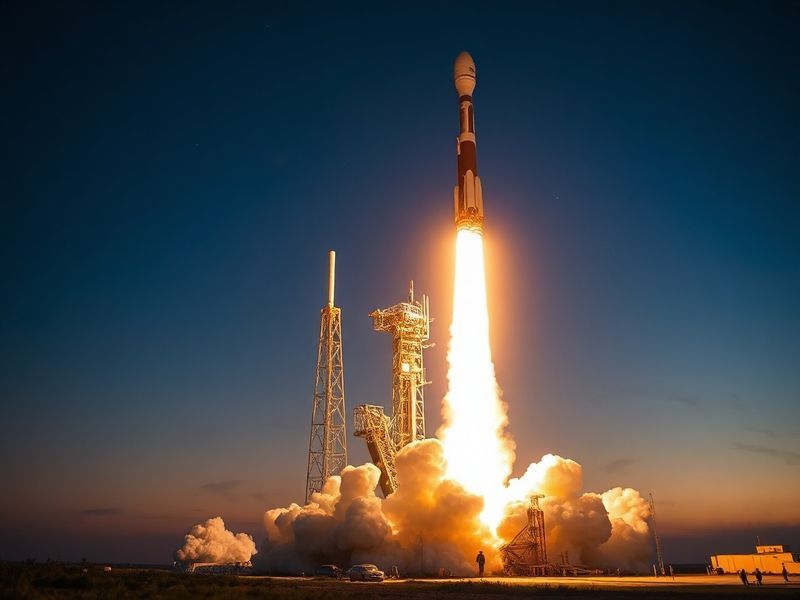
        <p>The solution? A swarm of small, flat-panel satellites orbiting just 550 kilometers up. By launching thousands of these “flat-pack” units, SpaceX could create a mesh network with near-orbital latency—under 50 milliseconds in many cases. The first 60 test satellites rode a Falcon 9 rocket in May 2019. Since then, over 6,000 have been deployed, with more than 5,000 still active. Each launch adds capacity, and each satellite, equipped with laser links, relays data across the constellation like digital couriers in the sky.</p>

        <p>But Starlink isn’t just about speed. It’s about scalability. While fiber networks require years of trenching and permits, a single rocket can deploy dozens of satellites in minutes. This agility allows SpaceX to respond to demand faster than any terrestrial provider. It also positions the company at the center of a new infrastructure race—one not fought with shovels and fiber-optic cable, but with rockets and regulatory filings.</p>

        <h2>Who’s Using Starlink—and Why It Matters</h2>

        <p>Starlink’s user base is as diverse as it is dispersed. In Ukraine, the service became a lifeline during Russia’s invasion, with terminals powering military communications and civilian resilience. In Peru, remote villages use Starlink to connect schools and clinics. On the high seas, cruise ships and cargo vessels rely on it for reliable internet at sea. Even in the Australian Outback and Canadian Arctic, where traditional providers balk at the cost, Starlink delivers.</p>

        <ul>
            <li><strong>Rural communities:</strong> Farmers in Montana and shepherds in Mongolia now stream video and access telemedicine.</li>
            <li><strong>Emergency responders:</strong> Firefighters in California and aid workers in Haiti use Starlink when terrestrial networks fail.</li>
            <li><strong>Maritime and aviation:</strong> Cruise lines like Royal Caribbean and airlines like JSX offer Starlink-powered Wi-Fi mid-flight.</li>
            <li><strong>Governments and militaries:</strong> From the U.S. Department of Defense to NATO allies, Starlink is being evaluated for secure communications.</li>
        </ul>

        <p>This isn’t charity. SpaceX charges between $90 and $599 per month for service, with terminals costing $599 to $2,500. While still expensive for many, the cost is falling as production scales. Competitors like OneWeb and Amazon’s Project Kuiper are racing to catch up, but none have matched Starlink’s head start or launch cadence.</p>

        <p>Culturally, Starlink has become a symbol of tech-enabled autonomy. It empowers individuals and communities to bypass local monopolies and state-controlled internet. In some countries, this has sparked tension. Iran has reportedly jammed Starlink signals. China restricts access entirely. Meanwhile, in democratic nations, it’s seen as a democratizing force—leveling the digital playing field.</p>

        <h2>The Technical and Environmental Debate</h2>

        <p>Starlink’s rapid deployment has not been without controversy. Astronomers were among the first to raise alarms. The reflective surfaces of early satellites—nicknamed “satellite trains”—streaked across telescope images, ruining long-exposure astrophotography. SpaceX responded by introducing “VisorSat” designs with sunshades to reduce reflectivity. Today, most satellites are less visible, though not invisible. The Vera C. Rubin Observatory in Chile, set to begin a decade-long sky survey in 2025, still expects thousands of streaks per night.</p>

        <p>Then there’s the issue of orbital debris. With over 5,000 satellites in low Earth orbit, the risk of collisions grows. Starlink satellites are designed to deorbit within five years if they fail, and SpaceX has pioneered autonomous collision avoidance. Still, in 2021, a Starlink satellite came within 60 meters of a Chinese space station, prompting Beijing to file a complaint with the UN. The episode highlighted the need for global coordination in space traffic management.</p>

        <p>Environmental concerns extend to Earth. Each launch burns thousands of kilograms of rocket fuel, emitting CO₂ and soot. While SpaceX uses kerosene-based RP-1, newer Starship prototypes aim to switch to methane, which produces less black carbon. The carbon footprint of a single Starlink terminal over its lifetime is still being studied, but early estimates suggest it’s lower than building a new fiber line in remote areas.</p>

        <p>On the flip side, Starlink enables environmental monitoring. Its high-resolution imagery helps track deforestation in the Amazon and illegal fishing in the Pacific. In disaster zones, it provides real-time mapping for relief efforts. The project, for all its flaws, has become a dual-use tool—both industrial and humanitarian.</p>

        <h2>A Global Network with Geopolitical Weight</h2>

        <p>Starlink is more than a business. It’s a technological infrastructure with soft power implications. When Russia invaded Ukraine, Starlink terminals—donated by SpaceX and funded by global donors—became essential for coordinating resistance. Ukrainian forces used them to guide drones and relay battlefield intelligence. The move earned Musk both praise and criticism. While some saw it as a humanitarian act, others questioned whether a private company should shape geopolitical outcomes.</p>

        <p>SpaceX has since established a dedicated government services division, Starlink Government, offering secure, encrypted connectivity. This has attracted interest from NATO members and allied militaries. The U.S. Department of Defense has awarded contracts worth over $2.7 billion, signaling official recognition of Starlink as critical infrastructure.</p>

        <p>Yet, this dominance raises concerns. Who controls the infrastructure that connects the planet? Can a single company dictate access in times of conflict? The absence of global regulation means Starlink operates in a legal gray zone. While the International Telecommunication Union (ITU) regulates spectrum use, it has no authority over orbital placement or service pricing.</p>

        <p>As other nations launch their own constellations—China’s Guowang, the European Union’s IRIS²—we may see the emergence of competing satellite internet monopolies. The result could be a fragmented digital sky, where access depends on citizenship or payment rather than geography.</p>

        <h2>What’s Next for Starlink?</h2>

        <p>SpaceX isn’t resting. The company is developing a direct-to-cell service, allowing standard smartphones to connect to Starlink satellites without special hardware. If successful, it could bring connectivity to every corner of the planet—even where no terminal exists. Regulatory hurdles remain, especially with the FCC and international bodies, but the potential is transformative.</p>

        <p>Longer term, Starship—the fully reusable rocket meant to replace Falcon 9—could slash launch costs by 90%. With cheaper access, Starlink could expand to millions more users, offering not just internet, but cloud computing and edge processing from orbit. Imagine a future where data centers float above the atmosphere, serving remote regions with minimal delay.</p>

        <p>The cultural impact is just as profound. Starlink is normalizing the idea that the internet doesn’t need wires. It can be beamed down from space. This shift could redefine national sovereignty, digital rights, and even human identity in the digital age. As more people come online via satellite, the very concept of “remote” may disappear.</p>

        <p>For now, Starlink remains a marvel of engineering and a lightning rod for debate. It’s both celebrated and scrutinized, a symbol of technological ambition and a cautionary tale about unchecked corporate power in space. One thing is clear: the sky is no longer the limit. It’s the new frontier of connection.</p>

        <p>As we look toward a future where every person, device, and vehicle might be online—regardless of location—the question isn’t whether Starlink will succeed, but how far its influence will reach. And whether humanity is ready for a world wired from orbit.</p>
    </article>

    <hr>

    <!-- Metadata Section -->