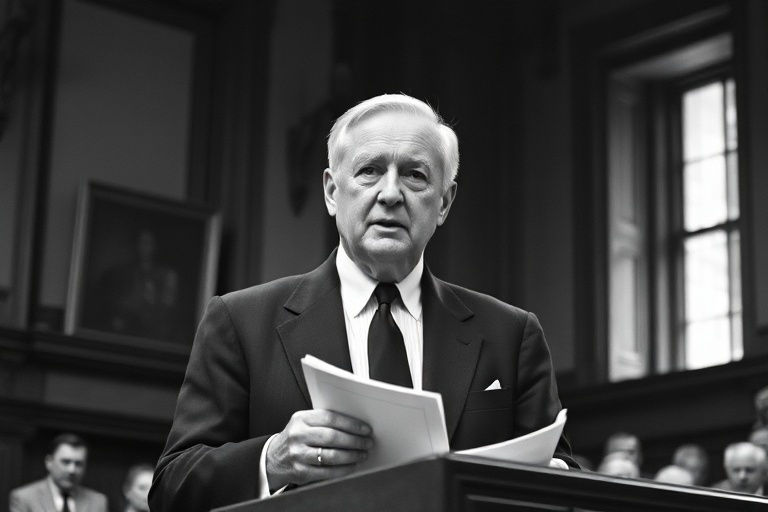
Who Was Henry Bolte?
Henry Bolte served as Premier of Victoria, Australia, from 1955 to 1972. His tenure remains one of the longest in the state’s history, marked by decisive leadership during a period of rapid social and economic change. Bolte’s administration reshaped Victoria’s infrastructure, education system, and cultural institutions, leaving a legacy that still influences the state today.
Born in 1908 in Ballarat, Bolte grew up in modest circumstances before entering politics. A member of the Liberal Party, he initially worked as a farmer and local councilor before winning a seat in the Victorian Parliament in 1947. His rise to the premiership came after years of service as a cabinet minister, where he gained a reputation for pragmatic decision-making and a no-nonsense approach to governance.
The Policies That Defined Bolte’s Premiership
Bolte’s government implemented sweeping reforms that modernized Victoria. One of his most significant achievements was the expansion of the state’s highway system, including the construction of the South Eastern and Eastern Freeways. These projects alleviated traffic congestion in Melbourne and connected regional areas to the capital, fostering economic growth.
Education also received major attention under Bolte. His administration oversaw the creation of new technical schools and the expansion of university facilities, ensuring that more Victorians had access to higher education. Additionally, Bolte’s government invested heavily in healthcare, building new hospitals and improving public health services across the state.
Beyond infrastructure and services, Bolte’s policies reflected a conservative but forward-thinking mindset. He supported industrial development, attracting major manufacturing firms to Victoria, which diversified the state’s economy. However, his approach to social issues was often contentious. Bolte opposed progressive reforms such as decriminalizing homosexuality and expanding Aboriginal land rights, aligning with the conservative values of his party.
Key Achievements of Henry Bolte’s Government
- Highway Expansion: Built critical freeways linking Melbourne to regional centers.
- Education Reform: Increased access to technical and higher education.
- Healthcare Investment: Constructed new hospitals and improved public health services.
- Industrial Growth: Attracted major manufacturing and business investments to Victoria.
- Infrastructure Projects: Developed water supply systems and urban renewal programs.
Controversies and Criticisms
Despite his accomplishments, Bolte’s leadership was not without controversy. His opposition to progressive social reforms drew criticism from civil rights groups and younger generations. One of the most contentious moments of his premiership came in 1967, when he controversially commuted the death sentences of two convicted murderers, Ronald Ryan and Peter Walker. The decision sparked national debate and remains a defining moment in Victoria’s legal history.
Bolte’s stance on Aboriginal rights also drew ire. His government resisted calls for land rights and maintained policies that many viewed as discriminatory. Environmentalists, too, criticized his administration for prioritizing development over conservation, particularly in cases involving land clearing and urban sprawl.
Yet, despite these controversies, Bolte remained a popular figure among many Victorians. His leadership style—direct, decisive, and often unapologetic—resonated with voters who valued stability and economic progress over social experimentation.
Bolte’s Lasting Influence on Victoria
Decades after leaving office, Bolte’s impact on Victoria remains evident. The infrastructure built during his tenure continues to support the state’s economy, while his education and healthcare reforms laid the groundwork for modern services. His leadership style, characterized by pragmatism and strong convictions, influenced subsequent generations of Victorian politicians.
However, Bolte’s legacy is also a reminder of the complexities of leadership. His conservative views on social issues contrast sharply with today’s progressive values, raising questions about the balance between tradition and reform in governance. For historians and political observers, Bolte’s premiership serves as a case study in leadership during times of transformation.
To explore more about Victoria’s political history, visit our Politics and Australia sections for deeper analysis and context.
Conclusion
Henry Bolte’s premiership was a defining era in Victorian history. His leadership shaped the state’s infrastructure, economy, and social policies, leaving a legacy that endures today. While his conservative views sparked controversy, his pragmatic approach to governance left an indelible mark on Victoria. Understanding Bolte’s tenure provides valuable insights into the challenges and trade-offs of leadership in times of change.
For further reading on Australian political history and its broader implications, explore the resources available on Dave’s Locker.