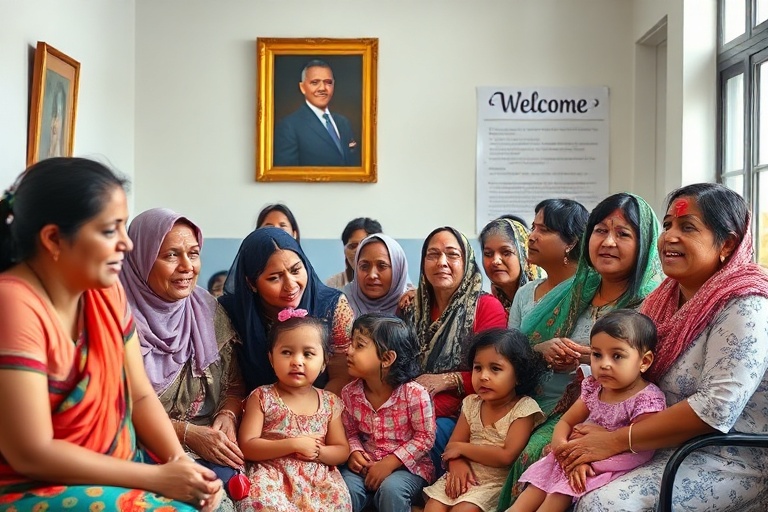
Government-backed parenting websites have quietly become one of the most significant digital phenomena of the 21st century. These platforms, often branded with country-specific domains like moms.gov, serve as centralized hubs for health advice, educational resources, and policy updates. What began as simple informational sites has evolved into sophisticated ecosystems designed to support caregivers in unprecedented ways.
Launched in 2018 as part of a broader digital public infrastructure initiative, moms.gov stands out for its comprehensive approach. Unlike commercial parenting blogs, this government-run portal integrates official health guidelines, vaccination schedules, and even mental health resources under one roof. For parents navigating complex systems—especially in regions with fragmented healthcare—such platforms offer clarity and reliability.
The Evolution of Government Parenting Portals
Digital parenting support isn’t new, but its formalization through government domains represents a shift in public service delivery. The concept gained traction after the 2015 UN Sustainable Development Goals emphasized inclusive, equitable education and healthcare. Countries like Finland, Singapore, and New Zealand pioneered these portals, blending technology with welfare policies.
In the United States, moms.gov arrived later but with a strong focus on accessibility. The site features multilingual support, mobile optimization, and partnerships with pediatricians to ensure accuracy. According to a 2023 report by the Pew Research Center, 68% of American parents have used government health websites for child-related queries—up from 42% in 2017. This reflects growing trust in official channels over commercial sources.
Key Features That Set moms.gov Apart
While many countries offer parenting resources online, moms.gov distinguishes itself through several innovations:
- Real-time Policy Updates: Parents receive notifications about changes in childcare subsidies, school enrollment deadlines, or new vaccination requirements.
- Localized Resource Maps: Users can search for nearby daycare centers, pediatric clinics, and early intervention programs using geolocation tools.
- Interactive Tools: calculators for childcare costs, developmental milestone trackers, and even AI-powered chatbots for basic queries.
- Data Privacy Compliance: Unlike many commercial apps, government portals operate under strict privacy laws, reassuring parents about data security.
These features align with broader trends in digital governance, where transparency and user-centric design take precedence. For example, Singapore’s HealthHub integrates health records with parenting advice, while Finland’s Vauva.fi includes community forums moderated by childcare experts.
Cultural Context: Why Some Countries Embrace It While Others Lag
Adoption of these platforms varies widely by region. In Nordic countries, where digital literacy and trust in government are high, parenting portals see 80%+ engagement among new parents. Conversely, in parts of Southeast Asia and Sub-Saharan Africa, low internet penetration and cultural preferences for traditional support networks slow adoption.
Cultural attitudes toward government intervention play a role, too. In South Korea, where parenting is highly competitive and government support is expected, portals like HappyHome.kr are widely used. Meanwhile, in countries with privatized healthcare—like the U.S.—parents often turn to moms.gov only when commercial options fail.
Religious and social norms also influence design. Some Middle Eastern countries tailor portals to include Islamic parenting guidelines, while others in Latin America focus on indigenous language support. These adaptations highlight how digital public services must balance global standards with local values.
The Broader Impact on Families and Policymakers
The rise of moms.gov and similar platforms has measurable effects on both families and policymakers. For caregivers, these portals reduce the mental load of navigating bureaucratic systems. A 2022 study by the University of Michigan found that parents using government parenting sites reported lower stress levels and higher confidence in decision-making.
For governments, these platforms serve as both a service and a data source. Anonymous, aggregated data from moms.gov helps identify gaps in childcare access—such as rural areas underserved by daycare centers. Policymakers use this information to allocate resources more effectively.
Critics, however, point to potential drawbacks. Over-reliance on digital portals could exclude marginalized groups without reliable internet access. There’s also the risk of algorithmic bias in tools like developmental milestone trackers, which may not reflect diverse cultural norms. Ensuring inclusivity remains a challenge for designers.
Despite these concerns, the trend shows no signs of slowing. The European Union’s Child Guarantee initiative, launched in 2021, explicitly calls for digital parenting support as a tool for reducing child poverty. Closer to home, initiatives like education reform in several U.S. states now mandate links to government parenting resources in school enrollment packets.
Looking Ahead: What’s Next for moms.gov?
Future iterations of moms.gov are expected to incorporate even more advanced technologies. Pilot programs are testing AI-driven personalized advice, where parents input their child’s age and receive tailored recommendations on nutrition, sleep, and learning activities. There are also discussions about integrating electronic health records directly into the portal, allowing seamless transitions between pediatric care and government services.
Another area of growth is community-building. While some parents prefer one-on-one pediatrician consultations, others seek peer support. moms.gov is exploring moderated discussion boards where caregivers can share experiences—under strict privacy protections, of course.
Long-term, the success of these portals may depend on their ability to evolve with societal changes. As work-life balance becomes more complex and dual-income households become the norm, parents need flexible, on-demand support. moms.gov could become a model for how governments adapt to modern family structures.
A Global Movement Taking Shape
The story of moms.gov is not just about one website—it’s about a global movement toward digitizing care. From healthcare to education, governments are recognizing that parenting support is not a luxury but a necessity. In doing so, they’re redefining what it means to raise children in the digital age.
For parents, these portals offer a lifeline. For societies, they represent an investment in the next generation. As technology advances and policies adapt, platforms like moms.gov will likely play an even larger role in shaping the future of childhood.
One thing is clear: the era of scattered parenting advice is fading. In its place stands a new model—structured, supported, and accessible to all.