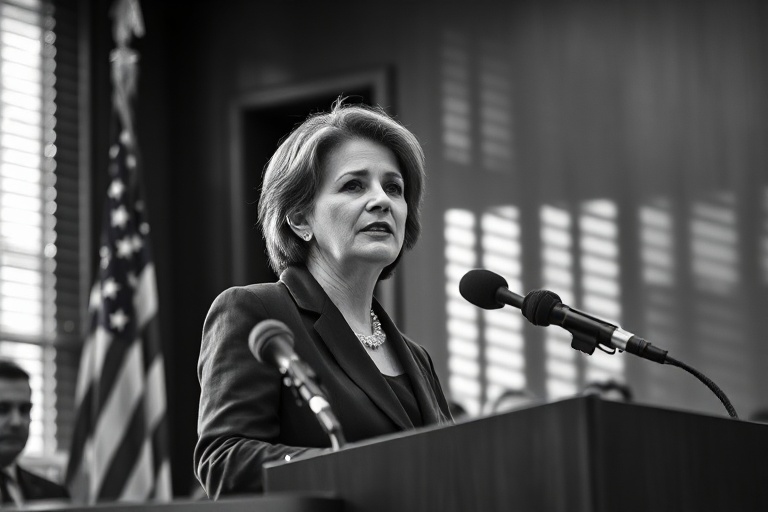
Karen Bass: From Grassroots Activist to Los Angeles Mayor
Karen Bass: A Political Journey Defined by Service
Karen Bass’s rise from a grassroots organizer to the first Black woman mayor of Los Angeles is a story of resilience and transformation. Her career spans decades, marked by a commitment to social justice and urban reform. Bass’s trajectory reflects broader shifts in American politics, particularly the increasing influence of Black women in municipal leadership.
Born in Los Angeles in 1953, Bass’s early life was shaped by the city’s evolving social and political landscape. She witnessed the Watts Rebellion in 1965 and later the Rodney King riots in 1992, events that deeply influenced her views on systemic inequality. These experiences fueled her decision to enter public service, driven by a desire to address the root causes of urban strife.
The Early Years: Community Organizing and Activism
Bass’s political career began in the 1990s, a period when Los Angeles was grappling with economic disparity and racial tensions. She co-founded the Community Coalition in 1990, an organization dedicated to empowering underserved communities. The group’s work focused on issues like gang violence, substance abuse, and education reform, laying the groundwork for Bass’s reputation as a pragmatic yet compassionate leader.
Her activism extended beyond local issues. In 2008, she was elected to the U.S. House of Representatives, becoming the first Black woman from California to serve in Congress. During her tenure, she championed healthcare reform, criminal justice reform, and international human rights. Bass’s work in Congress highlighted her ability to navigate complex policy debates while maintaining a focus on marginalized communities.
Legislative Impact: A Focus on Healthcare and Social Justice
In Congress, Bass was known for her advocacy on healthcare access. She played a key role in expanding the Affordable Care Act, particularly for low-income families. Her legislation often addressed the intersection of health and social determinants like housing and education. This holistic approach set her apart in a political climate often dominated by partisan divides.
Bass also made strides in international diplomacy. As chair of the Congressional Black Caucus, she engaged with global leaders on issues like HIV/AIDS in Africa and the Syrian refugee crisis. Her work underscored the importance of linking domestic policy to international human rights, a perspective that resonated with progressive voters.
Los Angeles Mayor: A New Chapter
In 2022, Bass made history by winning the Los Angeles mayoral race. Her victory was significant not only for breaking gender and racial barriers but also for her promise to address the city’s most pressing challenges. Homelessness, affordable housing, and public safety dominated her campaign, reflecting the priorities of Angelenos weary of decades of unmet needs.
As mayor, Bass has emphasized collaborative governance. She has worked to bridge divides between city agencies, nonprofits, and private stakeholders. Her administration’s early focus on emergency shelters and tenant protections has been met with cautious optimism, though critics argue progress remains slow in a city notorious for bureaucratic inertia.
Global Perspective: Black Women in Municipal Leadership
Bass’s career is part of a broader global trend. Cities like London, Paris, and Toronto have also seen Black women rise to mayoral positions, signaling a shift in political representation. This trend reflects growing recognition of the need for diverse leadership in urban governance, particularly in cities with histories of racial and economic segregation.
Research shows that Black women mayors often prioritize policies addressing inequality, healthcare, and education. A 2021 study by the Brookings Institution found that cities led by Black women mayors were more likely to implement progressive reforms in housing and criminal justice. Bass’s leadership in Los Angeles aligns with this pattern, though the scale of her city’s challenges tests even the most determined leaders.
Challenges and Criticisms
No political career is without controversy. Bass has faced criticism from both sides of the aisle. Progressives argue her policies don’t go far enough in tackling homelessness, while conservatives challenge her approach to public safety. Her decision to declare a state of emergency on homelessness in her first year was praised by advocates but met with skepticism by fiscal conservatives concerned about cost.
Internally, her administration has grappled with turnover and public perception. High-profile departures and accusations of micromanagement have led some to question her leadership style. Yet supporters point to the complexity of managing a sprawling city of nearly 4 million people, where every decision can have far-reaching consequences.
The Road Ahead: What’s Next for Karen Bass?
As Bass enters her second year in office, her agenda remains ambitious. Key priorities include:
- Expanding permanent supportive housing for the homeless
- Reforming the Los Angeles Police Department’s use-of-force policies
- Boosting economic opportunities in underserved neighborhoods
- Addressing the climate crisis through green job initiatives
Her ability to deliver on these promises will determine whether her tenure is seen as transformative or merely transitional. For Bass, the stakes are personal. She has often spoken about her hope to leave a legacy that empowers future generations, much like the mentors who shaped her own path.
A Legacy in the Making
Karen Bass’s story is still being written, but her impact is already undeniable. She represents a new wave of leaders unafraid to confront systemic inequities while navigating the messy realities of governance. Whether in Los Angeles or beyond, her career offers lessons on the power of persistence, the importance of coalition-building, and the enduring need for leaders who prioritize people over politics.
As cities worldwide continue to grapple with inequality and urban decay, figures like Bass remind us that leadership is not just about holding office—it’s about challenging the status quo and imagining a better future. Her journey from community organizer to mayor is a testament to the belief that change, though slow, is always possible.