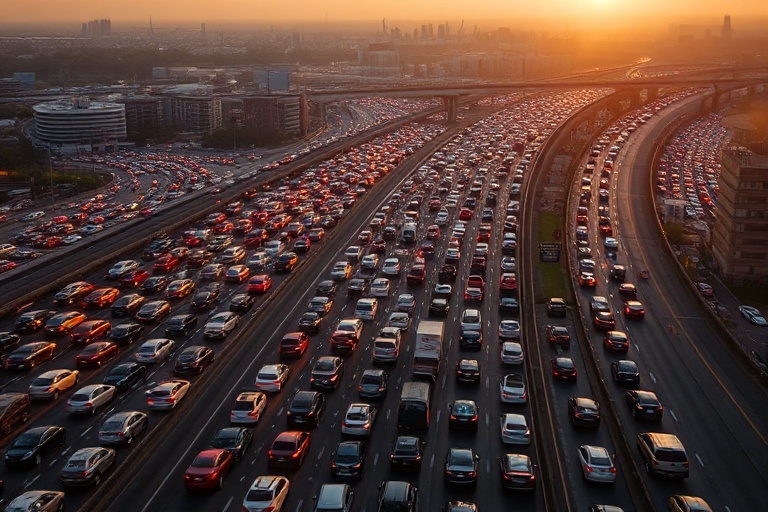
traffic congestion
Why Cities Worldwide Are Struggling with Traffic Congestion
The steady hum of engines, the occasional blaring horn, and the slow crawl of brake lights stretching into the horizon—these are familiar scenes in metropolitan areas from Los Angeles to Lagos, Mumbai to Madrid. Traffic congestion has become one of the most visible symptoms of urban growth, economic activity, and infrastructural strain. It’s not just an inconvenience; it’s a systemic challenge that drains productivity, increases pollution, and erodes quality of life.
Cities are expanding faster than their road networks can adapt. The result is predictable: more cars, more delays, and more frustration. While the causes vary by region—rapid motorization in developing nations, suburban sprawl in wealthier countries, and outdated transit systems nearly everywhere—the consequences are universal. Economically, congestion costs billions annually in lost time and fuel. Environmentally, it’s a major contributor to carbon emissions. Socially, it reshapes daily life, turning commutes into endurance tests and reshaping family routines around traffic patterns.
The Global Spread of Traffic Gridlock
Traffic congestion is no longer limited to the world’s largest megacities. Smaller urban centers in emerging economies are now experiencing the same gridlock that once plagued only New York or Tokyo. In Ho Chi Minh City, Vietnam, average speeds during rush hour dropped to just 5–7 km/h in 2023—slower than walking pace. Similarly, in Nairobi, Kenya, traffic jams can last for hours, with matatus (minibus taxis) and boda-bodas (motorcycle taxis) navigating chaotic lanes that lack clear regulation.
In contrast, developed cities like London and Singapore have turned to congestion pricing to manage traffic flow. London’s Ultra Low Emission Zone (ULEZ) and Singapore’s Electronic Road Pricing (ERP) systems charge drivers entering high-traffic zones, reducing vehicle counts and improving air quality. These models highlight a key insight: congestion isn’t just about the number of cars—it’s about how cities manage them.
Yet even with technological solutions, cultural attitudes toward driving play a role. In many Western cities, car ownership is tied to personal freedom and status. In contrast, in places like Amsterdam or Copenhagen, cycling and public transit are normalized, making congestion less severe despite high population densities.
What Causes the Daily Gridlock?
Traffic congestion stems from a combination of structural, behavioral, and systemic factors. At the root is the mismatch between infrastructure and demand:
- Population Growth: Cities are growing faster than ever. The UN projects that by 2030, 60% of the global population will live in urban areas—up from 56% in 2021. More people means more vehicles, especially in places where public transit is underdeveloped.
- Urban Sprawl: Low-density development forces residents to travel longer distances. In Atlanta, Georgia, one of the most sprawling U.S. cities, the average commute is over 40 minutes—despite relatively low population density.
- Poor Public Transit: In many cities, buses, trains, and subways are unreliable, overcrowded, or nonexistent. This pushes residents toward private vehicles as the only viable option.
- Economic Activity: Business districts and industrial zones concentrate jobs and commerce in central areas, creating bottlenecks during peak hours. A single stalled vehicle can cascade into a city-wide delay.
- Cultural Driving Habits: Aggressive lane changes, lack of adherence to traffic rules, and insufficient enforcement all contribute to slower traffic flow and increased risk of accidents.
Climate and geography also play a role. Cities built on flat terrain with wide streets—like Houston—encourage car use, while hilly or densely packed cities—like San Francisco or Mumbai—naturally limit vehicle flow. Natural barriers such as rivers or mountains can force traffic into narrow corridors, exacerbating congestion.
Innovative Solutions and Their Limitations
As cities seek relief, a range of solutions has emerged—some technological, others policy-based. One of the most visible trends is the rise of ride-sharing and micro-mobility:
- Ride-sharing apps: Services like Uber and Didi have reduced the number of parked cars in some areas by enabling shared rides. However, they’ve also increased total vehicle miles traveled in others, as drivers circle waiting for fares.
- Bike and scooter sharing: Cities like Paris and Barcelona have integrated electric bikes and scooters into their transit networks. These offer last-mile solutions but require dedicated lanes and safe infrastructure to be effective.
- Smart traffic systems: AI-powered traffic lights in cities like Pittsburgh and Moscow adjust signal timing in real-time, reducing wait times by up to 40% in pilot zones.
- Congestion pricing: As mentioned earlier, cities like London and Stockholm have implemented fees for entering central zones during peak hours. The results are promising: Stockholm saw a 20% reduction in traffic and a 12% increase in public transit use within a year.
However, not all solutions are scalable or equitable. Congestion pricing can disproportionately affect low-income drivers, while bike lanes often face backlash from car-dependent residents. Autonomous vehicles, once hailed as a cure-all, now appear likely to increase traffic if not managed properly—empty roaming cars and ride-hailing fleets could worsen congestion unless integrated with public transit.
The Human Cost of Endless Idling
Beyond the economic numbers, traffic congestion has real human consequences. Studies show that long commutes are linked to higher stress levels, poorer sleep, and increased rates of depression. In Tokyo, where some workers endure two-hour commutes each way, “commuter trains” have become a cultural symbol of endurance. Meanwhile, in São Paulo, Brazil, traffic jams lasting six hours or more are not uncommon, with drivers sometimes sleeping in their cars or working remotely from parking lots.
Children’s lives are also affected. In Los Angeles, students who attend schools near freeways face higher risks of asthma due to vehicle emissions. In Delhi, India, school timings are staggered specifically to reduce congestion, though the effect is limited. The social fabric of neighborhoods can erode as residents avoid public spaces during peak traffic hours.
Even tourism isn’t immune. In Venice, Italy, the city has banned large cruise ships from the historic center due to environmental and congestion concerns. The move reflects a growing global trend: cities are prioritizing livability over economic gains from tourism and commerce.
Can Cities Ever Escape the Gridlock?
There’s no single fix for traffic congestion, but a combination of policy, technology, and cultural change offers hope. The most successful cities don’t just build more roads—they rethink mobility entirely. Singapore, often cited as a model, combines strict vehicle quotas, high petrol taxes, and a world-class metro system. Its car ownership rate is among the lowest in the developed world despite high income levels.
Another approach is to decentralize economic activity. The rise of remote work post-2020 has already reduced rush-hour traffic in many cities. If sustained, this shift could permanently alter commuting patterns, reducing the pressure on central business districts.
Ultimately, the fight against traffic congestion is a reflection of broader urban challenges: equity, sustainability, and quality of life. It’s not just about moving cars—it’s about moving people efficiently, affordably, and cleanly. As cities grow, the question isn’t whether congestion will worsen, but whether leaders will act before it’s too late.
For those interested in how urban planning intersects with daily life, explore our Travel section, where we examine how cities around the world balance heritage and modernity. Or, for a deeper look at sustainable urban solutions, visit our Science category, which covers innovations in green infrastructure and climate adaptation.