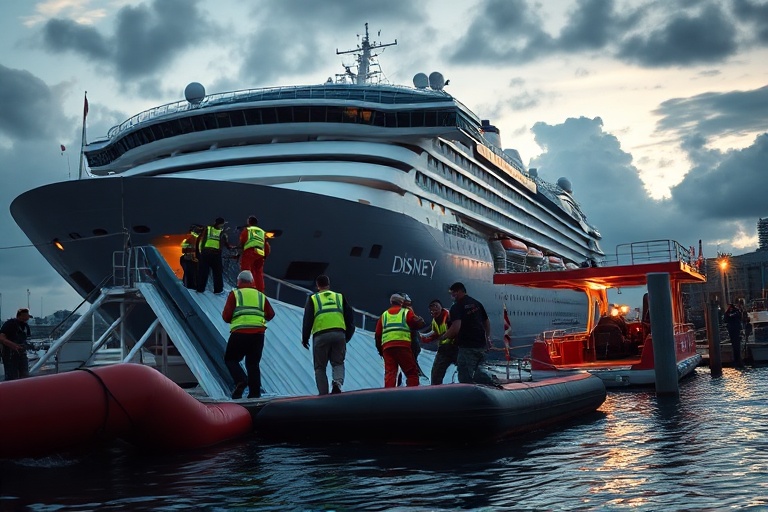
On a routine voyage in late November 2023, the Disney Wish—one of Disney Cruise Line’s newest ships—became the center of an incident that has since raised questions about emergency protocols and guest safety across the cruise industry. The event unfolded during a seven-day Caribbean itinerary when a fire alarm was triggered in crew-only areas, prompting a precautionary evacuation of passengers to muster stations. While no injuries were reported and the situation was resolved within hours, the incident has sparked broader discussions about preparedness, transparency, and the unique challenges of managing large-scale maritime emergencies.
The Disney Wish, launched in 2022, represents Disney’s growing footprint in the cruise market. Known for its immersive themed experiences and family-friendly amenities, the ship carries over 4,000 guests and 1,500 crew members. The November incident occurred during routine operations, but the response—particularly the delayed communication to passengers—has drawn criticism from maritime safety advocates and industry watchers alike.
What Happened During the Disney Cruise Ship Incident
The fire alarm was activated at approximately 2:45 AM on November 26, 2023, while the ship was sailing through international waters east of Florida. According to preliminary reports from the U.S. Coast Guard and internal Disney Cruise Line communications, the alarm originated in a lower-deck engineering space. Crew members conducted an immediate assessment and confirmed no active fire, but the precautionary evacuation was initiated as a standard safety measure.
Passengers reported being awakened by crew knocking on doors and directing them to muster stations on Deck 5. Many described the process as orderly but noted a lack of immediate clarity about the situation. One guest shared on social media that crew members mentioned a “minor technical issue” but provided no further details until nearly an hour later. The ship’s intercom system, typically used for real-time updates, remained silent for over 45 minutes after the initial alarm.
It wasn’t until 3:30 AM that a ship-wide announcement was made, stating that the alarm was false and that guests could return to their cabins. The Disney Wish continued its voyage without further disruption and returned to Port Canaveral on schedule two days later. While Disney Cruise Line issued a statement calling the event a “precautionary safety drill,” the timing and communication lapses have fueled concerns about transparency and passenger trust.
Industry-Wide Concerns: Are Cruise Lines Prepared for Real Emergencies?
The incident aboard the Disney Wish is not an isolated case. In recent years, the cruise industry has faced scrutiny over emergency response effectiveness, particularly in incidents involving fires, medical evacuations, and mechanical failures. Data from the U.S. Coast Guard shows that between 2018 and 2023, there were over 120 reported fires on cruise ships globally, with 14 resulting in significant damage or evacuation. While most were contained quickly, the potential for escalation remains a persistent concern.
Cruise lines operate under the International Convention for the Safety of Life at Sea (SOLAS), which mandates strict safety drills and equipment standards. However, compliance and execution vary. A 2022 report by the International Maritime Organization (IMO) highlighted inconsistencies in crew training and passenger briefings, especially on newer vessels where amenities and layouts can complicate evacuation routes.
What makes the Disney incident notable is not the alarm itself, but the response—or lack thereof—following it. In high-stress situations, clear and timely communication can prevent panic and ensure orderly evacuations. The delay in providing information raises questions about whether cruise lines are prioritizing guest reassurance or simply following protocol without adapting to real-world expectations.
Key Factors in Cruise Ship Emergency Response
- Communication speed: How quickly and clearly information is shared with guests during an incident.
- Crew training: The preparedness of staff to handle both technical and psychological aspects of emergencies.
- Public perception: The role of social media and guest testimonials in shaping trust and reputation.
- Regulatory oversight: The balance between industry self-regulation and government enforcement.
- Technology integration: The use of digital tools (apps, sensors, AI) to detect and respond to incidents faster.
Broader Implications: Trust, Transparency, and the Future of Cruise Safety
The Disney cruise incident arrives at a pivotal moment for the industry. After years of pandemic-related disruptions, cruise lines are experiencing record demand, with over 30 million passengers expected to sail in 2024. This growth brings increased scrutiny, not just from regulators, but from travelers who are more informed and vocal than ever before.
Social media has amplified guest experiences—both positive and negative—making reputational damage a real and immediate risk. A single poorly handled incident can go viral within hours, influencing booking decisions and investor confidence. Disney, long regarded as a leader in customer experience, now faces a test of its crisis management credibility.
Industry analysts suggest that the most resilient cruise lines will be those that go beyond compliance and invest in proactive safety culture. This includes real-time monitoring systems, multilingual crew training, and transparent communication channels that empower guests to make informed decisions. The Disney Wish incident, while minor in outcome, may serve as a catalyst for broader reforms across the sector.
What Should Cruise Guests Do Moving Forward?
While the vast majority of cruises proceed without incident, the Disney Wish case offers lessons for travelers. Experts recommend that guests familiarize themselves with the ship’s safety card upon boarding, noting the location of muster stations and emergency equipment. It’s also wise to download the cruise line’s official app, if available, as it often provides real-time updates and emergency alerts.
Passengers should not hesitate to ask crew members about safety procedures during the mandatory muster drill on embarkation day. While these drills are often viewed as routine, they are a critical opportunity to clarify evacuation routes and communication protocols. In the event of an actual emergency, guests should remain calm, follow crew instructions, and avoid relying solely on social media for updates.
For cruise operators, the message is clear: safety is not just about systems and drills—it’s about perception and trust. In an era where every second of delay can be scrutinized online, the best defense against reputational harm is a culture of openness, rapid response, and continuous improvement.
The Disney cruise incident may fade from headlines, but its implications will linger. It serves as a reminder that in the world of cruising—where wonder and risk coexist—preparation is not optional. It is the foundation of every memorable voyage.
Conclusion
The November 2023 incident aboard the Disney Wish underscores a critical truth: the cruise industry’s future depends not only on delivering enchanting experiences but on ensuring that safety is woven into every moment of the journey. While Disney and its competitors continue to innovate, the real measure of success will be seen not in the number of decks or dining options, but in the confidence of the guests who sail aboard them.