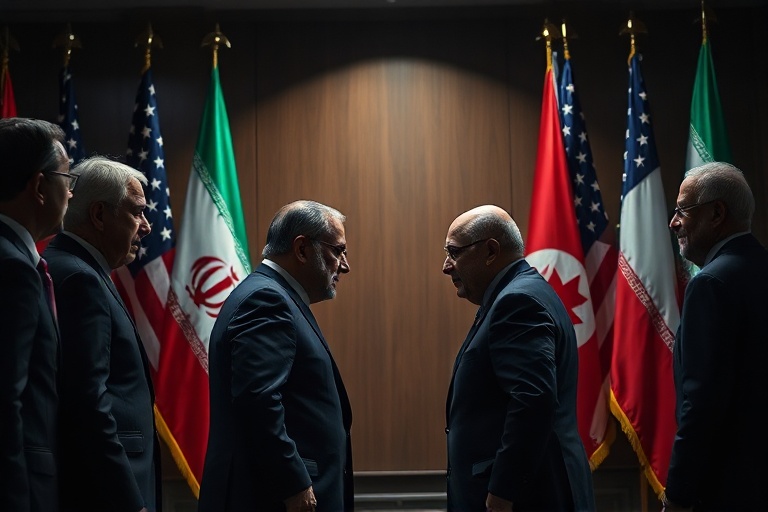
us-iran
The Complex Dance of Diplomacy: U.S.-Iran Relations in the 21st Century
The relationship between the United States and Iran is one of the most intricate and consequential geopolitical dynamics of the modern era. Spanning more than four decades, this rivalry has shaped not only the Middle East but also global energy markets, military strategies, and cultural exchanges. Unlike many bilateral tensions, the U.S.-Iran conflict is deeply rooted in historical grievances, ideological divides, and shifting alliances that continue to evolve with each passing decade.
The roots of this friction trace back to the 1953 CIA-backed coup that reinstated the Shah of Iran, Mohammed Reza Pahlavi, after a democratically elected government nationalized the country’s oil industry. This intervention, driven by Cold War interests, planted the seeds of distrust that would later bear fruit in the 1979 Islamic Revolution. When Ayatollah Ruhollah Khomeini overthrew the Shah and established an Islamic Republic, the United States found itself facing a regime that rejected its influence and sought to export its revolutionary ideology.
The Nuclear Standoff and Diplomatic Deadlocks
The most visible manifestation of U.S.-Iranian tensions in recent years has been the dispute over Iran’s nuclear program. The international community, led by the U.S., has long suspected Iran of pursuing nuclear weapons under the guise of civilian energy development. This suspicion led to a series of sanctions that crippled Iran’s economy and isolated it on the global stage. The Obama administration’s 2015 Joint Comprehensive Plan of Action (JCPOA), commonly known as the Iran nuclear deal, offered a temporary reprieve by lifting sanctions in exchange for strict limits on Iran’s nuclear activities. However, the Trump administration’s 2018 withdrawal from the agreement reignited hostilities and pushed Iran to accelerate its uranium enrichment.
Today, the JCPOA remains a shadow of its former self. Iran has steadily breached the deal’s restrictions, enriching uranium to levels far beyond what was permitted. Meanwhile, the U.S. has maintained a policy of “maximum pressure,” reimposing sanctions and targeting Iran’s regional proxies, including Hezbollah in Lebanon and the Houthi rebels in Yemen. The cycle of escalation and retaliation has created a precarious balance, where any misstep could trigger a wider conflict.
- Key moments in U.S.-Iran nuclear diplomacy:
- 1979: Iranian Revolution and hostage crisis
- 2006: UN Security Council imposes first sanctions over nuclear program
- 2015: JCPOA signed, offering sanctions relief in exchange for nuclear limits
- 2018: U.S. withdraws from JCPOA and reimposes sanctions
- 2020: Assassination of Qasem Soleimani by U.S. drone strike
- 2022: Iran and world powers resume talks to revive JCPOA
Proxy Wars and Regional Rivalry
Beyond the nuclear issue, the U.S. and Iran are locked in a broader struggle for influence across the Middle East. This proxy war plays out in Syria, Iraq, Lebanon, and Yemen, where each side supports opposing factions. Iran’s Islamic Revolutionary Guard Corps (IRGC) and its network of allied militias have become a dominant force in these conflicts, often clashing with U.S.-backed governments or allies like Saudi Arabia and Israel.
In Syria, Iran’s support for President Bashar al-Assad has been crucial in keeping him in power, despite a decade-long civil war. The U.S., on the other hand, has backed various rebel groups and Kurdish forces fighting against both Assad and ISIS. In Iraq, Iran’s influence is deeply embedded in the political and military structures, while the U.S. maintains a significant troop presence to combat remnants of ISIS and counter Iran’s sway. Lebanon’s Hezbollah, a militant group and political party, serves as Iran’s most potent proxy, wielding considerable power in Lebanese politics and frequently clashing with Israel.
These proxy conflicts have turned the Middle East into a chessboard where the moves of one player can have cascading consequences. The 2020 U.S. assassination of Qasem Soleimani, Iran’s most powerful military commander, was a stark reminder of how quickly tensions can escalate. Soleimani’s death not only heightened anti-American sentiment in Iran but also emboldened Iranian-backed militias to target U.S. forces and assets across the region.
The Human Dimension: Culture, Migration, and Soft Power
While geopolitics often dominates headlines, the human story of U.S.-Iran relations is equally compelling. Iran boasts a rich cultural heritage that has left an indelible mark on global art, literature, and philosophy. From the poetry of Rumi to the films of Abbas Kiarostami, Iranian culture has long transcended political boundaries. Yet, decades of isolation and sanctions have stifled cultural exchange, leaving many Iranians disconnected from the outside world.
Migration has also played a significant role in shaping the diaspora. Over a million Iranians fled the country after the 1979 revolution, many settling in the U.S., Canada, and Europe. These communities have become influential voices, advocating for change in Iran while navigating their dual identities. In cities like Los Angeles and Toronto, Iranian-Americans have established vibrant cultural hubs, from Persian restaurants to art galleries, that serve as bridges between the two nations.
Despite the political tensions, people-to-people connections persist. Iranian musicians, scientists, and athletes continue to make their mark on the global stage. In 2022, Iranian climber Elnaz Rekabi competed in the Asian Championships without wearing her mandatory hijab, sparking a wave of support and controversy. Meanwhile, Iranian scientists have contributed to international research projects, and athletes like Alireza Firouzja have become global stars in chess and football, respectively.
The Path Forward: Can Diplomacy Prevail?
The future of U.S.-Iran relations remains uncertain, with both sides oscillating between confrontation and cautious engagement. The Biden administration has signaled a willingness to revive the JCPOA, but Iran’s hardline factions have grown increasingly skeptical of American intentions. Meanwhile, Iran’s regional activities continue to provoke responses from Israel and Gulf states, complicating any potential thaw in relations.
For diplomacy to succeed, both sides must address the underlying issues that have fueled their rivalry. The U.S. will need to demonstrate a commitment to lifting sanctions and respecting Iran’s sovereignty, while Iran must curb its regional ambitions and comply with international nuclear norms. A lasting resolution will also require addressing the broader security concerns of Iran’s neighbors, particularly Israel and Saudi Arabia, whose own rivalries with Iran add another layer of complexity.
In the absence of a breakthrough, the cycle of pressure and retaliation is likely to continue, with ordinary Iranians and Americans bearing the brunt of the fallout. The human cost of this stalemate extends beyond geopolitics, affecting families separated by visas, students denied educational opportunities, and businesses struggling under sanctions. As the world watches, the question remains: Will the U.S. and Iran find a way to coexist, or will their rivalry continue to define the next chapter of Middle Eastern history?
For those interested in the broader implications of U.S. foreign policy, our Politics section offers deeper analysis on how these dynamics shape global affairs. Alternatively, explore our Culture section to learn more about the artistic and social exchanges that transcend political borders.
One thing is clear: the U.S.-Iran relationship is far from static. It is a story of resilience, resistance, and the enduring search for a shared future. Whether through diplomacy, conflict, or cultural exchange, the choices made today will echo for generations to come.