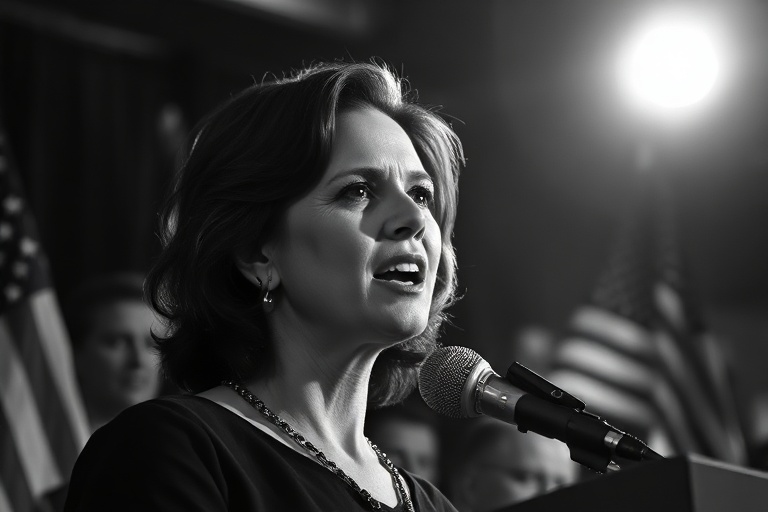
Ashley Judd: From Hollywood Star to Global Advocate for Change
Ashley Judd: A Life of Advocacy, Artistry, and Unyielding Resilience
Few figures in modern entertainment have balanced the demands of a high-profile career with the relentless pursuit of social change like Ashley Judd. Born on April 19, 1968, in Granada Hills, California, Judd grew up in a family where resilience and activism were as much a part of her upbringing as Hollywood glamour. The daughter of country music legend Naomi Judd and sister to Wynonna Judd, she was destined for the spotlight—but she chose a path that extended far beyond the stage and screen.
Judd’s career spans over three decades, marked not only by critically acclaimed performances but also by her fearless advocacy for women’s rights and global health initiatives. Whether on screen in films like Double Jeopardy and Kiss the Girls, or behind the camera as a producer and director, she has consistently used her platform to challenge systemic injustices. Her work has taken her from the halls of Congress to the villages of India, where she has fought against gender-based violence and championed access to education and healthcare.
From Kentucky Roots to Hollywood Stardom
Judd’s early years were shaped by the challenges of rural Appalachia, where her family moved when she was young. The region’s economic hardships and lack of opportunity became a defining influence, instilling in her a deep empathy for marginalized communities. After studying French literature at the University of Kentucky and later earning a master’s degree in public administration from Harvard’s Kennedy School of Government, Judd transitioned from academia to acting in the late 1990s.
Her breakout role came in 1992 with the television series Star Trek: The Next Generation, but it was her performance in Ruby in Paradise (1993) that earned her critical acclaim. By the mid-1990s, Judd had become a leading actress in Hollywood, starring in films such as Heat (1995) alongside Al Pacino and Norma Jean & Marilyn (1996), where she played Marilyn Monroe. Her ability to embody complex, resilient women on screen mirrored her off-screen persona—a blend of strength, vulnerability, and unwavering conviction.
Activism as a Lifelong Mission
Judd’s transition from Hollywood star to global advocate was not a departure from her career but an extension of it. In 2002, she traveled to Uganda to document the impact of the Lord’s Resistance Army’s insurgency, an experience that would redefine her professional trajectory. This trip marked the beginning of her deep involvement in international humanitarian work, particularly in areas of gender-based violence, poverty alleviation, and public health.
Her activism is rooted in a belief that storytelling can drive systemic change. Judd has served as a Global Ambassador for YouthAIDS and Population Services International, where she has worked to combat HIV/AIDS and promote access to contraception in developing nations. She has also been a vocal advocate for the #MeToo movement, using her platform to amplify the voices of survivors and push for accountability in industries notorious for silence and complicity.
In 2015, Judd testified before the United Nations on the issue of child marriage, drawing global attention to a crisis that affects millions of girls annually. Her testimony was a masterclass in advocacy—blending personal narrative with data-driven arguments to sway policymakers. That same year, she co-founded the Pop Culture Collaborative, an initiative that leverages the power of entertainment to drive social impact.
The Intersection of Art and Advocacy
Judd’s commitment to using media as a tool for change is evident in her producing and directing work. She has been involved in documentaries such as Half the Sky: Turning Oppression into Opportunity for Women Worldwide (2012), which explores gender inequality across Africa, Asia, and Latin America. The film, based on the book by Nicholas Kristof and Sheryl WuDunn, highlights stories of women overcoming oppression through education, economic empowerment, and political participation.
Her directorial debut, Dollhouse (2017), a short documentary about the commercial sexual exploitation of children in the United States, further cemented her role as a filmmaker unafraid to confront uncomfortable truths. The project was a collaboration with the National Center for Missing & Exploited Children, and it underscored Judd’s ability to merge artistic vision with advocacy in a way that resonates with both general audiences and policymakers.
Judd has also been a prominent voice in the entertainment industry, advocating for better representation of women and marginalized communities both on and off screen. She has spoken openly about the challenges of ageism in Hollywood and the need for more roles that reflect the diversity of real women’s lives. Her speeches at events like the Women in the World Summit have become iconic, blending personal anecdotes with sharp critiques of systemic inequities.
A Legacy of Resilience and Reinvention
Judd’s life has not been without its personal struggles. In 2017, she publicly shared her experiences with sexual harassment and assault, detailing the abuse she faced at the hands of Harvey Weinstein. Her testimony became a pivotal moment in the #MeToo movement, inspiring countless survivors to come forward. Judd’s courage in speaking out was met with widespread support, but it also exposed her to backlash and scrutiny—a testament to the risks inherent in challenging powerful institutions.
Despite these challenges, Judd has continued to evolve, both as an artist and an activist. In 2020, she published her memoir, All That Is Bitter and Sweet, which offers an unflinching look at her life, from her Kentucky roots to her battles with depression and addiction. The book is a raw exploration of resilience, revealing how her personal struggles have fueled her professional advocacy.
Today, Judd remains a formidable force in the worlds of entertainment and social justice. She continues to act, produce, and direct while maintaining her role as a global advocate. Her work with organizations like UNICEF and the International Center for Research on Women demonstrates her ongoing commitment to creating a more equitable world. Whether she’s addressing the United Nations or starring in a Netflix series, Judd’s presence is a reminder that art and activism are not mutually exclusive—they are complementary forces for change.
The Global Impact of Ashley Judd’s Advocacy
Judd’s influence extends far beyond the United States. Her work in countries like India, Uganda, and the Democratic Republic of Congo has brought international attention to issues such as child marriage, gender-based violence, and access to healthcare. In India, she has collaborated with local organizations to combat human trafficking and promote education for girls, emphasizing the importance of grassroots partnerships in driving sustainable change.
One of her most significant contributions has been her role in the global movement to end child marriage. According to UNICEF, over 650 million women alive today were married before the age of 18. Judd’s advocacy has helped to shift the narrative around this issue, framing it not just as a human rights violation but as a barrier to economic development and gender equality. Her 2015 UN testimony was a turning point, leading to increased funding and policy commitments from governments worldwide.
Judd’s ability to bridge cultural divides is a key component of her success as an advocate. She recognizes that solutions to global issues must be context-specific, tailored to the cultural, economic, and social realities of each community. This approach has earned her respect not only among policymakers but also among the communities she serves. In a world where activism is often criticized for being performative, Judd’s work stands out for its authenticity and long-term commitment.
Challenges and Criticisms
Despite her achievements, Judd’s activism has not been without controversy. Some critics argue that celebrities engaging in global advocacy can oversimplify complex issues, turning them into soundbites for Western consumption. Others have questioned whether her involvement in certain initiatives has led to unintended consequences, such as the displacement of local voices in favor of international narratives.
Judd has addressed these criticisms openly, acknowledging the complexities of her work. She emphasizes the importance of listening to local leaders and ensuring that her advocacy is guided by the needs and priorities of the communities she serves. Her approach reflects a nuanced understanding of the power dynamics inherent in global activism—a recognition that true change requires humility, collaboration, and a willingness to learn.
Conclusion: A Blueprint for Future Activists
Ashley Judd’s career is a testament to the power of using one’s platform for meaningful change. From her early days in Hollywood to her current role as a global advocate, she has demonstrated that artistry and activism are not mutually exclusive but rather two sides of the same coin. Her work reminds us that storytelling—whether through film, literature, or public testimony—can be a catalyst for transformation.
As the world continues to grapple with issues of inequality, violence, and systemic injustice, Judd’s legacy offers a blueprint for future activists. It is a reminder that change is possible, but it requires courage, persistence, and an unwavering commitment to listening to those most affected by the issues at hand. Whether she’s on screen, behind the camera, or in the halls of power, Ashley Judd continues to inspire a generation to believe in the possibility of a more just and equitable world.