Hail Storms Explained: Causes, Global Impact, and Future Risks
Understanding Hail Storms: How They Form and What Triggers Them
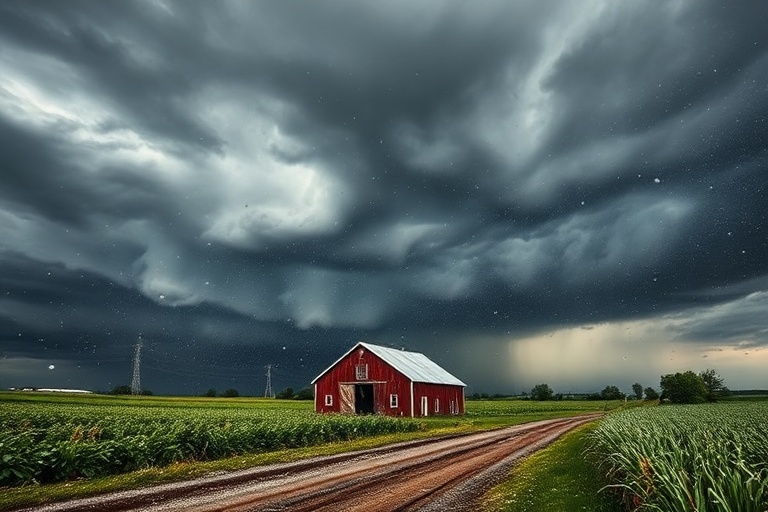
Hail storms are among nature’s most visually striking yet destructive weather events. These storms produce hailstones—balls of ice ranging from pea-sized pellets to softballs—that can damage crops, vehicles, and buildings. While hail is often associated with severe thunderstorms, its formation depends on a delicate balance of atmospheric conditions. Hail forms when updrafts in thunderstorms carry raindrops into extremely cold areas of the atmosphere, where they freeze into ice. If these ice particles are repeatedly lifted and dropped by the storm’s winds, they accumulate layers, growing larger until gravity overcomes the updraft.
Meteorologists classify hail based on size, with the largest recorded hailstone measuring eight inches in diameter and weighing nearly two pounds. The science behind hail formation reveals why certain regions experience these storms more frequently—particularly in areas where warm, moist air clashes with cold fronts. The Great Plains in the United States, for example, is part of “Hail Alley,” where hailstorms are most common due to the collision of air masses from the Gulf of Mexico and Canada.
Global Hotspots: Where Hail Storms Strike Most Often
Hail is a worldwide phenomenon, but some regions face greater risks than others. The United States leads in hail-related insurance claims, with an average of $10 billion in damages annually. Other high-risk areas include:
- Northern India and Bangladesh: Monsoon season often brings violent thunderstorms capable of producing grapefruit-sized hail.
- China’s Yangtze River Valley: Frequent spring and summer storms result in significant agricultural losses.
- South Africa’s Highveld region: Hailstorms here are so severe that specialized insurance products exist to cover them.
- Europe’s Alpine regions: Mountainous terrain enhances thunderstorm development, increasing hail frequency.
In some cultures, hail holds symbolic meaning beyond its physical impact. In parts of rural China, hailstorms have been historically interpreted as omens, prompting rituals to appease the weather gods. Meanwhile, in the Andes, indigenous communities view hail as a test of resilience, with farmers adapting by planting crops in staggered seasons to minimize losses.
The Economic Toll: How Hail Disrupts Livelihoods and Industries
The financial consequences of hailstorms extend far beyond broken windows and dented cars. Agriculture is particularly vulnerable, as hail can strip fields of crops in minutes. In 2019, a single hailstorm in Germany destroyed over 40,000 hectares of vineyards, devastating local wine producers. Similarly, in Kenya, hailstorms have ruined tea and coffee harvests, forcing farmers to seek alternative income sources.
Urban areas face their own challenges. After a 2020 hailstorm in Dallas, Texas, insurance claims surpassed $1.4 billion, making it one of the costliest in state history. The automotive industry also suffers, as dealerships and rental fleets endure costly repairs. In response, some cities have invested in hail-resistant infrastructure, such as reinforced roofs and impact-resistant glass, while others rely on early warning systems to mitigate damage.
Insurance plays a critical role in recovery. In countries like Canada and Australia, specialized hail insurance policies are common in hail-prone areas. These policies often include provisions for crop damage, vehicle repairs, and property restoration, reflecting the unique risks posed by each region.
Can Hail Storms Be Predicted or Prevented?
Advancements in weather forecasting have improved hail prediction, but prevention remains a challenge. Doppler radar detects the signatures of hail-producing storms up to 30 minutes before impact, giving communities time to seek shelter. However, forecasting accuracy varies by region, with rural areas often lacking the resources for advanced monitoring.
Some experimental methods aim to reduce hail size or frequency. One approach involves seeding clouds with silver iodide, a compound that disrupts the formation of large hailstones. While this technique has shown promise in small-scale trials, its effectiveness is still debated among scientists. Other strategies include deploying hail nets over orchards or constructing protective barriers around vulnerable buildings.
Public awareness campaigns also play a role in minimizing harm. In Colorado, the National Weather Service educates residents on hail safety, emphasizing the importance of sturdy shelters and avoiding windows during storms. These efforts have reduced injuries, though property damage remains inevitable in severe cases.
Looking Ahead: Climate Change and the Future of Hail Storms
As global temperatures rise, the frequency and intensity of hailstorms may shift. Warmer air holds more moisture, fueling stronger thunderstorms capable of producing larger hailstones. However, the relationship between climate change and hail is complex. In some regions, such as the U.S. Midwest, increasing instability could lead to more hail events. In others, like parts of Europe, changing atmospheric patterns might reduce their occurrence.
Researchers are actively studying these trends. A 2023 study published in Nature Climate Change projected that hailstorm frequency could increase by up to 40% in certain areas by 2070. Meanwhile, other studies suggest that while storms may become more intense, their geographic distribution could shrink, leaving some regions vulnerable while others see a decline.
For now, communities must balance adaptation with resilience. Investing in early warning systems, resilient infrastructure, and sustainable agriculture can help mitigate the impact of hailstorms. As climate patterns evolve, so too must our strategies for living with one of nature’s most unpredictable forces.